 When I first drove into Telluride to meet with a homeowner just off Main Street (about 0.3 miles from the historic Sheridan Opera House), the mountain air hit me before the work did. Up here, chimney systems live a harder life than almost anywhere else in Colorado. The elevation, the temperature swings, and the snow that piles up for months at a time put a kind of stress on a flue that you just don’t see down in the Denver metro. That’s the reason I wanted to put together a real, no-nonsense guide to chimney services in this beautiful mountain town.
I’m Adam, and I own Adam Chimney. I’ve spent years getting good at this trade and learning what Colorado homes actually need. Maybe you’ve got a century-old Victorian with a leaning brick stack, or maybe it’s a newer mountain build with a factory firebox. Either way, I want to walk you through the services, give you honest pricing, and show you what separates careful work from a rushed job.
Telluride Chimney Services: Understanding the Unique Mountain Challenges
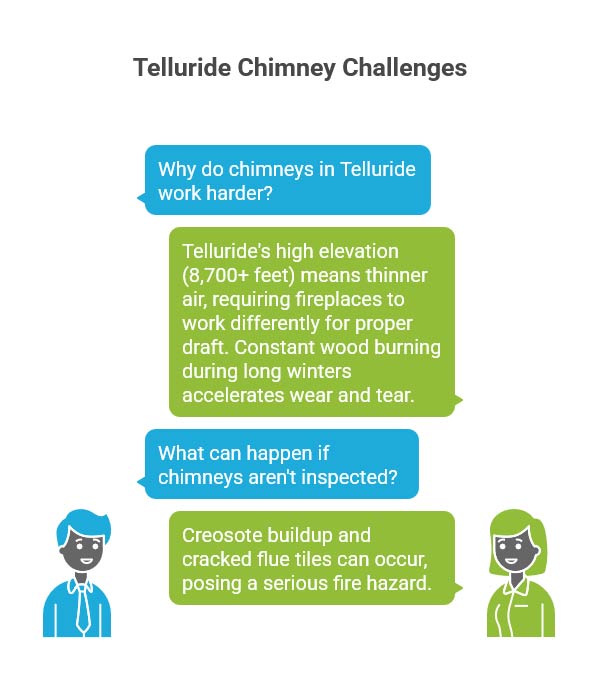
 Telluride chimney services have to account for one thing most homeowners never think about: your chimney works harder here than just about anywhere else in Colorado. At over 8,700 feet, the air is thinner, so your fireplace has to pull differently to get a clean draft going. Now add a long winter where folks burn wood daily from October into May, and you get fast wear and tear. The flue heats and cools, the masonry expands and contracts, and small problems turn into big ones quicker than you’d expect.
I worked with a homeowner over in the Columbia neighborhood who told me, “Adam, I’ve been burning wood every single day from October through May for the past fifteen years, and I never once had my chimney inspected.” During our first inspection and cleaning service, we found nearly 3 inches of creosote packed in there along with several cracked flue tiles. That’s a serious fire hazard, the kind that can turn a quiet evening into a 2 a.m. call to the fire department.
The short version: altitude, heavy use, and brutal weather all gang up on your chimney. The good news is that none of it is a mystery once you know what to look for, and most of it is preventable with regular care.
Folks always ask me why a chimney in Telluride needs more attention than the same chimney would in Denver. It’s the burn hours. A daily fire from fall to spring puts your flue through thousands of heat cycles a year, and at 8,700 feet that adds up fast. I’d rather catch the cracks early than rebuild a crown in February.
- Adam, Owner, Adam Chimney Sweep
Warning Signs Your Telluride Chimney Needs Attention
You don’t need to climb on the roof to know something’s off. Here are the signs I tell every homeowner to watch for:
- Smoke rolling back into the room when you light a fire instead of drawing up the flue.
- A heavy, tar-like smell on warm days, which usually means creosote.
- White staining on the outside brick (that’s efflorescence, a sign water is moving through the masonry).
- Bits of brick, mortar, or clay tile showing up in the firebox or on the hearth.
- Rust streaks running down from the cap or chase cover.
- A damper that sticks, won’t close all the way, or rattles in the wind.
- Cold drafts pouring down the chimney even when the damper is shut.
Spot any of these and it’s worth a call to (720) 207-9232. Catching a small issue now is a whole lot cheaper than dealing with the damage it causes later.
Core Chimney Services We Provide in Telluride
Chimney Sweeping and Cleaning
Let me be straight with you about chimney sweeping, because there’s a lot of bad information floating around. Our inspection and cleaning starts at $199, and that price gets you a thorough Level 1 inspection plus complete removal of soot and creosote from your flue. No upsell games, no bait pricing.
Here’s what the service actually involves:
Standard Chimney Sweep Service Breakdown
| Service Component | What’s Included | Time Required |
|---|---|---|
| Pre-inspection | Visual assessment of exterior and interior components | 15-20 minutes |
| Flue cleaning | Complete removal of creosote and debris using professional brushes and rods | 45-60 minutes |
| Smoke chamber cleaning | Removal of buildup in the critical transition area | 20-30 minutes |
| Firebox cleaning | Ash removal and inspection of refractory panels | 15-20 minutes |
| Post-cleaning inspection | Documentation of any issues discovered | 10-15 minutes |
| Customer consultation | Discussion of findings and recommendations | 15-20 minutes |
For our Telluride clients, I tell them to book our professional chimney-sweeping services at least once a year. If you’re a heavy burner, twice a year is smarter. Here’s how a typical sweep goes from the moment we pull up to your house:
- We lay down drop cloths and seal off the fireplace opening so no soot escapes into your living room.
- We run a camera up the flue to see the actual condition before we touch anything.
- We brush the flue from top or bottom (depending on the setup) while a HEPA vacuum captures the debris.
- We clean the smoke chamber and firebox, then check the damper and refractory panels.
- We do a final inspection, show you the before-and-after on the camera, and walk you through anything we found.
That last step matters to me. You should see what I see, not just take my word for it.
Chimney Repair Services
Now here’s where things get more involved. Chimney repair work swings wildly depending on what’s actually wrong. I’ve done simple fixes that ran $300 and full reconstructions that climbed into the tens of thousands. The only way to know is to get eyes on the system.
Common Chimney Repair Pricing in Telluride
| Repair Type | Description | Typical Price Range | Labor Hours |
|---|---|---|---|
| Flue tile replacement | Single damaged tile replacement | $400-$800 | 3-5 hours |
| Crown repair (minor) | Sealing cracks and applying a waterproof coating | $300-$600 | 2-4 hours |
| Crown rebuild | Complete crown reconstruction | $1,200-$2,500 | 8-12 hours |
| Chase cover replacement | Stainless steel or copper custom cover | $800-$1,800 | 3-5 hours |
| Damper replacement | Standard throat damper installation | $400-$700 | 2-3 hours |
| Top-mount damper | Energy-efficient cap damper system | $500-$900 | 2-4 hours |
| Masonry repair (minor) | Spot repairs on the brick chimney | $500-$1,200 | 4-6 hours |
One thing I always tell clients is that Telluride’s weather makes certain repairs urgent in a way they wouldn’t be at sea level. That freeze-thaw cycle you get in the mountains is hard on masonry. Water sneaks into a hairline crack, freezes overnight, expands, and pries the crack wider. Come morning it thaws, more water gets in, and the whole thing repeats. Left alone, that cycle won’t quit until the brick is crumbling, so the cheapest move is almost always to seal small cracks before winter sets in.
Brick Tuckpointing Services
Speaking of masonry, let’s talk about brick tuckpointing. This is one of those jobs people put off until it turns into a structural problem. Tuckpointing means grinding out the old, crumbling mortar between the bricks and packing in fresh mortar that’s mixed and color-matched properly. Done right, it can add decades to a chimney.
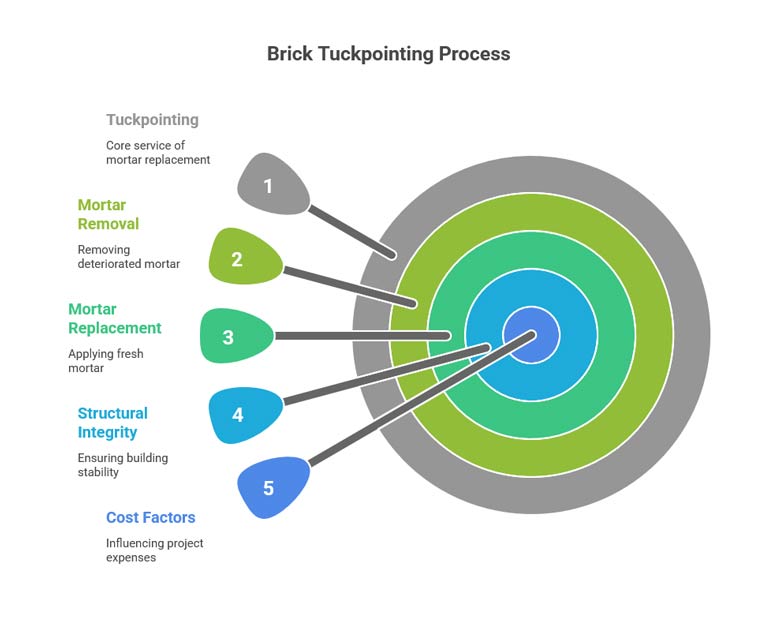
I worked on a beautiful historic home near Telluride Town Park where the mortar had gotten so bad you could pull bricks out by hand. The homeowner was floored, because from the ground everything looked fine. But once we got up on scaffolding (which, by the way, adds to the cost in Telluride thanks to the terrain), the damage was impossible to miss. Half the back face was held together by gravity and good luck.
Tuckpointing Pricing Structure
| Scope of Work | Price Per Square Foot | Additional Factors | Typical Total Cost |
|---|---|---|---|
| Minor tuckpointing (spot repairs) | $15-$25/sq ft | Access difficulty, mortar matching | $800-$2,000 |
| Moderate tuckpointing (one wall section) | $18-$30/sq ft | Scaffolding needs, height | $2,500-$5,500 |
| Extensive tuckpointing (full chimney) | $20-$35/sq ft | Historic mortar matching, structural concerns | $5,000-$12,000+ |
| Complete chimney rebuild | $150-$250/sq ft | Foundation work, code compliance | $15,000-$40,000+ |
The tricky part with tuckpointing in Telluride is that you’re often working on older homes where the original mortar was lime-based and soft. You can’t just pack modern Portland cement mortar in there, because it’s harder than the brick and it’ll crack the brick faces as the wall moves. We use historically appropriate mixes that match the original mortar’s strength and color, so the repair works with the old masonry instead of fighting it.
On these old Telluride homes I never reach for hard cement mortar. The original lime mortar was meant to flex and let the wall breathe. Match it wrong and you’ll spend years watching the brick faces pop off. Matching mortar is half science, half eyeballing it in the light, and it’s the part of the job I take the most pride in.
- Adam, Owner, Adam Chimney Sweep
Firebox Repair and Restoration
The firebox is where the magic happens, but it’s also where you see the most direct heat damage. Those refractory panels lining your firebox aren’t there for looks. They protect the structural masonry behind them and bounce heat back into the room. When they fail, you lose efficiency and you put the chimney structure at risk.
I had a client up in Mountain Village burning fires with a firebox that was basically shot. The back panel had crumbled away, so they were burning right against the bare brick of the chimney structure. That’s not just wasteful, it’s dangerous, because the heat starts cooking the masonry it was never meant to touch.
Firebox Repair Cost Analysis
| Service | Materials Cost | Labor Cost | Total Range |
|---|---|---|---|
| Refractory panel replacement (single panel) | $150-$300 | $200-$400 | $350-$700 |
| Complete firebox rebuild | $600-$1,200 | $800-$1,800 | $1,400-$3,000 |
| Firebox expansion/modification | $400-$900 | $1,200-$2,500 | $1,600-$3,400 |
| Smoke chamber parging | $300-$600 | $500-$1,000 | $800-$1,600 |
For our fireplace repair and installation services, we use high-quality refractory materials built to take the intense heat cycles you get in Telluride homes that lean hard on their fireplaces all winter long.
Chimney Cap and Crown Services
Let me tell you something that might save you thousands of dollars: your chimney cap is the first line of defense against water, and your crown is the second. I’ve lost count of how many times I’ve climbed onto a roof in Telluride and found either no cap at all or a rusted-out one doing absolutely nothing.
A good chimney cap does a few jobs at once. It keeps rain and snow out of the flue, it stops birds and squirrels from moving in, and it cuts down on those downdrafts that push smoke back into the house. In Telluride’s heavy snow you want a cap with enough mesh spacing that it won’t pack solid with snow, while still keeping critters and weather out.
Chimney Cap Options and Pricing
| Cap Type | Material | Lifespan | Price Range (Installed) | Best For |
|---|---|---|---|---|
| Basic galvanized steel | Galvanized steel | 5-10 years | $250-$450 | Budget-conscious, temporary solution |
| Stainless steel single-flue | 304 stainless | 20-30 years | $400-$700 | Standard protection, good value |
| Stainless steel multi-flue | 304 stainless | 20-30 years | $600-$1,200 | Multiple flue chimneys |
| Copper custom cap | Copper | 50+ years | $1,200-$3,000+ | Historic homes, premium aesthetics |
| Top-sealing damper | Stainless/silicone | 15-25 years | $500-$900 | Energy efficiency priority |
I install a lot of stainless steel caps and adjustable chimney safety caps, because they hold up beautifully for the money and they shrug off mountain weather year after year.
The chimney crown matters just as much. That’s the concrete or mortar slab at the very top that seals the chimney around the flue. A crown built the right way overhangs the chimney wall by two to three inches and has a drip edge, so water runs off and drips clear of the brick instead of soaking down into it. A cracked crown is one of the most common ways water gets into a chimney up here, and it’s usually a cheap fix if you catch it early.
Here’s a short YouTube clip from one of our recent winter jobs so you can see what working on a Colorado mountain roof actually looks like:
Chimney Lining Services
Here’s a topic that gets technical fast: chimney liners. Your liner is the channel that carries the combustion gases up and out while protecting the chimney structure from heat and acidic byproducts. In a lot of older Telluride homes, you’ll find chimneys built with no liner at all, or with clay tiles that have cracked and crumbled over decades of hard winters.
Chimney Liner Installation Costs
| Liner Type | Cost Per Foot | Installation Complexity | Total Cost (25-foot chimney) |
|---|---|---|---|
| Stainless steel flexible | $35-$65/ft | Moderate | $2,500-$4,500 |
| Stainless steel rigid | $45-$80/ft | High | $3,500-$5,500 |
| Cast-in-place | $100-$200/ft | Very High | $5,000-$9,000 |
| Aluminum flexible (gas only) | $20-$35/ft | Moderate | $1,800-$3,200 |
For most wood-burning setups in Telluride I steer people toward stainless steel flexible liners. They’re tough, they bend to follow slight offsets in the flue, and once they’re insulated they hold heat well even when it’s twenty below outside. A well-insulated liner also drafts better, which means a cleaner burn and less creosote piling up on you between cleanings.
Real Customer Experience from Telluride
Let me share a story that really shows why staying on top of chimney maintenance pays off. Last winter I got a call from a homeowner in the Adams Ranch area (just 0.8 miles from Telluride’s historic Courthouse). Every time they lit a fire, smoke backed up into the house, and they had no idea why.
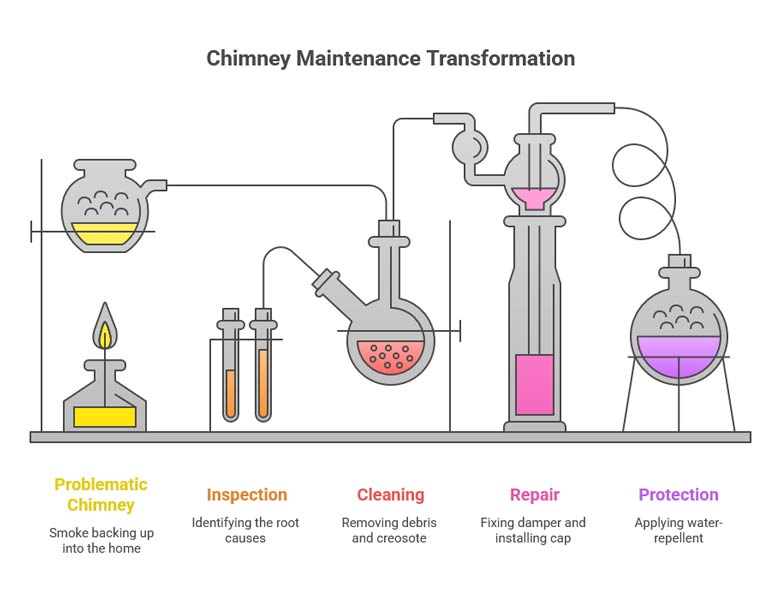
When I got there and ran our inspection services, I found a perfect storm. A missing cap had let birds nest in the flue over the summer, there was heavy creosote from burning wet wood, and the damper was stuck halfway closed. The homeowner figured these were three separate headaches, but they were all tangled together, each one making the others worse.
“I was ready to stop using my fireplace altogether,” the homeowner told me. “Adam came out, explained everything clearly without talking down to me, and had my chimney working better than it had in the ten years I’ve owned this house. The investment was worth every penny for the peace of mind alone.”
We cleaned the whole system, pulled out the bird’s nest and debris, freed up the damper, installed a new top-mount damper cap, and sealed the exterior masonry with a chimney-saver water repellent. Total investment: $1,450. That might sound steep, but stack it against the cost of a house fire or the slow drip of constantly fighting smoke problems, and it’s an easy call.
That Adams Ranch job is the one I bring up whenever someone tells me their chimney is “probably fine.” Three small things nobody noticed added up to a house full of smoke. None of them were expensive on their own. Skipping the yearly inspection is what made it expensive. An hour on the roof once a year would have caught every bit of it.
- Adam, Owner, Adam Chimney Sweep
Additional Services Worth Considering
Gas Insert Installation
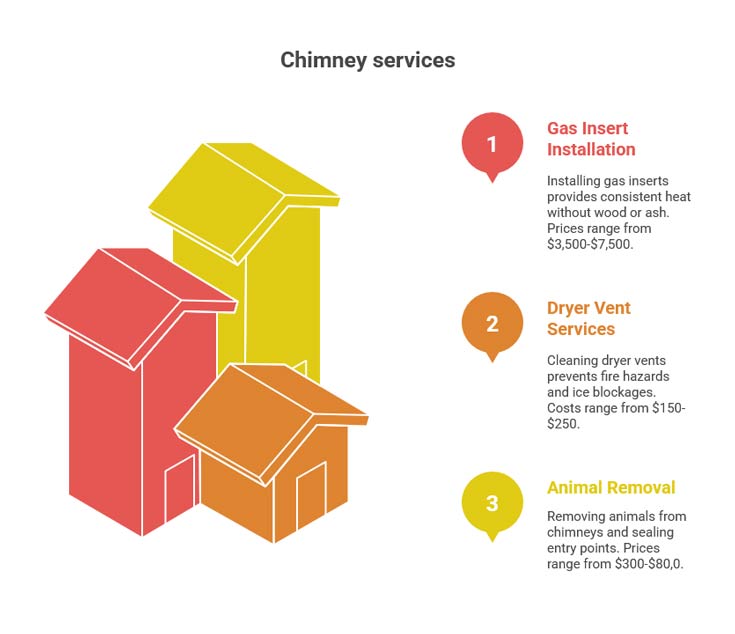
More and more Telluride homeowners are adding or swapping in gas inserts alongside their wood-burning fireplaces. I get the appeal. There’s no wood to haul up an icy driveway, no ash to shovel out, and you get steady heat the second you flip a switch on a cold morning.
Gas insert installation usually runs $3,500-$7,500, depending on the unit and how much gas line work the job needs. We stock solid options like the Kingsman Gas Fireplace Insert that perform really well in mountain homes where the heat has to keep up with single-digit nights.
Dryer Vent Services
While I’m already on-site for chimney work, a lot of clients ask about dryer vent services. This is a real safety issue people tend to ignore. A clogged dryer vent is a fire hazard, and in Telluride’s climate, ice can build up in an exterior vent and create a blockage you won’t notice until the dryer stops drying or, worse, overheats.
Dryer vent cleaning runs $150-$250, depending on how long and twisty the vent run is.
Animal Removal
Animal removal is something I deal with constantly in mountain communities. Raccoons, squirrels, and birds love chimneys. They’re warm, sheltered from predators, and out of the weather, which makes them prime real estate for nesting.
If you’ve got animals in your chimney, the cost to get them out and seal up the entry points usually runs $300-$80,0, depending on the situation. The important part is doing it humanely and then keeping them from coming back with a proper cap.
Understanding Labor and Travel Costs
Let me be transparent about something that affects pricing in Telluride: logistics. When we come from the Denver area to service Telluride homes, there’s real travel involved. That six-hour round trip, the occasional overnight stay for multi-day projects, and hauling specialized equipment over the passes all factor into the price.
Cost Factors Specific to Telluride
| Factor | Impact on Price | Why It Matters |
|---|---|---|
| Travel distance | +$150-$300 | Fuel, time, vehicle wear |
| Accommodation (multi-day projects) | +$100-$200/night | Extended projects require overnight stays |
| Equipment transport | +$50-$150 | Scaffolding, tools, materials |
| Altitude challenges | +10-15% time | Work takes longer at elevation |
| Weather delays | Variable | Projects may require multiple trips |
| Permit coordination | +$100-$300 | Working with the local building department |
That said, I always try to get the most out of every trip to Telluride. If I’ve got one job on the books, I’ll reach out to other clients in the area to see if they need anything done while I’m in town. That way we split some of those travel costs and everybody comes out ahead.
Essential Tools and Equipment We Use
When people see the tools we bring to a job, they’re usually surprised at how much goes into it. We’re well past the wire brush on a stick. Modern chimney work leans on real equipment to do the job safely and to actually see what’s going on inside the flue.
We bring everything from flexible chimney rods and rigid rod systems to professional-grade vacuums, video inspection cameras, and specialized masonry tools. That gear cost a good chunk of money up front, but it lets us work faster, keep your house clean, and show you exactly what we found instead of just describing it.
What a Professional Chimney Inspection Covers
A lot of people think an inspection is just a quick look up the flue. A real one goes deeper, and in a mountain town it has to. Here’s what we check on a standard visit:
- The cap and crown, for cracks, rust, and snow-load damage.
- The flue interior on camera, for creosote, cracked tiles, and gaps.
- The smoke chamber and damper, for buildup and proper operation.
- The firebox and refractory panels, for heat damage and crumbling.
- The exterior masonry and mortar joints, for water damage and freeze-thaw cracking.
- Clearances and the chimney’s connection to the home, for any safety concerns.
If something needs attention, you’ll get it straight from me with photos to back it up. And if everything checks out, I’ll tell you that too. I’m not interested in selling work that isn’t needed.
Frequently Asked Questions About Chimney Services in Telluride
How often should I have my chimney cleaned in Telluride?
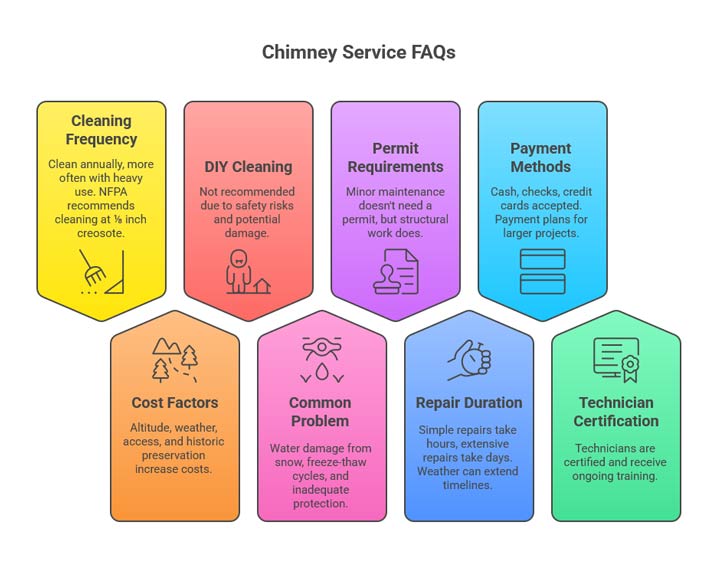
Given how hard most Telluride fireplaces work, I’d say annual cleaning at the very least. If you’re burning more than two cords a season or running a fire daily through winter, go twice a year. The National Fire Protection Association says it’s time to clean once you’ve got 1/8 inch of creosote built up, and heavy burners hit that mark fast.
Why does chimney work cost more in mountain communities?
Beyond the travel I mentioned, there are real technical hurdles up here. Altitude changes how materials cure, so concrete takes longer to set. The weather windows for masonry work are shorter. Access is often tougher on steep mountain lots. And historic preservation rules in Telluride sometimes call for specific materials and methods that cost more than off-the-shelf options.
Can I clean my chimney myself?
Technically yes, but I’d steer you away from it. A trained sweep catches safety problems that just aren’t visible to an untrained eye. We also carry insurance and have the right gear. I’ve seen DIY cleanings crack a flue liner, and I’ve seen homeowners take a bad fall off an icy roof. The $199 for our service buys you safety and a job done all the way through.
What’s the most common problem you see in Telluride chimneys?
Water damage, no contest. Heavy snow, freeze-thaw cycles, and weak caps or crowns combine to push water right into the masonry. Once water gets in, the deterioration speeds up in a hurry, and a $400 crown repair you skipped becomes a $6,000 rebuild.
Do I need a permit for chimney repair in Telluride?
Depends on the scope. Minor maintenance usually doesn’t need one, but structural work, liner installation, or major masonry repairs will. We handle the permit coordination as part of the job, so you’re not stuck navigating the building department on your own.
How long does a typical chimney repair take?
Simple stuff like a cap install or minor crown work wraps up in a few hours. Extensive tuckpointing, a liner install, or structural repairs can take several days. Telluride weather can stretch the timeline too, since we can’t do certain work in snow or once temperatures drop below freezing.
What payment methods do you accept?
We take cash, checks, and all major credit cards. For bigger projects, we can talk through payment plans or financing options so the cost is easier to manage.
Are your technicians certified?
Yes. I hold certifications through the Chimney Safety Institute of America, and our whole crew gets ongoing training. You can read more about our qualifications and experience on our website. If you ever want to dig into the national safety standards yourself, the Chimney Safety Institute of America is a great place to start.
Making Smart Decisions About Your Chimney Investment
Here’s my philosophy: I’d rather you understand exactly what you’re paying for and why than feel blindsided after the fact. When we hand you an estimate, we lay out materials, labor, and any extra costs in plain language. You won’t find vague line items or surprise charges on our invoices.
The honest truth is that chimney work is an investment in your home’s safety, efficiency, and value. A well-kept chimney can last generations. A neglected one can fail in a way that puts your family in real danger, and those failures rarely give you much warning.
I tell every Telluride homeowner to weigh their chimney and fireplace pricing decisions on long-term value, not just the sticker price today. Sure, a $3,000 liner feels expensive right now. But it guards against carbon monoxide leaks, improves efficiency, and can last 30 years or more. Break it down and that’s about $100 a year for safety you can count on.
Useful Resources and Regulations
If you want to understand the rules around chimney work in Telluride and San Miguel County, here are some official resources worth bookmarking:
- Town of Telluride Building Department – Information on permits and inspections
- Colorado Department of Public Health and Environment – Air Quality – Wood burning regulations and air quality standards
- San Miguel County Building Department – County-level building codes and requirements
- International Residential Code (IRC) – National building code standards for chimneys and fireplaces
Why Choose Adam Chimney for Your Telluride Services
I know you’ve got options for chimney service. What sets us apart is the mix of hands-on expertise, straight pricing, and real care for keeping your home safe. We’re not here to talk you into work you don’t need, but we will tell you honestly what needs attention now and what can wait until spring.
Our service areas reach across Colorado, and you can check whether we cover your spot on our service areas page. We built our reputation one happy customer at a time, and we hold ourselves to the same high standard on every job, whether it’s a $199 sweep or a full rebuild. Want to talk it through? Call me at (720) 207-9232 or reach out through our contact page.
And if you’re thinking about a career in chimney services, we’re always on the lookout for motivated folks who want to learn a real trade. It’s rewarding work that blends technical problem-solving with hands-on craftsmanship, and there’s nothing quite like the view from a Telluride rooftop on a clear morning.
Final Thoughts on Telluride Chimney Care
After years of working on chimneys all over Colorado, I can tell you Telluride throws some of the most interesting and challenging conditions I run into. Historic architecture, heavy daily use, and extreme weather mean your chimney needs care from people who actually understand those factors instead of treating it like any other house in the suburbs.
Whether it’s a routine cleaning, an emergency repair, or a full rebuild, we bring the same attention to detail and the same commitment to doing it right. Your chimney is a safety system, plain and simple, and it deserves to be treated like one.
For more helpful tips, take a look at our chimney and fireplace blog, where I share maintenance advice, industry updates, and answers to the questions I hear most. You can also browse the full list of chimney and fireplace services we offer across the state.
Remember, the cost of prevention is always less than the cost of repair, and both are a tiny fraction of what a chimney fire or carbon monoxide incident can cost you. Don’t wait for a problem to start thinking about your chimney. Book your inspection and cleaning today, and head into winter knowing your system is safe and working the way it should.
Stay warm out there, and keep those fires burning safely.