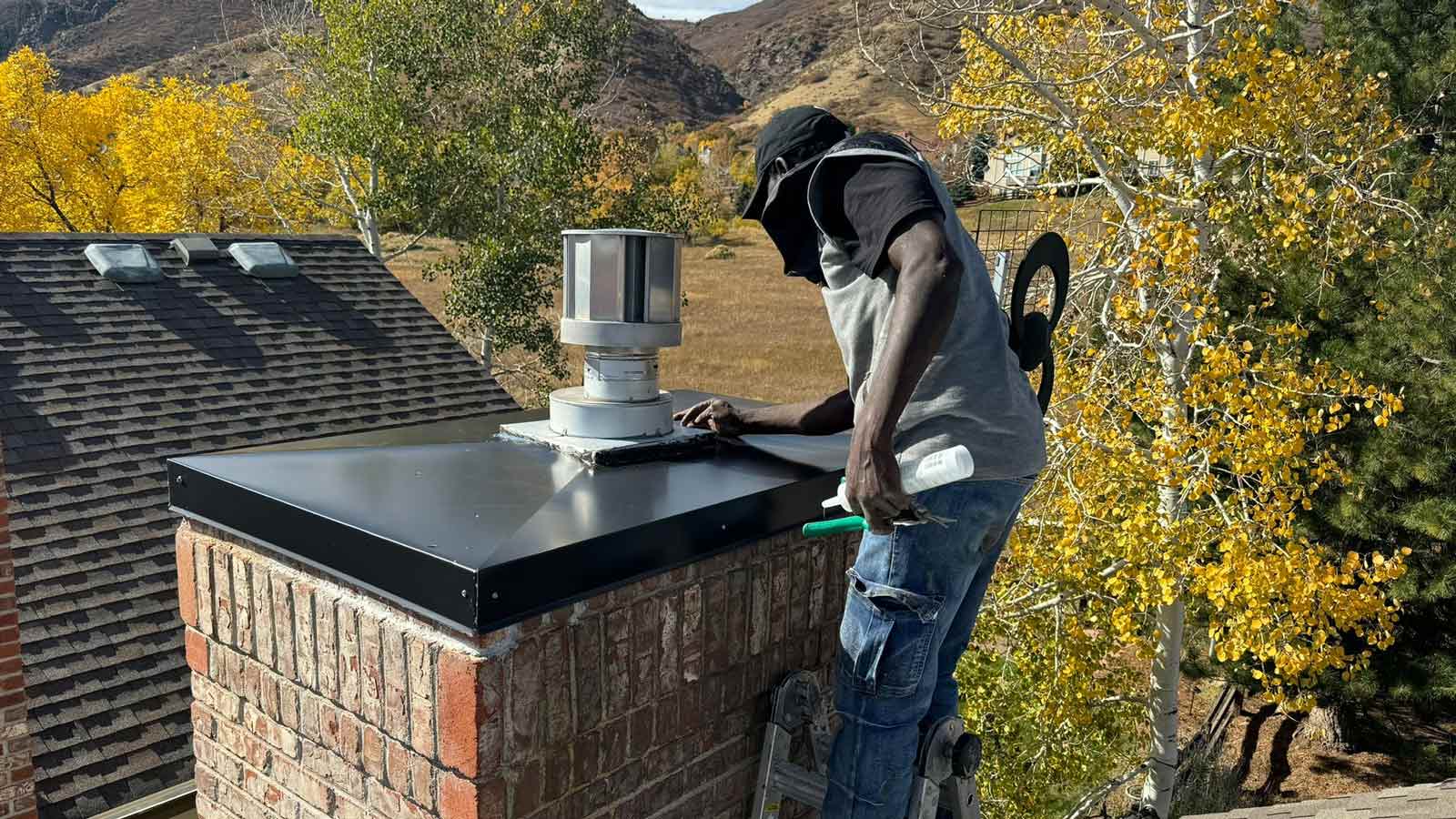
If you own a home in Denver, your chimney crown takes a beating every single year, and most people never give it a second thought until water shows up where it shouldn't. The crown is the concrete or masonry cap that sits on top of the chimney, and it's the first thing standing between Colorado weather and the brick underneath. Between the freeze-thaw swings, the dry summers, and the wet spring snow that loves to hang around, our crowns work hard. In this guide I'll walk you through what a chimney crown actually does, how to spot when yours is failing, what the repair looks like start to finish, and the local stuff that matters here on the Front Range. I've been climbing Denver roofs since 2001, so a lot of this comes straight off the job.
Understanding Chimney Crowns and Their Role
 A chimney crown is the flat or slightly sloped concrete or masonry surface that caps off the top of your chimney. Think of it as the roof of your chimney. It's there to shed rain, snow, and debris away from the structure so none of that water works its way down into the brick. People mix it up with the chimney cap all the time, but they're two different things. The cap is the little metal hood over the flue opening. The crown is the bigger slab the cap sits on. Both matter, and a healthy chimney needs both doing their job.
Here's the catch. The crown is poured concrete or masonry sitting out in the open with nothing protecting it, so over the years it cracks. A small crack today turns into a real problem after a few Denver winters, because water gets in, freezes, and pries the crack wider every time the temperature drops below freezing and climbs back up.
Maintaining the crown matters a lot more here than it does in a milder climate. Denver bounces between warm afternoons and freezing nights for months at a stretch, and that constant cycling is exactly what wrecks concrete. Leave a hairline crack alone and you can end up with water damage inside the masonry, rust on the flue, and a fireplace or damper that's quietly corroding from the inside out.
I tell folks the crown is like the shingles on your house. Nobody thinks about it until it leaks, but by then the damage is already done inside the brick. I've pulled apart chimneys in Aurora where one little crown crack let in so much water the top three rows of brick just crumbled in my hand. Catch it early and it's a cheap fix. Wait, and you're rebuilding.
- Adam, Owner, Adam Chimney Sweep
The Importance of Regular Chimney Inspections
 Routine chimney inspections are how you catch crown wear before it turns into a big repair bill. A good Denver chimney sweep looks at the whole system, not just the crown, so we check the flue, the damper, the cap, and the liner while we're up there. The crown, cap, and liner all work together to keep weather out and keep your fireplace drafting and burning safely. When one starts failing, it usually drags the others down with it.
For safety, the recommendation is to have your chimney inspected once a year. That goes double for Denver homeowners, because our weather puts more stress on the crown than a lot of other parts of the country see. An annual look means we spot the hairline crack in spring before the summer sun and next winter's freeze turn it into a structural issue.
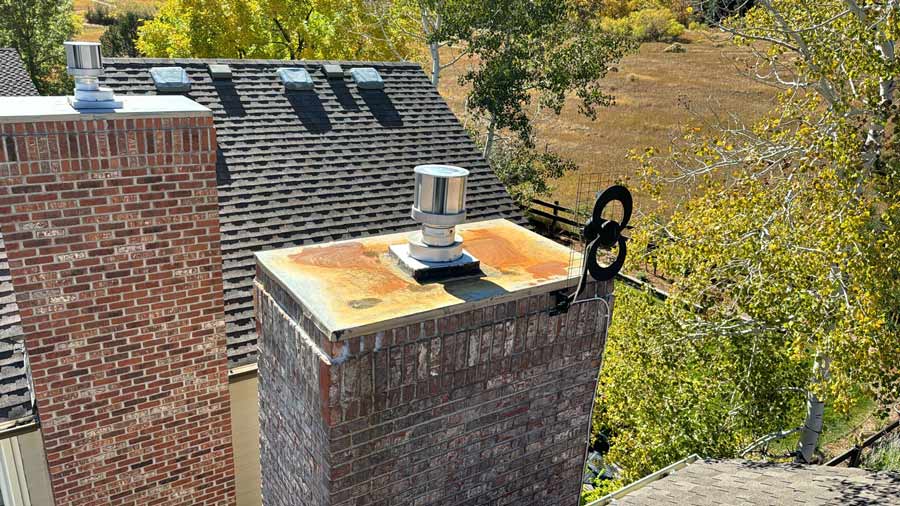
Want to see what a crown repair actually looks like up on the roof? Here's a walkthrough we filmed right here in the Denver area showing crown maintenance and the kind of damage we run into.
Common Chimney Crown Problems and Their Causes
Chimney crowns deal with a lot of punishment, and most of the damage I see traces back to a handful of usual suspects:
- Freeze-Thaw Cycles: This is the big one in Denver. Water sneaks into a small crack in the masonry, freezes overnight, and expands. That expansion forces the crack wider, then it thaws and the cycle repeats. Do that a few dozen times over a winter and a hairline becomes a gap you can fit a coin into.
- Poor Construction or Low-Quality Materials: Plenty of crowns were built wrong from day one. If a crown is too flat or doesn't have enough slope, it can't push water off the edge, so the water just sits there and soaks in. Cheap mortar mixes break down fast too. A crown built on the cheap will fail years before one that was poured right.
- Water Damage: Once a crack lets water into the masonry, the trouble spreads. Moisture corrodes the flue liner, rots out the damper, and in a worst case it can lead to carbon monoxide getting into the house or a fire hazard from a compromised liner. Water is the root of almost every serious chimney problem I deal with.
- Sun and Age: Our high-altitude sun is brutal on concrete. UV and the dry air shrink and harden the crown over the years, and old crowns get brittle and crack on their own even without much help from the weather.
Signs of a Damaged Chimney Crown
 You can't always get up on the roof to look at the crown yourself, and I'd rather you didn't. But there are warning signs you can catch from the ground or from inside the house that tell you it's time to call someone:
- Visible Cracks: If you can see cracks in the crown from the ground or from an upstairs window, that's your cue. Small cracks are how big ones start, and Denver's colder months speed the whole thing up.
- Flaking or Spalling: Bits of concrete or masonry crumbling off the crown mean water has already gotten in and started breaking it down. You might even find chunks in the gutter or on the roof.
- Rust or Water Stains: Rust streaks running down the outside of the chimney, or water stains showing up on interior walls and ceilings near the chimney, both point to moisture getting where it shouldn't.
- Displaced or Cracked Bricks: When a crown fails and water saturates the brick, the masonry below starts to loosen, shift, or crack. Bricks pushing out or mortar joints opening up are a sign the damage has already moved past the crown.
- A Musty Smell or Damp Firebox: If your fireplace smells damp or you notice moisture in the firebox after it rains or snows, water is finding a path down through the top of the chimney.
Most of the calls I get start with a water stain on a ceiling, and the homeowner has no idea it's coming from the crown. They think it's the roof. By the time the stain shows up inside, water's been getting in for a while. So if something looks off up top, don't wait for it to get worse. A two-minute look from me can save you a four-figure repair down the road.
- Adam, Owner, Adam Chimney Sweep
The Chimney Crown Repair Process
 Repairing or replacing a crown is a job for a pro, both for the quality of the work and for safety up on the roof. Here's how we handle it, step by step:
- Inspection and Assessment: A certified chimney tech gets up on the roof and checks the crown over. Based on how far gone it is, we'll tell you straight whether it needs a patch and seal or a full rebuild. No upselling, just an honest read on what the crown actually needs.
- Cleaning and Preparing the Surface: We clean off the crown to clear away debris, dirt, and any loose or crumbling masonry. The repair only sticks if the surface underneath is solid and clean, so we don't skip this.
- Applying Sealants or Patching: If the damage is minor, a waterproof crown sealant or a patching compound does the trick. This works great on small cracks and light spalling, and it buys the crown a lot more life.
- Reconstruction or Replacement: When the crown is badly cracked or falling apart, patching won't cut it. We remove the old crown and pour a new one, built from quality concrete or masonry shaped to actually shed water and hold up to Denver winters.
- Installing a Chimney Cap: We usually finish by adding or replacing the chimney cap. The cap covers the flue opening to keep out rain, debris, and animals, and it helps the draft too. A new crown and a solid cap together give you the full weather barrier the top of your chimney is supposed to have.
Start to finish, a straightforward seal-and-cap job is often done in a single visit. A full crown rebuild takes longer because the new concrete needs time to cure before it's fully weatherproof, and we'll talk you through the timeline before we start so there are no surprises.
The Benefits of Timely Chimney Crown Repairs for Denver Residents
 Getting crown work done before it spirals pays off in a few real ways for homeowners around Denver and the rest of Colorado:
Prevention of Water Damage
Fix the crown early and you stop moisture from getting into the chimney at all. That protects the firebox, the flue, the damper, and the brick. Water is what kills chimneys, so keeping it out is more than half the battle.
Increased Structural Longevity
A crown that's doing its job adds years to the life of the whole chimney and the masonry around it. A few hundred dollars of crown maintenance now can push off a multi-thousand-dollar rebuild for a long time.
Enhanced Safety
Cracks in a crown can lead to real hazards, like carbon monoxide leaking into the house or a fire risk from a damaged liner. A properly sealed crown cuts those risks way down and lets you actually relax when you light a fire.
Improved Efficiency
A solid crown and cap give you a better draft, so your fireplace burns cleaner and pulls smoke and gases up and out the way it's supposed to. You feel it in how the fire lights and how little smoke spills back into the room.
Choosing a Chimney Repair Service in Denver
Hiring professionals experienced with Colorado weather and how our chimneys are built makes a real difference on a crown repair. Around here the freeze-thaw stress is no joke, and a crew that knows that builds the crown to handle it. Look for a service that gives you:
Certified Technicians
Certification from the Chimney Safety Institute of America (CSIA) tells you the tech knows the trade and works to a real standard, not just whatever looks good enough. You can read up on what that certification means over at the Chimney Safety Institute of America.
Comprehensive Services
A company that handles cleaning, inspection, repair, and installation can give you a fuller read on your chimney's health, because they're looking at the whole system instead of just the one thing you called about. If you're not sure where to start, our full list of chimney services lays out everything we do.
Transparent Pricing
Denver folks appreciate straight answers on cost. You should get upfront pricing and a clear quote that spells out the repair and what it'll run you before any work starts.
When you hire someone for crown work, ask them point blank if they're CSIA certified and ask to see photos of the crown before and after. We always shoot pictures up top because you can't see the crown from the ground, and I want you to know exactly what you're paying for. A repair done right out here should hold up for years, not need a redo next spring.
- Adam, Owner, Adam Chimney Sweep
What a Healthy Chimney Crown Service Includes
When we come out for crown work in the Denver metro, here's what you can count on being part of the job:
- A full visual inspection of the crown, cap, flue, and surrounding masonry
- Photos of the crown so you can see the condition for yourself
- Cleaning and prep of the crown surface before any repair
- Crack sealing or a waterproof crown coat for minor damage
- A full crown rebuild with proper slope and an overhang drip edge when the old one is past saving
- A new or refit chimney cap to finish off the weather barrier
- A straight, written quote with no mystery charges
Colorado Weather and Your Chimney Crown
It's worth saying a bit more about why crowns fail faster here than they do in a lot of places. Denver sits at a mile high with low humidity and a ton of sunshine, and that combination is rough on concrete. The dry air pulls moisture out of the masonry and makes it brittle. Then winter rolls in with snow that melts in the afternoon sun and refreezes at night, sometimes a dozen freeze-thaw cycles in a single week. Each one of those cycles is a tiny crowbar working any crack in your crown a little wider.
Spring is its own problem. Our heavy wet spring snows dump a lot of water on the roof in a short time, and if the crown is already cracked, all that meltwater has somewhere to go. I see more crown-related water damage calls in April and May than almost any other time of year, because the snow load finally finds every weak spot the winter opened up. That's why I push annual inspections so hard for Denver homeowners. Catching the cracks in the off-season is a whole lot cheaper than dealing with the water damage after the spring melt.
FAQs for Chimney Maintenance and Fireplace Services
1. What is a chimney jack, and do I need one?
 A chimney jack is gear we use to support the chimney during a repair, mostly on tall or shaky chimneys. It keeps the structure stable while we work up top, which matters a lot for safety on taller homes. You won't need one for every job, but when a chimney is tall or already unstable, it's the right tool to keep the repair safe.
2. Are you a locally operated business?
Yes. We're a locally operated business and we've been serving Denver and the surrounding areas for years. Our team knows what Colorado chimneys and fireplaces go through, and you get that local know-how with every job, not some out-of-town crew passing through.
3. Can I install a new fireplace if I already have a chimney?
Absolutely. Putting a new fireplace into an existing chimney is common, whether you want wood-burning, gas, or electric. Before we install anything, we check that your chimney meets the safety requirements so you get proper ventilation and the unit runs the way it should.
4. How can I prevent water damage in my chimney?
Water damage is one of the biggest threats to a Denver chimney, especially through winter. Get regular inspections, put a chimney cap on if you don't have one, and waterproof the exterior masonry if the chimney needs it. Knock out the small stuff early and you head off the expensive water problems before they start.
5. What is a chimney crown, and how does it protect my chimney?
A chimney crown is the protective top layer of your chimney, built to keep out water, debris, and animals. Over time crowns crack or erode, and once that happens you may need a new crown to hold the structure together. A crown in good shape keeps water out, which protects both your fireplace and the chimney itself.
6. What are the benefits of a wood-burning fireplace?
Wood-burning fireplaces are a favorite for the classic look, the real heat, and the feel of a live fire. Wood is a renewable fuel too, which makes it an eco-friendly pick for a lot of Denver folks who just love a crackling fire on a cold night.
7. Do you offer services for both chimneys and fireplaces?
Yes. We handle the full range for both chimneys and fireplaces, from inspections and repairs to fireplace installs and routine maintenance. Our goal is to keep your whole system running safely and efficiently, top to bottom.
8. Why choose CrownUp Pros for my chimney and fireplace needs?
At CrownUp Pros, you get local know-how, solid workmanship, and a crew that actually cares whether you're happy with the job. New crown, chimney jack install, or fireplace maintenance, our trained techs do it right the first time.
Protect Your Home with Chimney Crown Maintenance
 For Denver homeowners, regular chimney inspections and crown maintenance are money well spent on your home's safety and comfort. Whether you're staring at a cracked crown, spalling bricks, or you just need a good chimney cleaning, dealing with it sooner instead of later saves you from the big repairs down the road. A well-kept chimney keeps water out, helps your fireplace run better, and protects the structure of your home. If you'd like a professional set of eyes on yours, reach out to us and we'll get you on the schedule.
Chimney Repair and Maintenance Services for Denver Homes
Keeping your home safe and your fireplace efficient is what a free chimney inspection or a round of chimney repairs in Denver, CO is all about. From chimney sweep work and full chimney inspections to chimney cap installs and masonry roof repair, regular upkeep protects your chimney from hazards and keeps the repair bills small. Chimney sweeps clear out creosote and debris so your air flows better and your fire risk drops. A chimney cap adds protection from rain and pests, and professional chimney cleaning keeps the whole system efficient. Whether you've got a gas fireplace or you need work on a dryer vent, it's worth trusting certified pros who do the kind of complete repair services that keep your fireplace and chimney in top shape all year. For broader background on safe wood burning and home heating, the EPA Burn Wise program is a solid resource.
For professional chimney crown repairs, cleaning, and inspections in the Denver metro area, contact Adam Chimney at (720) 207-9232 or visit us at 12894 E Villanova Dr, Aurora, CO. 80014. Let our expert team help keep your chimney safe, efficient, and ready for the Denver seasons.