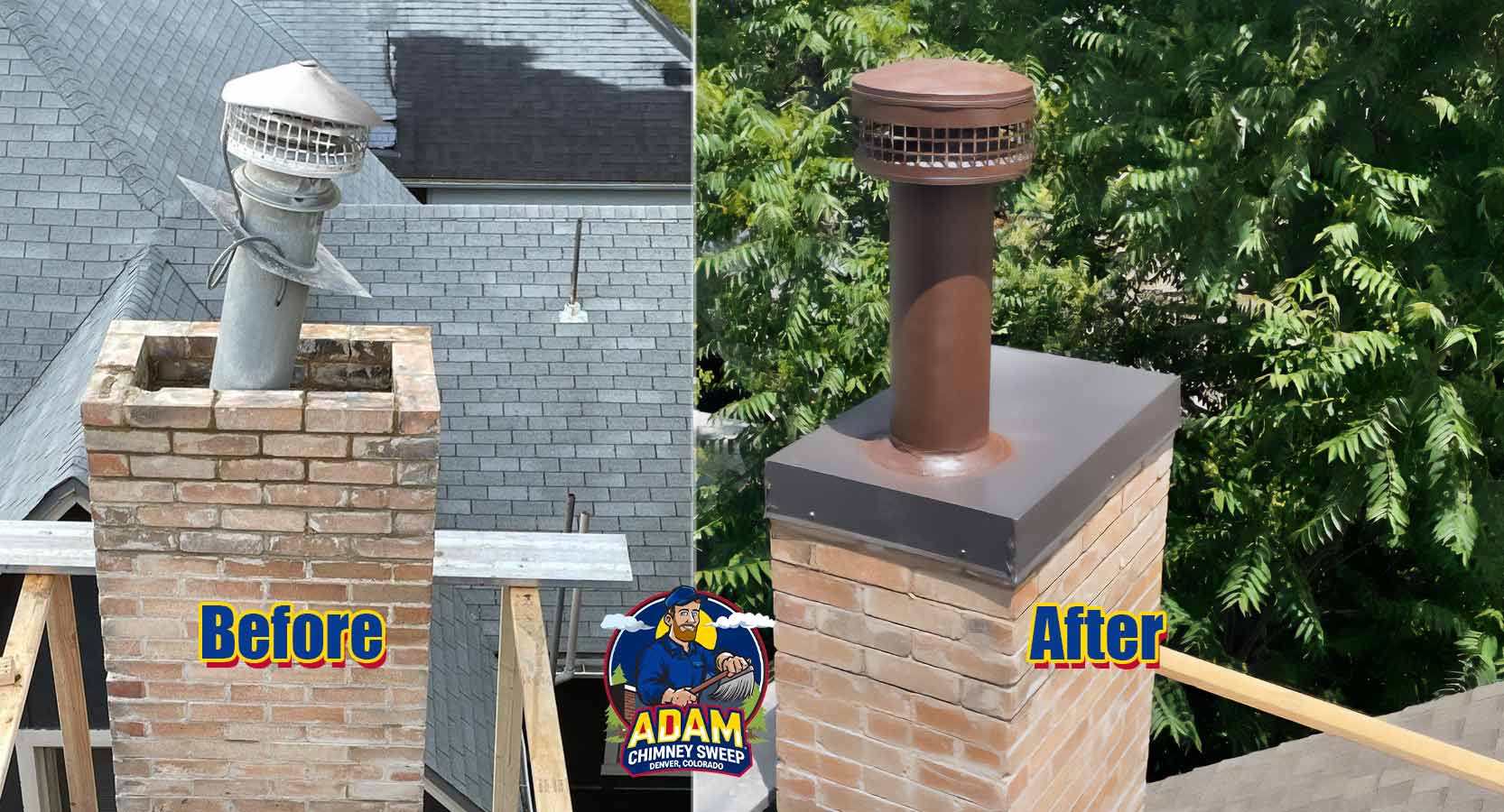
 Out on the northeastern plains in Logan County, Sterling homes take a beating from high winds, blowing dust and big temperature swings that wear masonry down fast. If you have lived here through a few winters, you already know the drill. The wind never really quits, and your chimney is standing up there in the worst of it every single day.
Wind-driven rain and grit work their way into worn caps and cracked mortar joints, and the swing from a warm afternoon to a freezing night speeds up spalling and crown cracks. Water gets into a hairline crack, freezes overnight, expands, and makes the crack a little bigger. Do that a few hundred times over a couple of winters and a small problem turns into a real repair.
Chimney & fireplace services in Sterling, CO
 Adam Chimney Sweep handles chimney and fireplace work across Sterling and the surrounding Logan County plains, and we have been protecting Colorado homes since 2001. We are a family-owned crew, not a franchise running a call center, so the person who looks at your chimney is the same person who does the work. Here is what we take care of:
- Chimney sweeping & cleaning — HEPA-vacuum sweeps that pull out creosote and soot without leaving a black mess on your floors or furniture.
- Inspections — dual-camera inspections that catch cracks, blockages and code issues early, before they turn into a bigger bill.
- Repairs & tuckpointing — crown rebuilds, firebox repair and masonry repointing to put failing joints back in shape.
- Caps, crowns & liners — stainless caps and relining that keep weather, animals and sparks where they belong.
- Fireplace & insert installation — safe, code-compliant wood, gas and insert installs.
Most homeowners call us for one thing and find out something else needs attention too. That is normal out here. A chimney is a system, and the cap, crown, mortar and liner all work together to keep water and weather out. When one part starts failing, the rest usually is not far behind. We will tell you what we see, show you the camera footage, and let you decide what to do. No pressure, no scare tactics.
Out on the Sterling plains, the wind is the thing that gets people. Folks think a little crack in the crown is no big deal, but that wind drives rain straight into it and it just gets worse every storm. I would rather seal a crown for a couple hundred bucks now than rebuild it in three years.
- Adam, Owner, Adam Chimney Sweep
Why Sterling homeowners choose Adam Chimney Sweep
Wind and weather on the eastern plains
Sterling sits out where there is nothing to slow the wind down. That open exposure is hard on the top of a chimney, which is the part that takes the brunt of it. We seal and rebuild weathered crowns, repoint failing mortar with proper tuckpointing, and fit wind-resistant caps that keep plains weather and critters out of your flue.
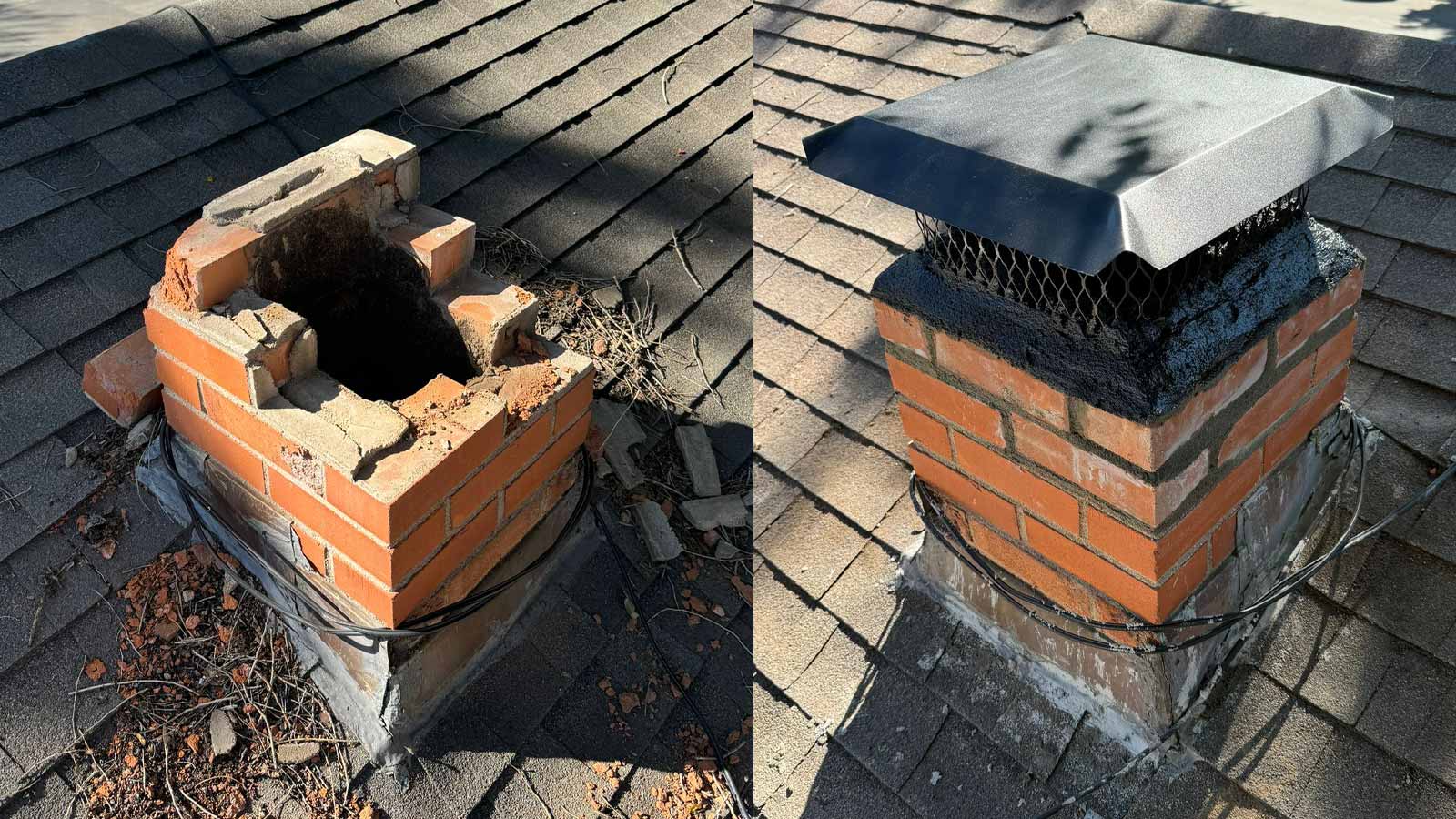
The most common thing we find on older Sterling chimneys is a cracked crown. The crown is the concrete slab at the very top that sheds water away from the flue. When it cracks, water runs down inside the masonry instead of off the sides, and from there it goes everywhere it should not. A good crown seal or rebuild stops that cold and usually pays for itself by saving the brick underneath.
Right behind crown cracks, we see worn-out mortar joints. The same freeze-thaw cycle that cracks crowns also eats away at the mortar between your bricks. Once a joint opens up, water gets behind the brick face and the spalling starts. Tuckpointing grinds out the bad mortar and packs in fresh, matched mortar, which locks the masonry back up and keeps it from coming apart.
What you get when we show up
We try to make this easy. You call, we give you a real price over the phone, and we show up when we say we will. Here is what is included on a typical visit:
- A straight answer on price before we start, so there are no surprises at the end.
- Drop cloths and a HEPA vacuum so your house is as clean when we leave as when we got there.
- A dual-camera look up the flue so you can see what we see instead of taking our word for it.
- A clear rundown of what needs doing now and what can wait, with honest options for both.
- A crew that treats your home like its own and cleans up after itself.
We work all over Logan County and the eastern plains, so we know what these chimneys go through. The wind, the dust, the dry air and the temperature swings all leave their mark, and we have seen just about every version of it.
How a chimney sweep and inspection works
If you have never had your chimney done, here is what to expect from start to finish. It is not complicated, and a normal visit does not take long.
- We talk first. You tell us what is going on, whether it is a yearly cleaning, a draft problem, water coming in, or you just bought the house and want it checked. We give you a price over the phone.
- We protect the room. Before any brushes come out, we lay down drop cloths and set up the HEPA vacuum so soot does not get loose in your house.
- We sweep the flue. We brush the flue from the right end and vacuum the creosote and soot as we go. This is the step that actually lowers your fire risk.
- We run the cameras. The dual-camera inspection goes up the flue and shows cracks, gaps in the liner, blockages, and any code problems. You get to watch the footage.
- We walk you through it. We show you what we found, tell you what is urgent and what is not, and give you upfront pricing on any repairs. You decide what happens next.
For wood-burning fireplaces, the National Fire Protection Association recommends a chimney inspection every year, and that is good advice for Sterling homes that run a fire hard all winter. You can read more about chimney safety standards at the National Fire Protection Association. A yearly look keeps small stuff small and catches the big stuff before it becomes a fire or a flood in your living room.
People ask me why they need a camera inspection if the chimney looks fine from the ground. The answer is that the problems that start fires and let water in are all on the inside where you cannot see them. I have pulled cameras out of flues in Sterling that looked perfect from the driveway and were cracked top to bottom inside.
- Adam, Owner, Adam Chimney Sweep
Warning signs your Sterling chimney needs attention
You do not have to be an expert to catch most of these. If you notice any of the following, it is worth a call before the next big storm or the next time you light a fire:
- White, chalky staining on the outside brick, which means water is moving through the masonry.
- Chips, flakes or crumbling faces on the brick, which is spalling from freeze-thaw damage.
- Bits of mortar or concrete showing up in the firebox or on the roof.
- A damp smell, water stains on the ceiling near the chimney, or rust on the damper.
- Smoke backing up into the room when you light a fire, which can mean a blockage or a draft problem.
- Animals, nests or a lot of debris in the flue, which usually means the cap is missing or damaged.
- A cap that is rusted through, bent by the wind, or just gone.
None of these fix themselves, and out here on the plains they tend to get worse faster than they would somewhere sheltered. The wind and the freeze-thaw cycle do not take a season off.
Caps and crowns: your first line of defense out here
If you only fix one thing on a Sterling chimney, make it the top. The cap and crown are what stand between the open sky and the inside of your flue, and on the eastern plains they take more abuse than anywhere else on the house.
A good stainless steel cap does three jobs at once. It keeps rain and snow out of the flue, it keeps birds, squirrels and raccoons from nesting in there, and the spark screen on it keeps embers from blowing onto your roof. Cheap caps rust out or get bent by the wind in a few years. We fit heavier stainless caps that are built to take the gusts we get out here and stay put.
The crown is the masonry slab under the cap. When it is solid, it sheds water out and away from the brick. When it cracks, it funnels water down into the chimney, and that is where the expensive damage starts. A crown seal works for early cracks, and a full rebuild handles a crown that is too far gone. Either way, fixing the crown protects everything below it.
Tuckpointing and masonry repair
Brick chimneys are only as strong as the mortar holding them together. On Sterling's plains, that mortar is fighting wind, grit and a freeze-thaw cycle that runs all winter. Over time the joints recede, crack, and start letting water behind the brick. Once that happens, the brick faces begin to flake and pop off, and a chimney that looked fine starts to crumble.
Tuckpointing is the fix. We grind out the failing mortar, then pack in fresh mortar matched to your existing joints so it blends in and seals the masonry back up. Done right, it stops water from getting behind the brick and adds years to the life of the chimney. It is one of the better-value repairs we do, because it heads off a full rebuild down the road. The EPA's Burn Wise program has solid background on keeping wood-burning systems running clean and safe, which you can find at EPA Burn Wise.
Liners and relining
The liner is the channel inside your chimney that carries smoke and gases out of the house. On older Sterling homes, the original clay tile liners crack and break down over time, especially after years of freeze-thaw. A cracked liner is a real problem, because it can let heat and combustion gases reach the wood framing around the chimney, and it makes a chimney fire far more likely to spread.
When a liner is shot, we reline with stainless steel. A stainless liner is sized to your appliance, holds up to high heat, and seals the flue so everything goes up and out the way it should. It is one of those repairs you do not think about until an inspection turns it up, and then you are very glad you found it before something went wrong. If you are running a wood stove or an insert, the right liner is what makes the whole setup safe.
A cracked liner is the one that keeps me up at night, because it is the difference between a chimney fire that stays in the flue and one that gets into your walls. Out here in Sterling we see a lot of old clay liners that are done, and folks have no idea until we run the camera. Relining is not glamorous, but it is the repair that actually keeps a family safe.
- Adam, Owner, Adam Chimney Sweep
Fireplace and insert installation
If your fireplace is tired, drafty, or you just want something that throws real heat and is easy to run, an insert is usually the answer. We install wood, gas and insert units to code, and we size the job to your home so it actually works the way it should. A gas insert in particular is hard to beat on a cold Sterling night, since you get heat at the flip of a switch with no hauling wood or cleaning ash.
Whatever you put in, the install has to be done right or it is not safe. That means the correct liner, the right clearances, and a proper connection to the flue. We handle all of it and walk you through how to run the unit before we leave.
Frequently asked questions
How often should I have my chimney swept in Sterling?
If you burn wood regularly through the winter, once a year is the right call. The NFPA recommends a yearly inspection, and a cleaning at the same time makes sense for most Sterling homes. If you only light a fire a few times a season, you can sometimes stretch it, but you still want eyes on it once a year to catch crown cracks and worn caps early.
How do I know if my crown or cap is bad?
From the ground, look for a cap that is rusted, bent or missing, and watch for chunks of concrete on the roof or in the firebox. Inside, water stains on the ceiling near the chimney or a damp smell are signs water is getting in up top. If you are not sure, that is what the camera inspection is for. We can tell you in one visit whether the top of your chimney needs work.
What does tuckpointing cost and is it worth it?
The price depends on how much of the mortar is failing, which is why we give you a real number after we look at it rather than a guess over the phone. It is almost always worth it, though. Tuckpointing a chimney before the brick starts spalling is a fraction of the cost of rebuilding the masonry after it comes apart. On the plains, where the freeze-thaw cycle is hard on mortar, staying ahead of it saves real money.
Do you handle water leaks around the chimney?
Yes. Most chimney leaks in Sterling trace back to a cracked crown, worn mortar, a bad cap, or failed flashing where the chimney meets the roof. We find the source with the camera and a roof-top look, then fix the actual cause instead of just patching the spot inside. Water damage only gets worse and more expensive the longer it sits, so it is worth catching early. For more on indoor air quality and safe home heating in Colorado, the state health department has helpful guidance at the Colorado Department of Public Health and Environment.
Book your Sterling chimney service
Whether it is a routine sweep, a camera inspection, a crown rebuild or a full reline, we will give you a straight price and do the job right. We know what these eastern-plains chimneys go through, and we have been keeping Colorado homes safe and warm since 2001.
You can also see the rest of what we do on our chimney services page, or read up on what a full chimney inspection covers before you book.
Ready to book a sweep, inspection or repair in Sterling? Call Adam Chimney Sweep at (720) 207-9232 for upfront pricing and a crew that treats your home like its own.