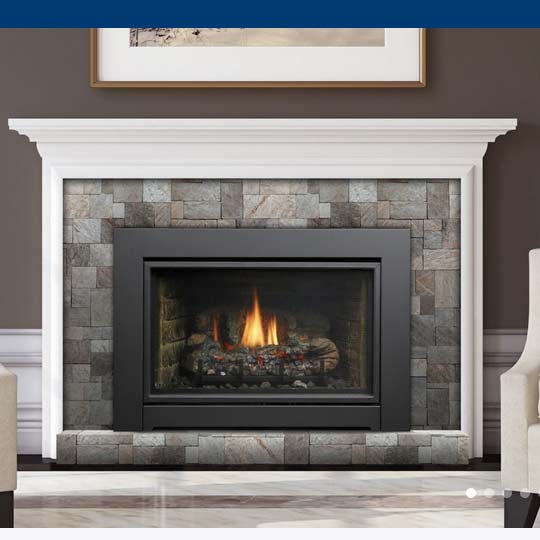
Kingsman IDV34 and IDV44 Direct Vent Gas Fireplace Inserts
 The Kingsman IDV34 and IDV44 direct vent gas fireplace inserts are two of the easiest ways to add real warmth and a clean, modern look to a Colorado home without the mess of burning wood. I've installed plenty of these across the Front Range and up into the high country, and they hold up. Whether you live down in Pueblo County or one of the quieter mountain towns up in Eagle County, both of these inserts give you steady heat, lower gas bills, and a flame that actually looks good through the glass.
Below I'll walk you through what these units do, how they differ, what installing one in a Colorado house really involves, and the questions folks ask me most often before they buy. If you're sweating the details, that's a good thing. A gas insert is something you live with for fifteen or twenty years, so it's worth getting right.
Want to understand how your existing setup fits with one of these? I broke down the parts of a chimney here.

 Get Kingsman Idv34 And Idv44 Direct Vent Gas Fireplace Inserts Installed Today!
Why Choose Kingsman Direct Vent Gas Fireplace Inserts?
Colorado weather doesn't mess around, and a heating setup that can't keep up gets old fast. A bad December cold snap will find every weak spot in your house. The Kingsman IDV34 and IDV44 inserts were built for exactly this kind of climate, and here's what they do well:
- Steady, dependable warmth: This matters in colder spots like Summit County, where winter can dig in hard and stay a while.
- Better energy efficiency: These units sip gas compared to an old open fireplace, which keeps heating costs down in budget-minded areas like Boulder County.
- A clean, modern look: The styling fits right into newer homes in design-focused areas like Pitkin County.
- Real convenience: Remote control operation means you can turn up the heat from the couch, which busy households in Jefferson County tend to love.
The thing people forget is that an open masonry fireplace actually loses you heat. It pulls warm air up the flue and out of the house. A sealed gas insert flips that math around, so you're heating the room instead of the sky.
I tell every homeowner the same thing: a gas insert isn't just a prettier fire, it's a heater. The old open fireplace your house came with was basically a hole that sucked warm air out the top. Drop a sealed Kingsman in there and you stop bleeding heat. Most folks notice the difference on the very first cold night.
- Adam, Owner, Adam Chimney Sweep
Key Features of the Kingsman IDV34 and IDV44 Inserts
1. Dual Burner System
Both the IDV34 and IDV44 run a dual burner setup, and it makes a real difference day to day. You get:
- A realistic flame effect that gives you the look of a wood fire without the splitting, hauling, or ash.
- Adjustable heat output, so you can dial warmth up or down with the season. That's handy in places like Chaffee County, where a 60-degree afternoon can turn into a 15-degree night.
2. Direct Vent Technology
The direct vent design is the part that makes these inserts both safe and efficient. Here's how it works:
- It pulls fresh air from outside for combustion, so it isn't burning up the air you've already paid to heat.
- It pushes exhaust straight back outdoors, which keeps combustion byproducts out of your living space.
- That sealed loop keeps your indoor air cleaner, a plus for homes in busier areas like Douglas County.
3. Heat-Radiating Ceramic Glass
The ceramic glass panel does more than look nice. It pushes heat back into the room instead of letting it escape. With this glass you get:
- More heat transferred to the space you're actually sitting in.
- A clean, clear view of the flame.
- Heat that lingers after the unit cycles down, which helps in high-altitude spots like Lake County.
4. Safety Features
I won't put anything in a customer's house that I wouldn't put in my own, and the Kingsman safety package is solid. Each unit includes:
- Safety screen barrier: Keeps hands and paws off the hot glass, which families in Weld County with little kids or pets appreciate.
- Oxygen depletion sensor: If oxygen in the room drops too low, the unit shuts itself off. That's a smart backstop in newer, tightly sealed homes.
The oxygen depletion sensor is the feature I won't budge on, especially in these newer airtight builds around Denver. People seal their houses up tight for efficiency, which is great, but a sealed house changes how everything inside it breathes. That sensor is your backup. I test it on every install before I hand over the remote.
- Adam, Owner, Adam Chimney Sweep
5. Customizable Design Options
One reason I like steering folks toward Kingsman is that you're not stuck with one look. You can match the insert to your room with:
- Decorative panels: Pick brick, black, or reflective to suit your space.
- Optional remote control: Adjust the flame and heat without getting up.
- Log set or glass media: Go traditional with logs or contemporary with glass, which works well for modern homes in Larimer County.
How a Kingsman Insert Installation Works
People ask me what installation day actually looks like, so here's the honest, step-by-step version. No two houses are identical, but the process usually runs like this:
- Inspection first. I look at your existing firebox, flue, and surround to confirm a direct vent unit will fit and vent properly. This is also where we catch any old damage hiding behind the brick.
- Measuring and sizing. We confirm whether the IDV34 or the IDV44 is the right call for your room size and opening. Guessing here is how people end up over- or under-heating a space.
- Gas line check. We verify your gas supply, whether it's natural gas or propane, and make sure the line can handle the insert's demand.
- Running the vent. The direct vent gets routed safely to the outdoors with the right clearances. At Colorado altitude this step gets extra attention.
- Setting the insert. The unit goes in, gets connected, sealed, and leveled, and the panels and media you picked get installed.
- Testing and walkthrough. I fire it up, check the burn, test the safety sensor, and then show you how to run the thing before I leave.
Most standard installs wrap up in a day. Retrofits in older masonry homes can take a bit longer if we find surprises behind the firebox, which, in houses built before the 1970s, we sometimes do.
Installation Considerations for Colorado Homes
Get a professional to handle the install if you're retrofitting an old fireplace in a historic home in El Paso County or putting a new unit into a modern condo in Adams County. A few things I always weigh before quoting a job:
- Ventilation requirements: The direct vent has to be placed correctly so the unit runs safe and efficient.
- Size considerations: Pick the right insert for the room. The IDV34 suits smaller spaces, the IDV44 handles larger or open areas.
- Fuel type: Natural gas or propane, chosen to match what your home already runs.
- Altitude adjustments: Colorado's higher elevations often need tweaks to the burner so the flame and heat come out right.
That last point trips up a lot of out-of-state installers. A burner tuned for sea level will not behave the same way at 9,000 feet. The air's thinner, so the fuel-to-air mix has to change, or you end up with a lazy yellow flame and soot on the glass.
Altitude is the one thing I see done wrong over and over. Somebody buys a great insert online, a general handyman drops it in, and then they call me a month later wondering why the flame looks weak and the glass keeps going black. Nine times out of ten the burner was never adjusted for our elevation. Kingsman gives you the high-altitude kit, but somebody actually has to install it.
- Adam, Owner, Adam Chimney Sweep
Cost and Energy Savings
A Kingsman insert is an investment up front, but it tends to pay you back over time. Here's where the savings show up:
- Lower heating bills: Direct vent systems spread heat efficiently, so your furnace runs less.
- Minimal maintenance costs: Gas inserts need far less upkeep than a wood-burning fireplace. No cord of wood, no constant ash cleanup.
- Higher home value: A clean, efficient fireplace insert helps at resale, especially in competitive markets like Boulder County.
One thing worth knowing: gas inserts still need a yearly check. The savings are real, but they hold up only if the unit stays clean and the venting stays clear. A ten-minute annual service keeps the efficiency where it should be and catches small issues before they turn into expensive ones.
Comparing Kingsman IDV34 and IDV44 Models
The biggest decision most people face is which of the two models to get. The short answer comes down to room size and how much heat you need. Here's the side-by-side:
| Feature | IDV34 | IDV44 |
|---|---|---|
| Heating Capacity | Up to 25,000 BTU/hr | Up to 40,000 BTU/hr |
| Ideal Room Size | Small to medium rooms | Large rooms or open spaces |
| Viewing Area | 32” W x 20” H | 40” W x 25” H |
| Remote Control | Optional | Included |
| Log Set Options | Yes | Yes |
If you're heating one normal-sized living room, the IDV34 is usually plenty. If you've got vaulted ceilings, an open floor plan, or a big great room you want to keep toasty during a snowstorm, the IDV44's extra output earns its keep. When I'm not sure, I'd rather size up a little than leave you cold.
Common Problems and Warning Signs to Watch For
Gas inserts are reliable, but they're not set-and-forget forever. Here are the warning signs that tell me a unit needs attention, and they're worth knowing so you can catch trouble early:
- Soot or black film on the glass: Usually a sign the flame isn't burning clean, often an altitude or air-mix issue.
- A weak or floppy yellow flame: A healthy gas flame should be steady with blue at the base. A lazy yellow flame means something's off.
- A faint gas smell: Shut the unit off and call a pro. Don't wait on this one.
- The pilot won't stay lit: Could be a thermocouple, the sensor, or a venting problem.
- Rattling or odd noises from the blower: Often just dust buildup, but worth a look before it gets worse.
None of these mean disaster, but they all mean "get it checked." A quick service call almost always beats letting a small problem ride through a whole winter.
Testimonials from Colorado Homeowners
“The Kingsman IDV34 has transformed our living room in Aspen. The warmth and ambiance it provides are unmatched!”— Sarah T., Pitkin County.
“We installed the IDV44 in our lodge in Breckenridge, and it keeps the entire cabin cozy even during heavy snowstorms.”— Mark L., Summit County.
“Having a direct vent fireplace was a game-changer for our home in Boulder. We love the energy savings!”— David P., Boulder County.
FAQs About Kingsman Fireplace Inserts
Q: How often do I need to service my Kingsman fireplace insert?
A: Once a year. An annual inspection and cleaning keeps it burning clean, running efficiently, and safe.
Q: Can I install the Kingsman insert myself?
A: I'd strongly advise against it. You're dealing with a gas connection and a venting system that has to meet local code, and the high-altitude tuning takes the right tools and know-how. Get a pro.
Q: Is a direct vent system better than vent-free options?
A: For most homes, yes. Direct vent is more efficient and safer because it sends combustion gases outside instead of into your living space.
Q: How long does a gas insert last?
A: With yearly service, you can reasonably expect 15 to 20 years out of a quality Kingsman unit. Skip the maintenance and that number drops.
Q: Will it still heat my house if the power goes out?
A: The fire itself runs on gas, so you'll still get radiant heat during an outage. The electric blower won't run without power, but the warmth is still there, which is a real comfort during a Colorado winter storm.
Where to Buy Kingsman Fireplace Inserts in Colorado
Kingsman fireplace inserts are sold through authorized dealers and professional installers all over Colorado, including:
- Denver Fireplace Supply – Denver, CO
- Mountain Home Stove & Fireplace – Eagle, CO
- Pueblo Fireplace & Patio – Pueblo, CO
For more details and to find a local dealer, you can check the official Kingsman website. It's also smart to read up on safe fireplace and heating practices through the EPA's Burn Wise program, which has good plain-language guidance on cleaner home heating.
Get Professional Fireplace Installation in Colorado
Adam Chimney Sweep handles expert installation of the Kingsman IDV34 and IDV44 inserts across Pitkin, Summit, Boulder, Larimer, Lake, Douglas, Weld, Otero, Jefferson, and El Paso Counties. We're a family-owned shop, and we've been doing this around Denver since 2001, so we know how Colorado homes and Colorado altitude treat these units.
If you're thinking about a gas insert, or you already bought one and want it installed right, give me a call at (720) 207-9232. Not sure your chimney's ready for an insert yet? Start with a chimney inspection in Denver and we'll tell you exactly where things stand before you spend a dime on the unit. You can also see our full lineup of chimney and fireplace services if you've got more than one project in mind.