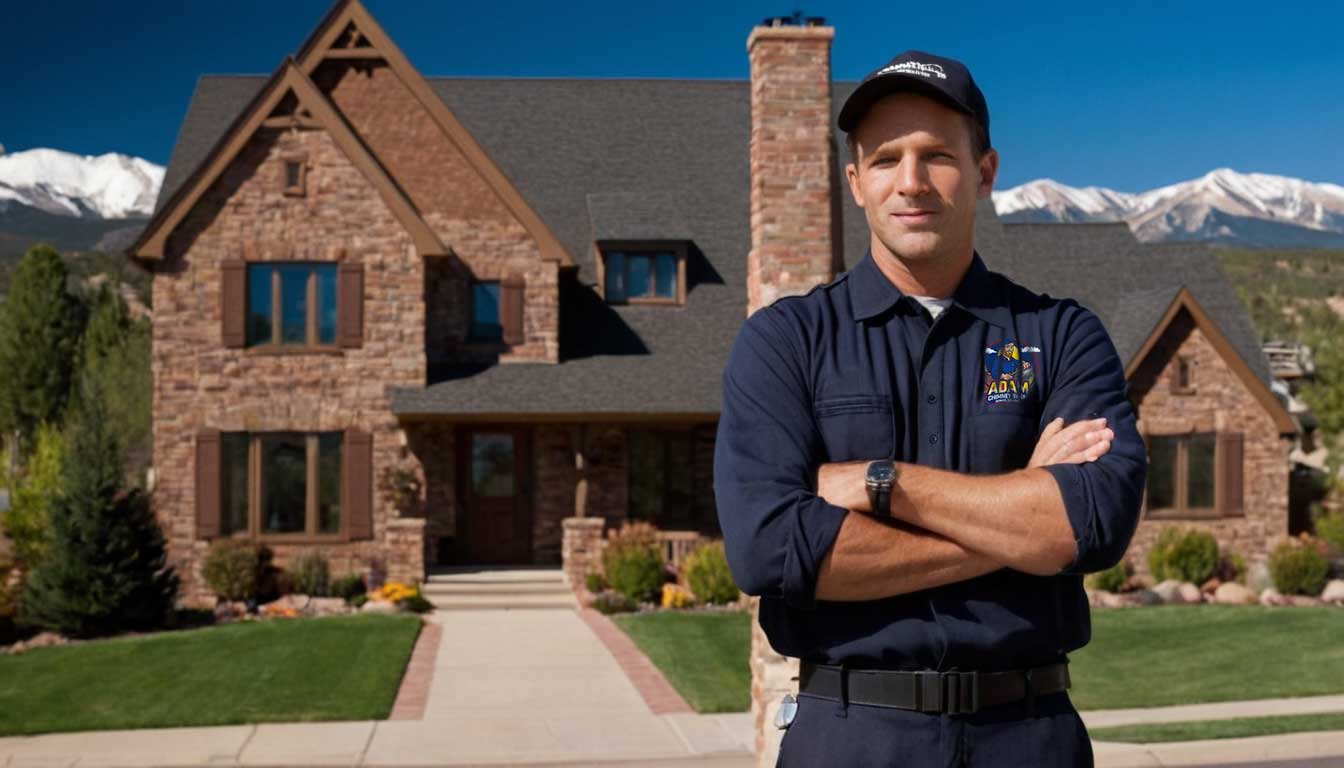
 Living in Edwards, Colorado, just half a mile from the Edwards River Park, you already know your chimney isn’t a luxury. It’s what gets your family through the long, cold winters at 7,200 feet. I’m Adam, and I’ve been serving Edwards and the Eagle River Valley for years. Mountain chimneys deal with problems that Denver and Front Range chimneys never see, and that changes how I work up here.
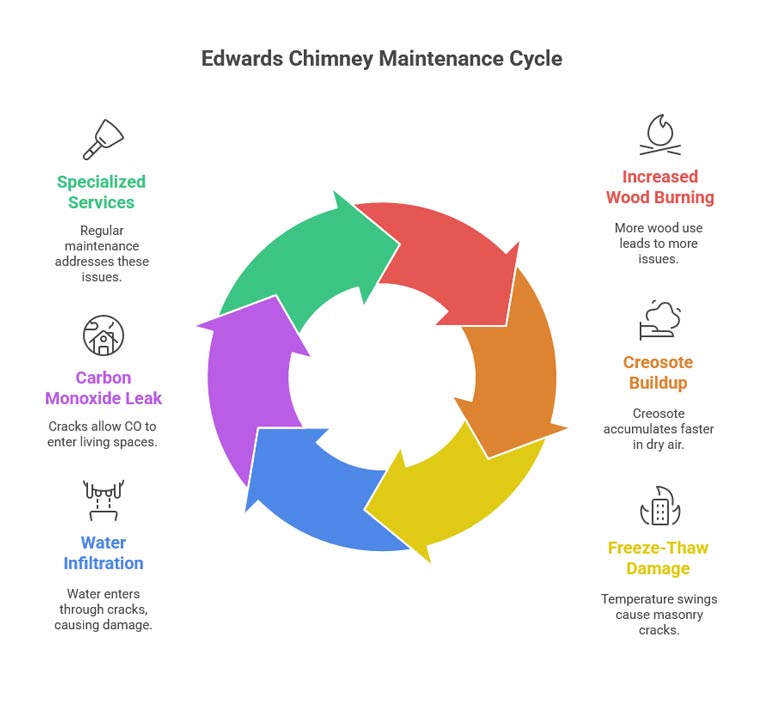
The temperature swings are brutal. One day it’s 50 degrees, the next you’re waking up to single digits and two feet of fresh powder. That freeze-thaw cycle is murder on masonry. The altitude pulls the draft differently than it would at sea level. The drier air lets creosote build up faster. And I haven’t even mentioned what happens when a family of raccoons decides your unused summer chimney looks like prime real estate.
Why Edwards Chimney Services Need Specialized Attention
 Edwards chimney services aren’t the same as the work I’d do for a house down in the valley, and the reason comes down to how much you burn and how hard the climate hits. Most folks up here burn wood more than people lower down. Natural gas prices bounce around, and honestly, there’s nothing like a real wood fire when you’re watching snow pile up on the deck. But more burning means more wear, more creosote, and more risk.
I’ve seen chimneys in Edwards that look fine from the ground and are one good fire away from a bad night. The crown cracks from freeze-thaw, water sneaks in, and by spring you’ve got spalling brick. Or the flue liner splits in a spot you can’t see from below, and carbon monoxide starts leaking into the living room instead of going up and out where it belongs. That’s the kind of thing a camera catches and a flashlight never will.
Here’s a quick rundown of what makes our high country tougher on a chimney:
- Freeze-thaw damage: water gets into mortar and brick, freezes overnight, expands, and breaks the masonry apart a little more each cycle.
- Faster creosote buildup: dry mountain air and heavy wood use mean tar can glaze the flue in a single season.
- Tricky draft: thinner air at 7,200 feet changes how smoke pulls, so a flue that drafted fine at sea level can struggle here.
- Wildlife: raccoons, squirrels, and birds treat an open flue like a free den, especially in the warm months.
- Slower cure times: cold and altitude both stretch how long mortar and crown coat need before they’re safe to use.
Our Edwards Chimney Services: What We Actually Do
Let me walk you through what we offer, because “our services” isn’t just marketing speak. It’s what I personally stand behind every time my team shows up at your door.
Chimney Inspection and Cleaning
Starting at $199, our inspection and cleaning service is the foundation of everything else. Here’s what that includes:
| Service Component | What We Check | Why It Matters |
|---|---|---|
| Visual Inspection | Crown, cap, flashing, masonry | Identifies apparent damage before it becomes expensive |
| Interior Video Scan | Flue liner condition, creosote buildup, blockages | Catches hidden problems that cause house fires |
| Damper Check | Seal quality, operational function | Poor dampers waste hundreds in heating costs annually |
| Clearance Verification | Distance to combustibles, proper ventilation | Code compliance prevents insurance issues |
| Draft Test | Smoke draw, airflow patterns | Confirms gases exit properly, not into your home |
After the inspection, we sweep everything clean. I’m talking about pulling out all that Stage 1, 2, or 3 creosote, including the really nasty glazed stuff that won’t come off without specialized tools. We use professional-grade brushes and a HEPA vacuum, so your house stays clean while we work.
I’ve been doing this for over a decade, and I still see homeowners shocked when I show them what came out of their chimney. A quarter-inch of creosote can ignite at 451°F, and your fireplace gets hotter than that every single time you light it. That’s why I won’t leave an Edwards job until the flue is actually clean, not just brushed.
- Adam, Owner, Adam Chimney Sweep
Chimney Repair Services
Chimney repair in Edwards isn’t the same as repair work in milder climates. The materials we use have to take extreme temperature swings, and the techniques have to account for how things expand and contract season to season.
Masonry Repair and Brick Tuckpointing
Brick tuckpointing is probably our most common repair in Edwards. The freeze-thaw cycle chews up mortar joints, and once water gets behind the brick face, the damage picks up speed fast.
| Repair Type | Average Cost Edwards Area | Timeline | What’s Included |
|---|---|---|---|
| Minor Tuckpointing | $800-$1,200 | 1-2 days | Repointing 20-50 sq ft, matching mortar color |
| Major Tuckpointing | $2,500-$4,500 | 3-5 days | Full chimney repoint, weather seal application |
| Brick Replacement | $150-$300 per brick | Varies | Matching brick, mortar work, and seal |
| Chimney Crown Repair | $600-$1,800 | 1-2 days | Crown coat or complete rebuild, depending on damage |
| Flashing Replacement | $400-$900 | Half day | New metal flashing, proper seal to the roof |
The labor costs here reflect mountain work. Getting materials to Edwards, especially in winter, adds to the bill. We’re also working at altitude, which stretches cure times for mortar and sealant. A job that takes 24 hours to cure at sea level might need 36 to 48 hours up here.
When I’m working on a chimney crown, I use a specific mix made for freeze-thaw cycles. Standard crown coat products crack within a season at this elevation. The stuff we use costs more and lasts 15 to 20 years instead of 5 to 7.
Chimney Cap and Chase Cover Installation
If you don’t have a proper chimney cap, you’re asking for trouble. I’ve pulled everything from bird nests to full-grown raccoons out of Edwards chimneys. A good cap keeps animals out, stops rain and snow from getting in, and blocks embers from escaping while you’ve got a fire going.
| Cap Type | Price Range | Best For | Lifespan |
|---|---|---|---|
| Basic Galvanized Steel | $150-$250 installed | Budget-conscious, temporary solution | 5-8 years |
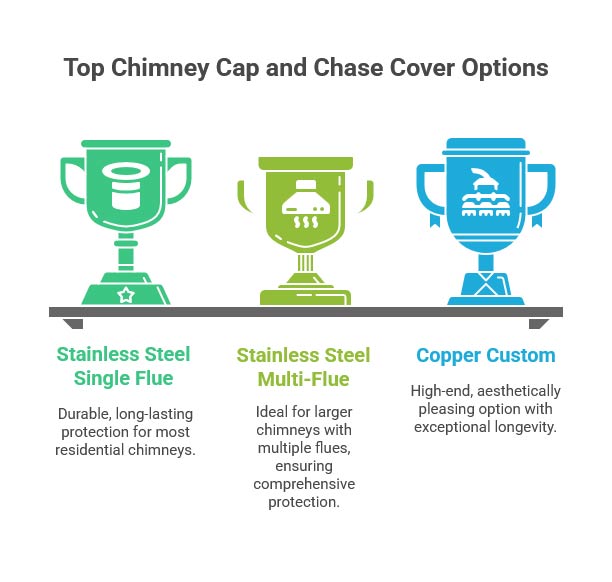
| Stainless Steel Single Flue | $300-$500 installed | Most residential chimneys | 20-30 years |
| Stainless Steel Multi-Flue | $600-$1,200 installed | Larger chimneys, multiple flues | 20-30 years |
| Copper Custom | $800-$2,000+ installed | High-end homes, aesthetic preference | 50+ years |
| Chase Covers (Stainless) | $400-$800 | Prefab fireplaces | 25-35 years |
We stock several cap styles, including adjustable safety caps and custom multi-flue caps, which work well for larger Edwards homes with multiple fireplaces.
For homes with prefab fireplaces, which are common in newer Edwards construction, a proper chase cover is critical. The original builder-grade covers rust out in 7 to 10 years here. We swap them for stainless steel that’ll outlast the house.
People treat the cap as the cheap part they can skip, and then I’m the one fishing a raccoon nest out of their smoke chamber in July. Up in Edwards I won’t put a galvanized cap on a home I expect to last, because the wind and snow off these slopes eat it alive. Spend a little more on stainless once and you’ll forget it’s even up there.
Firebox Repair and Restoration
The firebox takes the most abuse of any part of your fireplace. Direct flame, thermal cycling from room temperature up past 1,000°F and back, sometimes more than once a day in an Edwards winter. That’s rough on any material.
Common Firebox Issues in Edwards:
- Cracked Firebrick: Develops from thermal cycling
- Average repair cost: $400-$800
- Involves removing damaged bricks, fitting new refractory brick, and high-temp mortar
- Timeline: 1 day plus 24-48 hour cure time before use
- Deteriorated Refractory Panel: Common in prefab units
- Average replacement cost: $300-$600 per panel
- Must use manufacturer-specific panels for safety
- Timeline: Half-day installation, 24-hour cure
- Damaged Firebox Floor: Usually from direct log contact
- Average repair cost: $250-$500
- May require a new firebrick base or refractory concrete
- Timeline: 1 day plus cure time
- Smoke Chamber Repair: Water damage or structural issues
- Average cost: $800-$2,000
- Complex work requiring parging or relining
- Timeline: 2-3 days, depending on the extent
Chimney Lining Services
Chimney lining is absolutely critical to safe operation, and I take it seriously. An intact liner is the only thing between toxic combustion gases and the air your family breathes.
| Liner Type | Cost Per Linear Foot | Total Cost (20′ chimney) | Best Application | Warranty |
|---|---|---|---|---|
| Stainless Steel Rigid | $45-$65 | $900-$1,300 + labor | Straight runs, gas appliances | 15-25 years |
| Stainless Steel Flexible | $35-$55 | $700-$1,100 + labor | Offset chimneys, wood burning | 15-25 years |
| Aluminum Flexible | $25-$35 | $500-$700 + labor | Gas only, not suitable for wood | 10-15 years |
| Cast-in-Place | $75-$125 | $1,500-$2,500 + labor | Damaged masonry chimneys | Lifetime |
Labor Costs: Installing a liner is skilled work. In Edwards, expect to pay $800-1,500 for labor, depending on chimney height, accessibility, and complexity. A 25-foot chimney with two 90-degree offsets takes a lot longer than a straight 15-foot run.
We usually recommend stainless steel for Edwards homes. It handles the temperature swings, works with wood or gas, and lasts long enough that you won’t think about it again for 20-plus years.
Here’s how a typical liner install goes when we’re on your roof:
- We measure the flue with laser tools so the liner is sized right the first time, not forced or kinked.
- We drop or feed the liner down the chimney, working around any offsets the old clay tile created.
- We connect it to your appliance or fireplace and seal the top and bottom so nothing leaks past it.
- We insulate where it’s needed, which matters a lot at altitude for keeping the flue warm and the draft strong.
- We finish with a top plate and cap, then run a draft test to make sure smoke pulls the way it should.
Fireplace Installation and Gas Insert Services
Sometimes repair isn’t enough. Maybe you’ve got an old masonry fireplace that barely throws heat, or you want to switch to gas for the convenience. That’s where our fireplace installation and gas insert services come in.
Gas Insert Installation Breakdown:
| Component | Cost Range | Details |
|---|---|---|
| Gas Insert Unit | $2,500-$6,500 | Quality units like the Kingsman Gas Fireplace Insert |
| Liner Kit | $400-$800 | Aluminum flexible liner for gas venting |
| Gas Line Extension | $300-$800 | If the existing gas line isn’t nearby |
| Electrical Work | $150-$400 | For blower and ignition systems |
| Labor | $800-$1,500 | Professional installation, 1-2 days |
| Permits | $50-$150 | Eagle County requirements |
| Total Project | $4,200-$10,000 | Depends on complexity and unit choice |
Last winter I put a gas insert in for a couple just off Highway 6, right by the elementary school. They were spending $400 a month on propane to heat their 2,400 square foot home, and the insert cut that by about 60%. It paid for itself in three winters, and now they’ve got zone heating they run from a remote. In a place like Edwards, where propane bills can wreck a budget, that’s the kind of upgrade that just makes sense.
- Adam, Owner, Adam Chimney Sweep
Want to see what a clean gas insert install actually looks like before we ever show up at your door? This walkthrough covers the same kind of repair and cleaning work we bring to Edwards homes every week.
Dryer Vent Services
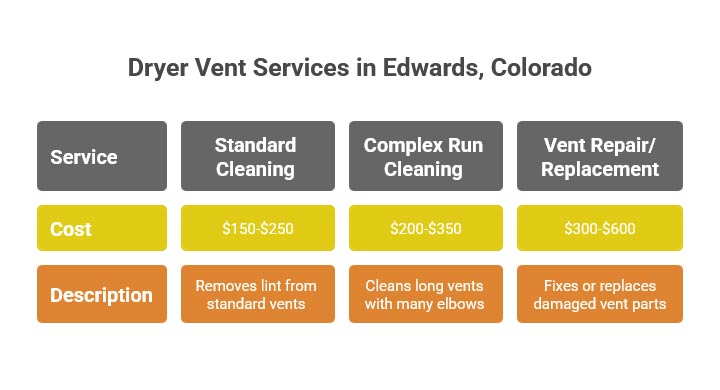
This isn’t technically chimney work, but dryer vent cleaning is something we do because it uses similar tools and it stops house fires. In Edwards, where homes are often built into hillsides, dryer vents can run 25 to 30 feet with multiple elbows. That’s a setup for lint buildup and a real fire risk.
- Standard Dryer Vent Cleaning: $150-$250
- Complex Run Cleaning: $200-$350
- Vent Repair/Replacement: $300-$600
We suggest annual dryer vent cleaning if you do more than 4 to 5 loads a week, or at least every 2 years no matter how often you run it.
Wildlife Removal
Animal removal is something I do more in Edwards than anywhere else I work. The wildlife here is persistent. Raccoons, squirrels, chimney swifts (the law protects them, so removal has to wait until they naturally migrate), bats, and once in a while even owls.
| Service | Average Cost | What’s Involved |
|---|---|---|
| Basic Removal | $200-$400 | Remove nest/animal, clean area, install cap |
| Complex Removal | $400-$800 | Multiple animals, damage repair, and extensive cleaning |
| Prevention (Cap Installation) | $150-$500 | A proper cap prevents future issues |
| Sanitization Service | $150-$300 | Disinfect after animal occupation |
We use humane methods. Usually that means waiting for the animal to leave on its own, since they don’t sit in a chimney 24/7, then installing a cap before they come back. In some cases we’ll fit a one-way door that lets them out but not back in.
Labor Costs and Hidden Expenses
Let me be straight with you about what drives costs in Edwards. It’s not just the work itself. It’s everything around it.
Labor Rate Breakdown:
| Work Type | Hourly Rate | Why This Rate |
|---|---|---|
| Standard Sweep/Inspection | $95-$125/hour | Licensed, insured, CSIA certified |
| Masonry Repair | $100-$150/hour | Specialized skill, mountain conditions |
| Liner Installation | $125-$175/hour | Complex, safety-critical work |
| Gas Fitting Work | $100-$140/hour | Licensed gas work, permit requirements |
Hidden Costs You Should Know About:
- Travel: Edwards is 2-plus hours from our leading shop in Aurora. We don’t charge extra for Edwards service calls, but that drive time is built into scheduling. We batch Edwards jobs when we can to keep costs down.
- Permits: Eagle County requires permits for most chimney work beyond basic cleaning. That’s $50–$150, depending on the work type. We handle the process, but the cost passes through.
- Weather Delays: Mortar and crown coat won’t cure right below 40°F. If we’re halfway through a job and the temperature drops, we have to stop and reschedule. This rarely adds cost, but it stretches the timeline.
- Material Transport: Some specialty items aren’t stocked locally. We might need to order specific brick colors, custom liner sizes, or specialty caps. Shipping to Edwards adds 10-20% to material costs.
- Access Challenges: A lot of Edwards homes sit on slopes, which makes the roof hard to reach. If we need scaffolding or special gear to get to your chimney safely, that adds $200-$500 to the job.
A Real Edwards Customer Story
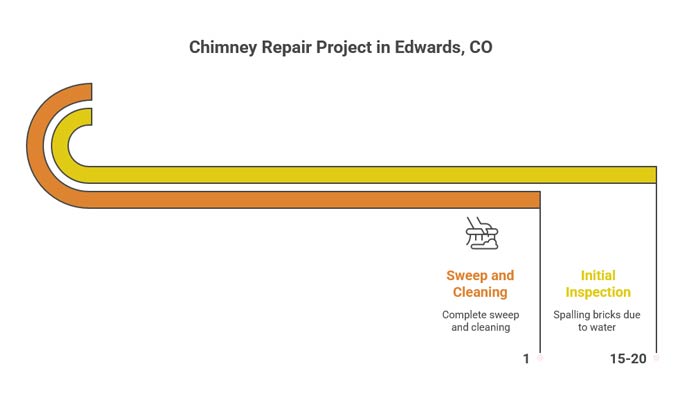
Let me tell you about a job from last fall. I got a call from a homeowner on Miller Ranch Road, about three-quarters of a mile from the Eagle Valley Library. They’d just bought the house, a beautiful property with mountain views, but the home inspection had flagged the chimney.
When I got there, here’s what I found:
- The chimney crown had a 3-inch crack running the full width
- Water had been entering through that crack for at least two winters
- The freeze-thaw cycle had caused spalling on 15-20 bricks
- The damper was rusted partially open (goodbye, heating efficiency)
- There was about 1/4″ of Stage 2 creosote throughout the flue
- And, this was the kicker, there were two distinct raccoon nests in the smoke chamber
The previous owner had clearly not maintained this chimney in years. Maybe they rarely used it. Maybe they didn’t know any better. Either way, it was a disaster waiting to happen.
The Work We Did:
- Complete sweep and cleaning – $199
- Raccoon nest removal and sanitization – $350
- Chimney crown rebuild – $1,200
- Tuckpointing and brick replacement – $2,400
- Damper replacement – $400
- Stainless steel cap installation – $450
- Flashing inspection and minor repairs – $300
Total Project: $5,299
Was it expensive? Yes. Was it necessary? Absolutely. That crack in the crown was letting water straight into the masonry. Give it one more winter and they’d be looking at $15,000-$20,000 in structural chimney work, maybe a full rebuild from the roofline up.
The homeowner was upset at first, since this wasn’t in their renovation budget. But I showed them photos of what happens when water gets into masonry and freezes. I explained that the creosote buildup was already a fire hazard. And I pointed out that the open damper was probably costing them $50-$75 a month in wasted heat.
We worked out a payment plan. I prioritized the safety work first (cleaning, damper, cap) and scheduled the cosmetic tuckpointing for spring. They ended up getting everything done because they saw the value.
Last time I checked in, and I do follow up with customers, they were burning fires regularly, their heating bills had dropped noticeably, and they had zero worries about their chimney. That’s the outcome I want for every customer.
Warning Signs Your Edwards Chimney Needs Attention
You don’t need to climb on the roof to spot trouble. Most of the time the chimney tells on itself if you know what to look and listen for. Call us if you notice any of these:
- White chalky staining on the outside brick, which usually means water is moving through the masonry.
- A strong campfire or tar smell coming from the fireplace, especially on warm or humid days. That’s creosote.
- Smoke pushing back into the room when you light a fire instead of pulling up the flue.
- Chunks of brick, mortar, or rusty flakes showing up in the firebox or on the ground near the chimney base.
- Daylight or water stains on the ceiling or wall around where the chimney passes through.
- Scratching, chirping, or shuffling sounds up in the flue, which almost always means an animal moved in.
None of these mean panic. They mean book an inspection before the small problem turns into the $12,000 problem.
Seasonal Considerations in Edwards
Edwards sits at 7,200 feet, and that matters for chimney work more than most people figure.
Spring (April-May)
- Best time for: Inspection and repairs before next season
- Why: Mild weather, materials cure well, no rush
- Typical wait time: 1-2 weeks for scheduling
Summer (June-August)
- Best time for: Major projects like relining and rebuilds
- Why: Long daylight, stable weather, materials cure ideally
- Typical wait time: 2-3 weeks (busiest season)
Fall (September-October)
- Best time for: Pre-winter inspection, minor repairs
- Why: Catch problems before heavy use begins
- Typical wait time: 1-2 weeks, climbing to 3-4 by late October
Winter (November-March)
- Best time for: Emergency repairs only
- Why: Weather limits what’s possible
- Typical wait time: For emergencies, same day to 3 days
I always tell Edwards homeowners to schedule the inspection in May or early September. If you wait until October and we find a problem, you might be looking at a multi-week wait while we finish emergency calls. Then you’re either not using your fireplace or using it when it isn’t safe. Plan ahead and you skip all of that.
- Adam, Owner, Adam Chimney Sweep
Equipment We Use (And Why It Matters)
Professional chimney work takes professional tools. I’ve put over $30,000 into equipment specifically for mountain work, and here’s some of what we bring to every Edwards job:
- Professional chimney brushes (39-inch rods for straight runs, flex rods for offsets)
- HEPA vacuum systems (12,000+ CFM, so your house stays clean)
- High-resolution chimney cameras (see exactly what I see)
- Laser measuring tools (for precise liner sizing)
- Specialized masonry tools (mountain-grade mortar requires specific trowels)
- Safety equipment (harnesses, scaffolding, roof jacks rated for altitude work)
When I quote $199 for an inspection, part of that price covers this equipment. A DIY inspection with a flashlight and a ladder might seem cheaper, but you won’t see what I see with a camera that zooms and pans inside your flue.
Understanding Edwards Chimney Code Requirements
This part matters: Edwards is in Eagle County, which enforces the International Building Code with local amendments. For chimney work, that means:
Basic Code Requirements:
- Clearances: 2 inches minimum from combustible materials for masonry chimneys, more for metal chimneys
- Height: Chimney must extend 3 feet above the roof penetration and 2 feet above any point within 10 feet
- Liners: Required for all fuel-burning appliances; must be sized appropriately for the appliance
- Caps: Spark arrestors required in wildfire zones (that’s most of Edwards)
- Flashing: Must be properly installed and sealed to prevent water entry
Permit Requirements:
Most chimney work beyond basic cleaning needs a permit in Edwards. Here’s what triggers it:
| Work Type | Permit Required? | Typical Cost | Processing Time |
|---|---|---|---|
| Cleaning/Inspection | No | N/A | N/A |
| Crown repair | Generally no | N/A | N/A |
| Liner installation | Yes | $75-$125 | 3-5 business days |
| Structural repair | Yes | $100-$150 | 5-7 business days |
| Gas insert installation | Yes | $75-$150 | 3-5 business days |
| New construction | Yes | $150+ | 7-14 business days |
We handle all permit applications for our customers. It’s included in our service, so you don’t pay extra for our time dealing with the county.
Frequently Asked Questions
Q: How often should I have my chimney cleaned in Edwards?
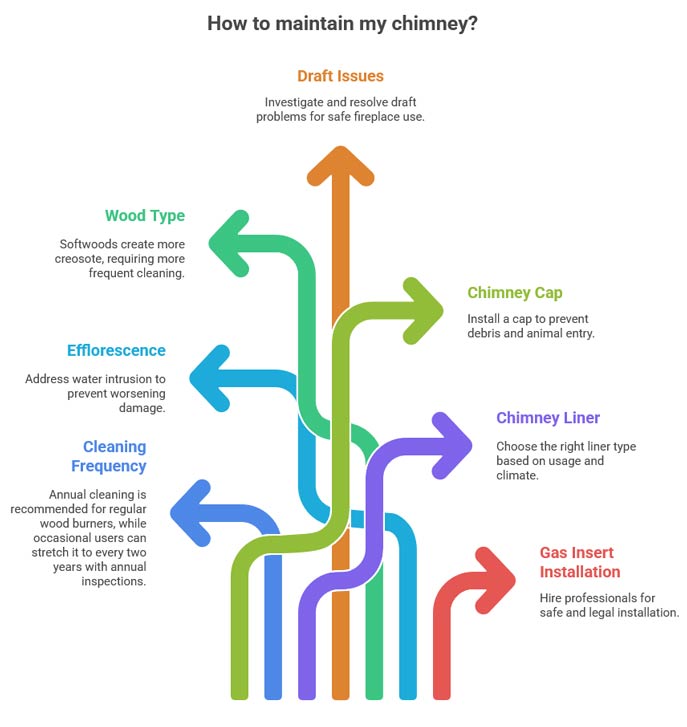
A: If you burn wood regularly, more than 3 times a week through winter, I recommend annual cleaning. For occasional use, under 40 fires a year, you can probably stretch it to every two years, but still get an annual inspection. The altitude and dry air here let creosote pile up faster than it does at lower elevations.
Q: What’s that white chalky stuff on my chimney bricks?
A: That’s efflorescence, salt deposits that show up when water moves through masonry. It’s a sign water is getting into your chimney, usually through a cracked crown or worn-out mortar joints. It’s not an emergency, but it points to a problem that gets worse if you leave it alone.
Q: Can I burn pine or aspen in my fireplace?
A: You can, but softwoods like pine and aspen create more creosote than hardwoods like oak or ash. If you’re burning pine, you’ll need to clean more often. In Edwards, where lodgepole pine and aspen are easy to come by and often free, plenty of people burn them. Just know you might need cleaning every season instead of every other one.
Q: My fireplace smokes when I first light it. Is that normal?
A: No, that points to a draft problem. Common causes are a cold chimney (warm the flue with a rolled-up newspaper before lighting your main fire), a closed or partly closed damper, or not enough air in the room. At Edwards’ altitude the draft can be trickier than at sea level. If it keeps happening, call us for an inspection, because there might be a blockage or a structural issue.
Q: Do I really need a chimney cap?
A: Yes. Without a cap you’re inviting animals, rain, snow, leaves, and debris into your chimney. I’ve seen flues completely blocked by bird nests or raccoon debris. A $300-$400 cap is cheap insurance against a $5,000 emergency repair or a house fire. Every chimney should have one.
Q: What’s the difference between a cap and a damper?
A: A chimney cap sits on top of your chimney and keeps things from getting in from above. A damper sits just above your firebox (or sometimes at the top, like our lock-top cap damper) and controls airflow. You need both. The cap keeps stuff out; the damper stops heat loss when the fireplace isn’t in use.
Q: How long does a chimney liner last?
A: Stainless steel liners usually last 15-25 years with regular use. Clay tile liners can go 50-plus years if they’re not damaged, but they crack more easily from thermal cycling. Aluminum liners (gas only) might last 10-15 years. In Edwards’ harsh freeze-thaw climate, plan on the lower end of those ranges.
Q: Can I install a gas insert myself?
A: Technically, if you’re a licensed gas fitter, yes. But most homeowners aren’t licensed, and DIY gas work is both illegal and dangerous. Gas work needs permits in Eagle County, and the inspector will want to see a licensed contractor’s work. Beyond the legal side, a bad install can lead to carbon monoxide poisoning or gas leaks. This is a job for professionals. Our gas insert installation services include all the proper permits and inspections.
Q: What causes creosote, and why is it dangerous?
A: Creosote forms when wood smoke condenses inside your chimney. It goes through three stages: Stage 1 is flaky and easy to remove, Stage 2 is tar-like, and Stage 3 is hard, glazed, and stubborn. All three burn. Chimney fires usually start when Stage 2 or 3 creosote ignites, and those fires can hit 2,000°F, hot enough to crack masonry, warp metal chimneys, and spread into your house. It’s serious.
Q: How much does a full chimney rebuild cost in Edwards?
A: Full rebuilds from the roofline up usually run $8,000-$15,000, depending on height and complexity. Complete rebuilds from the ground up cost more than $25,000. That’s why we push regular maintenance. A $199 annual inspection and $800 in preventive repairs beats a $12,000 emergency rebuild every time.
Q: Do you offer financing or payment plans?
A: Yes. For larger projects over $2,000, we work with financing companies that offer competitive rates. We also offer in-house payment plans for qualified customers. I’d rather set up a payment arrangement than watch you put off critical safety work. Check our chimney and fireplace pricing page for current options, or contact us directly to talk it through.
Q: What’s your service area besides Edwards?
A: We cover the entire Eagle River Valley, Vail, Avon, Minturn, and the surrounding areas. Check our full service areas page for specifics. We also serve the Denver metro area and most of the Front Range. If you’re not sure whether we reach your area, just ask.
Q: Can I schedule a same-day appointment?
A: Sometimes, especially in late spring and summer. During peak season (September-November and January-March), we usually book 1-2 weeks out. For emergencies like a chimney fire, an active animal in the chimney, or carbon monoxide concerns, we’ll do everything we can to get someone to you within 24 hours.
Getting Started: Next Steps
If you’re in Edwards reading this, you’re probably either due for an inspection or you’ve already spotted a problem. Either way, here’s what I recommend:
- Schedule an inspection – Our $199 inspection and cleaning service is the foundation. We can’t give you accurate repair pricing without seeing the real condition. You can request a quote online or call us directly.
- Plan ahead – if you’re reading this in October and hoping to burn fires all winter, you’re cutting it close. Book spring or early fall when we have more availability and the weather is right for any repairs.
- Budget realistically – a well-maintained chimney costs $200-400 a year for inspections and minor upkeep. A neglected one can suddenly demand $5,000-plus in emergency repairs. Regular maintenance is always cheaper than emergency fixes.
- Ask questions – I’d rather spend 20 minutes explaining something on the phone than have you decide with half the picture. Call, email, ask away. Our chimney and fireplace blog has more detailed articles on specific topics.
- Stay informed – learn about our company and what we stand for. If you’re interested in learning the trade yourself, we’re always looking for good people, so check our chimney career opportunities.
You can also reach me directly at (720) 207-9232 if you’d rather just talk it through. I’ve been doing this in Colorado since 2001, and a quick call usually saves everybody time.
Why Choose Us for Edwards Chimney Work
Look, I could fill this section with generic claims about being the best and most trusted in the valley. Instead, here’s what actually sets us apart:
We’re licensed and specifically insured for high-altitude work. Not every chimney contractor is. Mountain conditions call for a different approach.
We use the right materials. I don’t use standard mortar mixes in Edwards. I don’t install builder-grade caps. I use products built for your climate, even when they cost more, because I stand behind my work.
We educate our customers. I want you to understand what we’re doing and why. That’s why I write long, detailed articles instead of “Give us a call!” blog posts. Informed customers make better decisions.
We stand behind our work. If something goes wrong with a job we did, we make it right. Period. We warranty our repairs for 5 years and our installations for 10 years, longer on some components like stainless steel caps.
We respect your time and property. We show up when we say we will. We protect your floors and furniture. We clean up after ourselves. That should be the bare minimum, but you’d be surprised how many contractors skip it.
Official Resources and Regulations
For Edwards-specific chimney regulations and permit requirements, check these official sources:
Eagle County Building Department: For permit applications and specific local building code requirements – Eagle County Building Department
International Code Council (ICC): The source for International Building Code standards that Eagle County follows – ICC Website
National Fire Protection Association (NFPA): Publishes NFPA 211, the standard for chimneys, fireplaces, vents, and solid fuel-burning appliances. You can start at the NFPA homepage or go straight to the NFPA 211 Standard.
Chimney Safety Institute of America (CSIA): Sets industry standards for chimney professionals and provides homeowner education – CSIA Website
Colorado Division of Fire Prevention and Control: State-level fire safety regulations – Colorado DFPC
These resources lay out code requirements, safety standards, and regulations that fit your situation. We stay current with all of them so you don’t have to, but it’s always good for homeowners to understand the framework we’re working inside.
Adam runs a full-service chimney company serving Edwards, Eagle County, and the entire Denver metro area. With over a decade of experience in mountain conditions, specialized training in high-altitude masonry work, and CSIA certification, Adam and his team handle inspection, cleaning, repair, and installation for all types of chimneys and fireplaces. For more information or to schedule service, visit adamchimneysweep.com/contact.