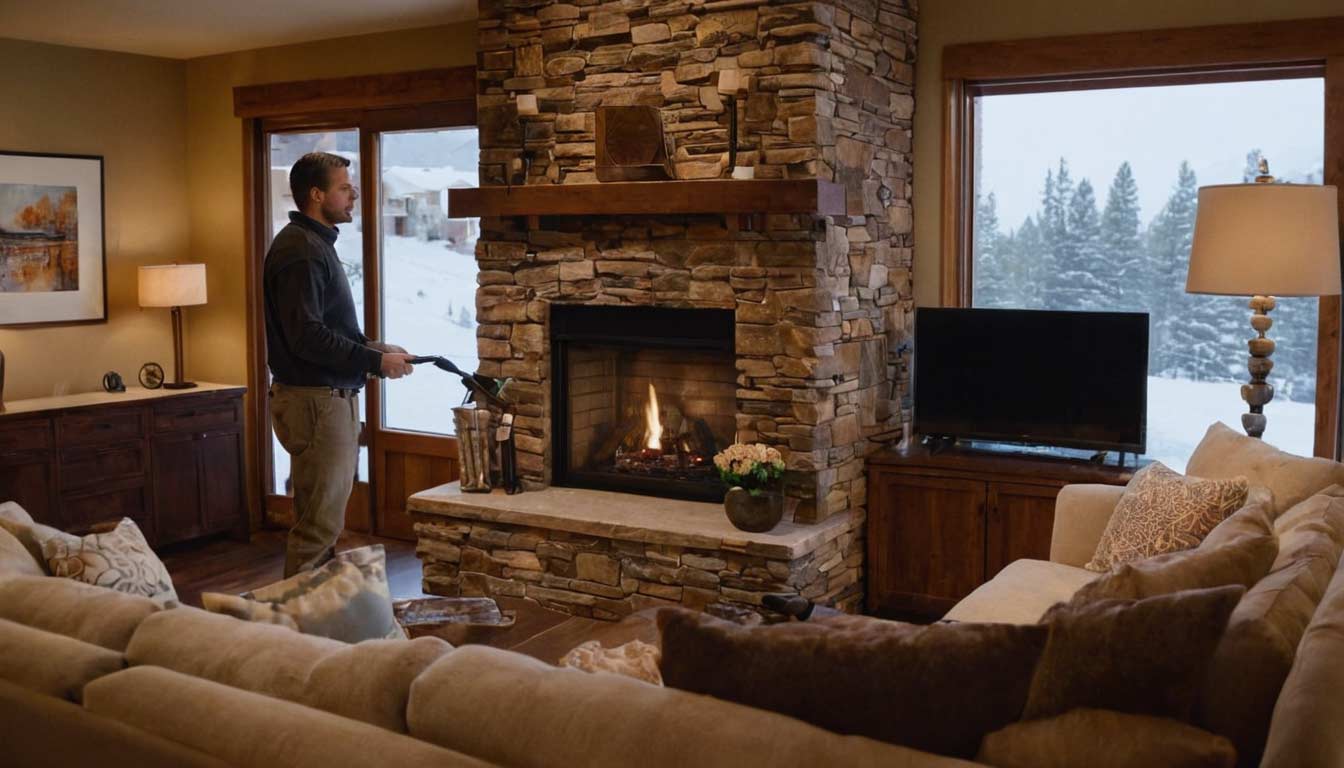
 I'm Adam, and I've run Adam Chimney Sweep out of the Denver area since 2001. Over those years I've spent a lot of time on rooftops in Akron, CO, and I can tell you the eastern plains are their own animal where chimneys are concerned. The prairie wind alone will mess with your draft in ways folks from the Front Range never deal with. If you own a home in Akron and you've got a fireplace, wood stove, or even a gas appliance venting up a flue, this page is for you. Call me directly at (720) 207-9232 and I'll walk you through whatever you're dealing with.
Akron sits out where the weather doesn't hold back. Hot, dry summers. Hard winters that drop well below freezing. Wind that comes across open ground with nothing to slow it down. All three of those things wear on masonry, and they do it faster than most people expect. So let me share what I've learned fixing and building chimneys out here, what it actually costs, and how to keep yours working without nasty surprises.
Akron Chimney Services Built for Eastern Colorado Conditions
Reliable Akron chimney services start with one thing: understanding the climate your chimney has to survive. This isn't a humid part of the country where mold is your worry. Out here it's the freeze-thaw cycle, the swing between scorching afternoons and freezing nights, and that relentless wind. Each of those attacks a different part of the system.
Climate Considerations for Chimney Systems in Akron
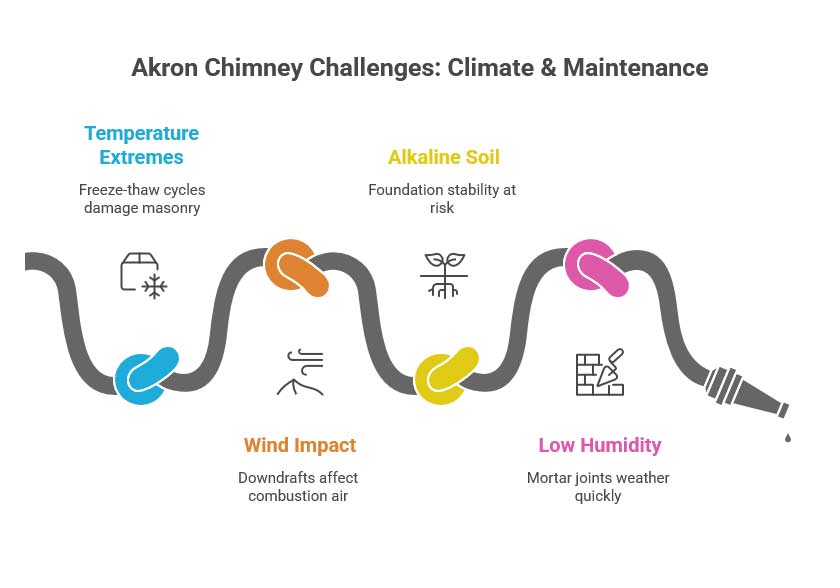
 Akron's semi-arid climate runs hot in summer and brutally cold in winter, and your chimney feels every degree of it. Winter temps sitting below freezing put real stress on brick and mortar. Then summer heat drives expansion and contraction cycles that slowly work joints loose. On top of that, the wind sweeping across the eastern Colorado plains pushes back on your draft, which is why a properly sized flue and the right chimney cap matter so much more here than they would in a sheltered spot.
The soil plays a part too. A lot of eastern Colorado ground is alkaline, and that chemistry can chew on foundations for exterior chimneys if the footings and drainage aren't done right. The dry air doesn't help either. Low humidity pulls moisture out of mortar joints over time, so they crumble sooner than you'd think. None of this means an Akron chimney is doomed. It just means regular upkeep here isn't optional the way it might be somewhere milder.
Seasonal Maintenance Requirements
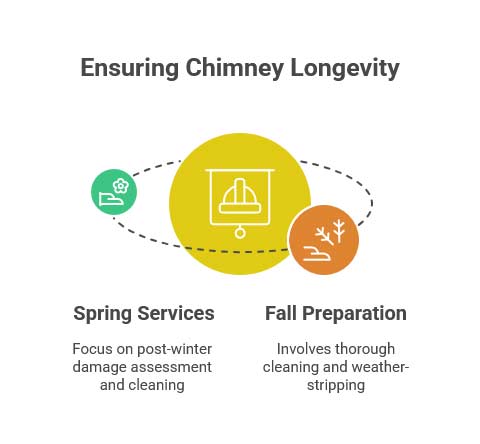
After all these years I've noticed Akron's temperature swings reward people who stay ahead of the problem. Come spring, I'm usually finding fresh winter damage from freeze-thaw, little cracks that weren't there in October. By fall, the job shifts to bracing the chimney for the wind and cold that's about to roll in. Two different seasons, two different to-do lists.
Out in Akron the wind is the part people forget. I've stood on roofs where you could barely keep your footing, and that same wind is the thing fighting your fire every night. Get the cap and the flue height right and half your draft complaints just disappear. Get them wrong and no amount of dry firewood fixes it.
- Adam, Owner, Adam Chimney Sweep
Wind Considerations for Chimney Performance
Steady prairie wind creates downdrafts and can starve your fire of the combustion air it needs. That's why I push hard on two things in Akron: a wind-resistant cap and the correct height clearance above the roofline. In an exposed spot like this, a chimney that's an inch too short can smoke up your living room every time the wind shifts.
Complete Installation Services for Akron Homeowners
Putting in a new chimney in Akron means building for the prairie, not against it. My Chimney Services cover the whole range, from old-school masonry work to modern prefab systems, and I size every one of them to handle the wind loads and temperature extremes you get out here.
Masonry Chimney Installation
Plenty of Akron homeowners still want a traditional masonry chimney, and I get it. They're tough and they shrug off the temperature extremes better than just about anything. We start every masonry job by looking at the soil, because the foundation has to suit the ground it sits on. Then we use mortar mixes chosen to stand up to the alkaline soil chemistry and the constant freeze-thaw cycling around here.
Key Installation Components:
- Foundation and Footing Systems
- Concrete footings extending below the frost line (typically 42 inches in Akron)
- Reinforcement designed for local soil conditions
- Proper drainage to prevent frost heaving
- Vapor barriers to protect against ground moisture
- Structural Components
- Fire brick or refractory material lining
- Properly sized flue tiles or stainless steel liners
- Reinforcement bars for seismic resistance
- Expansion joints to accommodate thermal movement
Prefabricated Chimney Systems
If you'd rather keep costs down, a prefabricated chimney can perform beautifully as long as it's installed right. These systems actually suit Akron well, since they're engineered from the start to take thermal stress and wind loads. Here's how a typical prefab install goes:
- Site preparation and foundation work
- Assembly of triple-wall insulated chimney pipe
- Proper support and bracing systems
- Integration with roofing and flashing systems
- Installation of appropriate chimney caps and spark arrestors
One thing I'll add from experience: the flashing and the cap are where most prefab installs go wrong years later. The pipe itself is rarely the issue. So we take our time on the parts that meet the roof and the parts that meet the sky.
Professional Repair Services Tailored to Akron Conditions
Common Repair Issues in Eastern Colorado
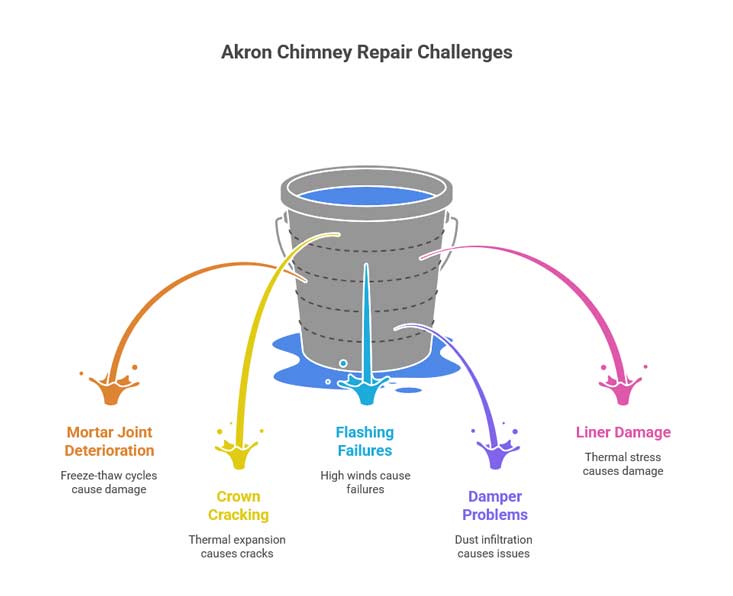
Fix enough chimneys in one region and the same problems start showing up again and again. Akron and the surrounding plains have a handful of repairs I see far more often than I would in town. Knowing the pattern lets me get to the root of it faster instead of just patching symptoms.
Frequent Repair Needs:
- Mortar Joint Deterioration: Caused by freeze-thaw cycles and wind-driven moisture
- Crown Cracking: Result of thermal expansion and contraction
- Flashing Failures: Due to high winds and temperature extremes
- Damper Problems: Caused by dust infiltration and temperature cycling
- Liner Damage: From thermal stress and the settling of structures
Our chimney repair work goes after every one of these with fixes built for eastern Colorado, not generic patch jobs. We use materials and methods I've watched hold up year after year in this exact environment, which saves you from paying to repair the same thing twice.
Specialized Repair Techniques
Tuckpointing and Masonry Restoration
Tuckpointing is one of the calls I get most often in Akron. The idea is simple even if the work isn't: we grind out the old crumbling mortar and pack in fresh material made for local conditions. I lean on polymer-modified mortars because they flex a little and shrug off weather better than the plain stuff. On a wind-blasted chimney out here, that flexibility buys you years.
Our Tuckpointing Process:
- Assessment of existing mortar condition
- Careful removal of damaged material
- Surface preparation and cleaning
- Application of a compatible new mortar
- Finishing and curing protection
- Final inspection and quality assurance
Crown Repair and Reconstruction
The crown takes a beating in Akron. It's the flat slab on top, fully exposed to sun, wind, rain, and snow, and it's usually the first thing to crack and let water in. We rebuild crowns with reinforced concrete and built-in waterproofing so they stop shedding water into the chimney below. A solid crown is honestly one of the cheapest ways to protect the whole structure.
The cheapest repair I ever sell somebody is a crown seal before the cracks get bad. I've seen a fifty-dollar problem turn into a five-thousand-dollar rebuild because water snuck in for three winters straight. In Akron's freeze-thaw, water is the enemy, and the crown is your first line against it.
- Adam, Owner, Adam Chimney Sweep
Maintenance Programs for Long-Term Performance
Annual Inspection and Cleaning Services
Good maintenance is the whole ballgame for chimney safety. We build our programs around Akron's actual seasons so the timing makes sense for what the weather's doing and for your schedule. The goal is catching small stuff in spring or fall before it turns into a winter emergency.
Comprehensive Maintenance Includes:
Spring Services:
- Post-winter damage assessment
- Cleaning of debris accumulation
- Inspection of flashing and sealants
- Crown and cap condition evaluation
Fall Preparation:
- Thorough cleaning and inspection
- Weather-stripping of dampers
- Application of protective sealers
- Verification of proper operation
Our chimney inspection services use real tools, not guesswork. Video cameras let me see inside the flue, and moisture meters flag water problems behind the brick before they show on the surface. That's how we spot trouble while it's still cheap to fix. If you want to read up on why annual inspections matter, the Chimney Safety Institute of America lays out the national standards we follow.
Customer Success Story: Akron Prairie Home
Last spring the Richardson family called me. They'd just bought a gorgeous Victorian-era home on East 3rd Avenue here in Akron, and it came with an original brick chimney that nobody had touched in years. Mrs. Richardson wanted it checked before their first winter in the place, mostly because she was worried about safety, and rightly so.
When I got up there I found exactly what I expected from an older chimney in this area: mortar joints worn down by years of wind, a cracked crown letting water seep in, and a flue liner that was the wrong size for the fireplace. The family braced for a huge bill. Instead, I laid out a phased plan so we could knock out the dangerous stuff first and spread the rest across two seasons.
We kicked things off with emergency crown repairs and repointed the worst-exposed sections. That fall we finished up with a new stainless steel liner and a fresh chimney cap installation. The Richardsons told me the draft and efficiency jumped noticeably, and they finally felt safe lighting a fire with their kids in the house. That's the kind of outcome I'm after on every job.
Product Costs and Labor Considerations
Material Cost Analysis for Akron Projects
Nobody likes a vague answer on price, so let me be straight about what drives the numbers in Akron. A few things push costs here: hauling specialty materials out from Denver, local labor rates, and the extra work that prairie conditions sometimes demand. Here's a realistic look at common material costs.
Typical Material Costs:
| Component | Standard Grade | Premium Grade | Professional Installation |
|---|---|---|---|
| Chimney Cap (Stainless Steel) | $150-300 | $400-800 | $200-400 |
| Flue Liner (6″ x 25′) | $800-1,200 | $1,500-2,500 | $600-1,000 |
| Crown Repair (partial) | $300-600 | $800-1,500 | $400-800 |
| Tuckpointing (per sq ft) | $8-15 | $20-35 | $10-25 |
| Full Cleaning Service | N/A | N/A | $150-300 |
Labor Costs and Service Pricing
Our chimney sweep services start at $150, and that gets you a thorough cleaning plus a basic inspection, which is honestly a solid deal. Bigger jobs get priced by how much work they actually take and what each chimney throws at us. No two old chimneys are identical, so I'd rather quote you fairly than slap on a one-size number.
Service Tier Pricing:
| Service Level | Description | Price Range | Typical Duration |
|---|---|---|---|
| Basic Cleaning | Standard sweep and visual inspection | $150-250 | 2-3 hours |
| Comprehensive Service | Detailed inspection with a camera | $300-450 | 3-4 hours |
| Repair Services | Minor repairs and maintenance | $200-800 | 2-6 hours |
| Major Restoration | Extensive rebuilding or relining | $2,000-8,000 | 1-3 days |
Labor in Akron usually runs $85 to $200 an hour, depending on how complex and specialized the job is. My techs have logged years working specifically in eastern Colorado conditions, so they move efficiently and they don't get surprised by the things that trip up crews from out of the area.
Factors Affecting Project Costs
A handful of Akron-specific factors can nudge your project cost up or down:
Local Considerations:
- Material Transportation: Specialized materials may require shipping from Denver
- Seasonal Access: Weather conditions can affect project timing
- Soil Conditions: May require exceptional foundation work
- Wind Exposure: Could necessitate additional structural reinforcement
- Historical Compliance: Older homes may require period-appropriate materials
See the Work for Yourself
Reading about chimney repair and cleaning only goes so far. Here's a short video of my crew handling exactly the kind of repair-and-clean job that's common across Denver-area homes, so you can see what the process actually looks like before you book.
Specialized Services for Akron's Unique Needs
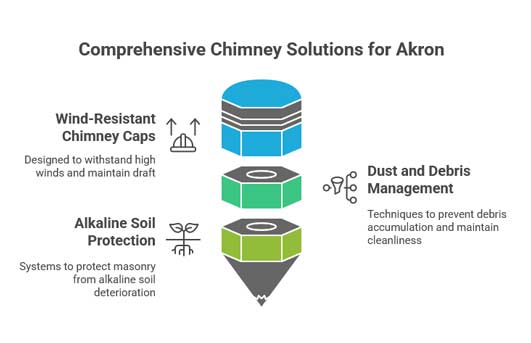
Wind-Resistant Chimney Caps
Like I keep saying, the wind out here drives a lot of decisions. The cap is one of them. We install caps built to hold draft steady while blocking downdrafts and keeping debris out of your flue. On the plains, the right cap is the difference between a fire that pulls clean and one that backs smoke into the room.
Wind-Resistant Features:
- Aerodynamic Design: Reduces wind resistance and turbulence
- Reinforced Construction: Withstands high wind loads
- Positive Draft Enhancement: Improves performance in challenging conditions
- Debris Protection: Prevents accumulation of prairie dust and debris
- Corrosion Resistance: Stainless steel construction for longevity
Dust and Debris Management
Eastern Colorado kicks up a lot of dust and farm debris, and your chimney breathes some of it in. Our maintenance work includes cleaning methods and screening built for that reality, so you're not fighting a flue that's slowly packing up with grit.
Protective Services:
- Installation of fine-mesh screening
- Regular removal of accumulated debris
- Application of protective sealers
- Inspection of air intake systems
Alkaline Soil Protection
That alkaline ground I mentioned earlier doesn't just sit there. It speeds up masonry breakdown at the base of exterior chimneys. We use foundation protection methods and materials picked specifically to slow that chemistry down, which matters most on chimneys that run all the way to grade.
Frequently Asked Questions About Akron Chimney Services
How often should chimneys be cleaned in Akron's climate?
With the dust and wind out here, I tell folks to clean every active chimney once a year, no exceptions. If you burn wood a lot through the season, twice a year is smarter, ideally once before you start burning and once after you wrap up for spring.
What makes Akron chimney maintenance different from other areas?
It comes down to three local realities: steady wind, big temperature swings, and alkaline soil. Those force you into specific materials, techniques, and timing if you want the chimney to last. A crew that only works the Denver metro and never comes out to the plains tends to underestimate all three.
Can existing chimneys be upgraded for better wind resistance?
Yes, and it's usually easier than people assume. A better cap, a properly sized liner, and some targeted structural reinforcement can transform how an older chimney handles wind. Our chimney lining services alone can make a real difference in both draft and safety.
What's the typical lifespan of a chimney in Akron's environment?
Keep up with maintenance and a masonry chimney can run 50 to 100 years out here. The catch is the parts that take the most weather. Caps, liners, and crowns often need replacing every 15 to 30 years, depending on how hard and how often you burn.
Are there local building code requirements for chimneys in Akron?
There are. Akron follows Colorado state building codes with a few local tweaks. New installs and major repairs need permits and inspections, which is a good thing, since it keeps the work safe and up to standard. I handle that side so you don't have to chase paperwork.
What should I do if I smell smoke or my fireplace won't draft right?
Stop using it and give me a call at (720) 207-9232. Poor draft and smoke spilling into the room can point to a blockage, a downdraft problem, or worse, and out here in the wind it's worth checking sooner rather than later. I'd rather come look and find nothing than have you ignore a real hazard.
Seasonal Service Scheduling
Optimal Timing for Different Services
Spring (March-May):
- Post-winter damage assessment
- Crown and masonry repairs
- Cleaning of winter debris accumulation
Summer (June-August):
- Major reconstruction projects
- Liner installation and replacement
- Foundation work and structural repairs
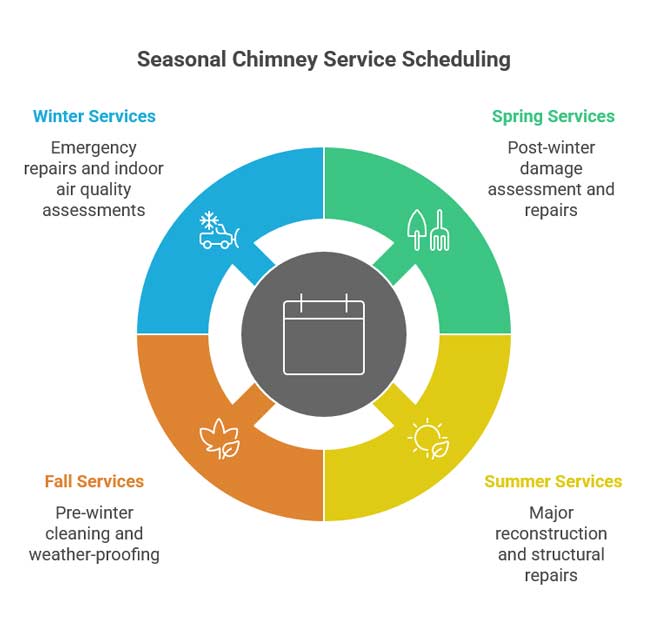
Fall (September-November):
- Pre-winter cleaning and inspection
- Damper and cap maintenance
- Weather-proofing applications
Winter (December-February):
- Emergency repairs only
- Indoor air quality assessments
- Planning for spring projects
Emergency Service Availability
Chimney trouble doesn't check the calendar, so we keep emergency service running for the stuff that can't wait. If we're talking a possible carbon monoxide risk, structural damage, or a fire hazard, that jumps to the front of the line. Safety calls always do.
Quality Assurance and Safety Standards
Certification and Training
My team keeps current certifications through industry bodies, including the National Fireplace Institute and the Chimney Safety Institute of America. I make everybody keep up with the training because the techniques and safety standards genuinely change, and I'd rather we stay sharp than coast on what we learned a decade ago.
Safety Protocols
Every job starts with a safety plan that covers both my crew and your household:
Worker Safety:
- Proper ladder and scaffolding procedures
- Personal protective equipment requirements
- Weather condition assessments
- Equipment inspection protocols
Homeowner Safety:
- Carbon monoxide testing
- Structural integrity verification
- Proper ventilation confirmation
- Emergency shutdown procedures
Quality Control Measures
We check our own work at several points along the way, not just at the end:
- Initial Assessment: Comprehensive evaluation of existing conditions
- Work Planning: Detailed project specifications and material selection
- Progress Inspections: Regular verification of work quality during the project
- Final Testing: Complete performance verification before project completion
- Follow-up Service: Post-project support and warranty coverage
Environmental Considerations and Efficiency
Sustainable Practices
People care more about this every year, and so do we. A few ways that shows up in my Chimney Services:
Eco-Friendly Materials:
- Low-emission sealers and mortars
- Recycled content where appropriate
- Energy-efficient installation techniques
- Minimal packaging waste
Energy Efficiency Improvements:
- Proper sizing for optimal efficiency
- Insulation upgrades where they help
- Draft optimization for reduced fuel consumption
- Modern damper systems for better control
Air Quality Considerations
Air quality out here takes hits from dust, farming, and the seasons. A well-kept chimney helps your indoor air stay cleaner through:
- Proper ventilation system operation
- Regular cleaning to prevent contamination
- Sealing of potential infiltration points
- Carbon monoxide detection and prevention
Technology Integration in Modern Chimney Services
Advanced Diagnostic Tools
The gear we bring to a job has come a long way, and it lets me show you exactly what's going on instead of asking you to take my word for it.
Video Inspection Systems:
- High-resolution cameras for internal viewing
- Recording capability for documentation
- Real-time problem identification
- Historical comparison capabilities
Moisture Detection:
- Electronic moisture meters
- Infrared thermal imaging
- Humidity monitoring systems
- Leak detection protocols
Draft and Performance Testing:
- Digital draft gauges
- Combustion analysis equipment
- Efficiency measurement tools
- Safety verification systems
Digital Documentation
You get real records from every job, so there's never any mystery about what we found or what we did:
- Before and after photographs
- Video recordings of key findings
- Detailed inspection reports
- Maintenance recommendations
- Warranty documentation
Future-Proofing Your Chimney Investment
Emerging Technologies
The trade keeps moving, and some of the newer options are genuinely worth a look:
Smart Damper Systems:
- Remote operation capability
- Automatic closure for energy efficiency
- Smartphone app integration
- Safety monitoring features
Advanced Liner Materials:
- Improved corrosion resistance
- Enhanced thermal properties
- Easier installation methods
- Extended warranty coverage
Preventive Maintenance Planning
I like to map out the long game with homeowners so nobody gets blindsided by a big expense:
Five-Year Planning:
- Scheduled maintenance intervals
- Component replacement timing
- Budget planning for major work
- Performance optimization opportunities
Ten-Year Outlook:
- Major system upgrades
- Efficiency improvement projects
- Technology integration opportunities
- Structural enhancement planning
I've been doing this since 2001, and the one thing I'd tell every Akron homeowner is don't wait for smoke or a leak to call. A quick look once a year out here, with the wind and the freeze-thaw we get, will save you real money and probably keep your family safer too. That's not a sales pitch, it's just what the plains do to brick.
- Adam, Owner, Adam Chimney Sweep
Conclusion: Your Partner in Akron Chimney Care
As the local chimney guy serving Akron and the rest of eastern Colorado, I take the prairie's challenges seriously because I've spent twenty-plus years dealing with them firsthand. Installation, repair, maintenance, whatever you need, we handle it so your chimney stays safe and runs the way it should through every season.
Routine cleaning, an emergency fix, or a full new system, the team brings the know-how, the right equipment, and the stubbornness to do it correctly. Your chimney is a big part of your home's safety and comfort, and we treat it that way.
We work out of 12894 E Villanova Dr, Aurora, CO 80014, and we're proud to serve Akron with the same standards that earned us our reputation across eastern Colorado. Our chimney sweep services blend old-fashioned craftsmanship with modern tools to get results that hold up.
Give me a call at (720) 207-9232 to set up your consultation and find out why more Akron homeowners trust their chimneys to Adam Chimney Sweep. Let's keep your fireplace safe, efficient, and ready for a lot more Colorado winters.
For official information regarding permits, regulations, and building codes in Colorado:
- Denver Building and Fire Code – Official Denver building and fire code regulations
- Colorado Building Codes – State residential building code requirements for chimneys and fireplaces
- Colorado State Buildings Program – Official state building code administration
- Code of Colorado Regulations – Complete administrative rules and regulations
- Denver Fire Prevention Division – Fire safety requirements and regulations