 Just south of Colorado Springs in El Paso County, the Security-Widefield community is a mix of suburban homes with both gas and wood-burning fireplaces.
Front Range wind, sun and seasonal storms wear on caps and flashing, and both gas and wood-burning systems need regular inspection to run cleanly and safely. We've been working on chimneys in this part of the state long enough to know what the weather here does to a roofline, and it's usually more than people expect.
Chimney & fireplace services in Security-Widefield, CO
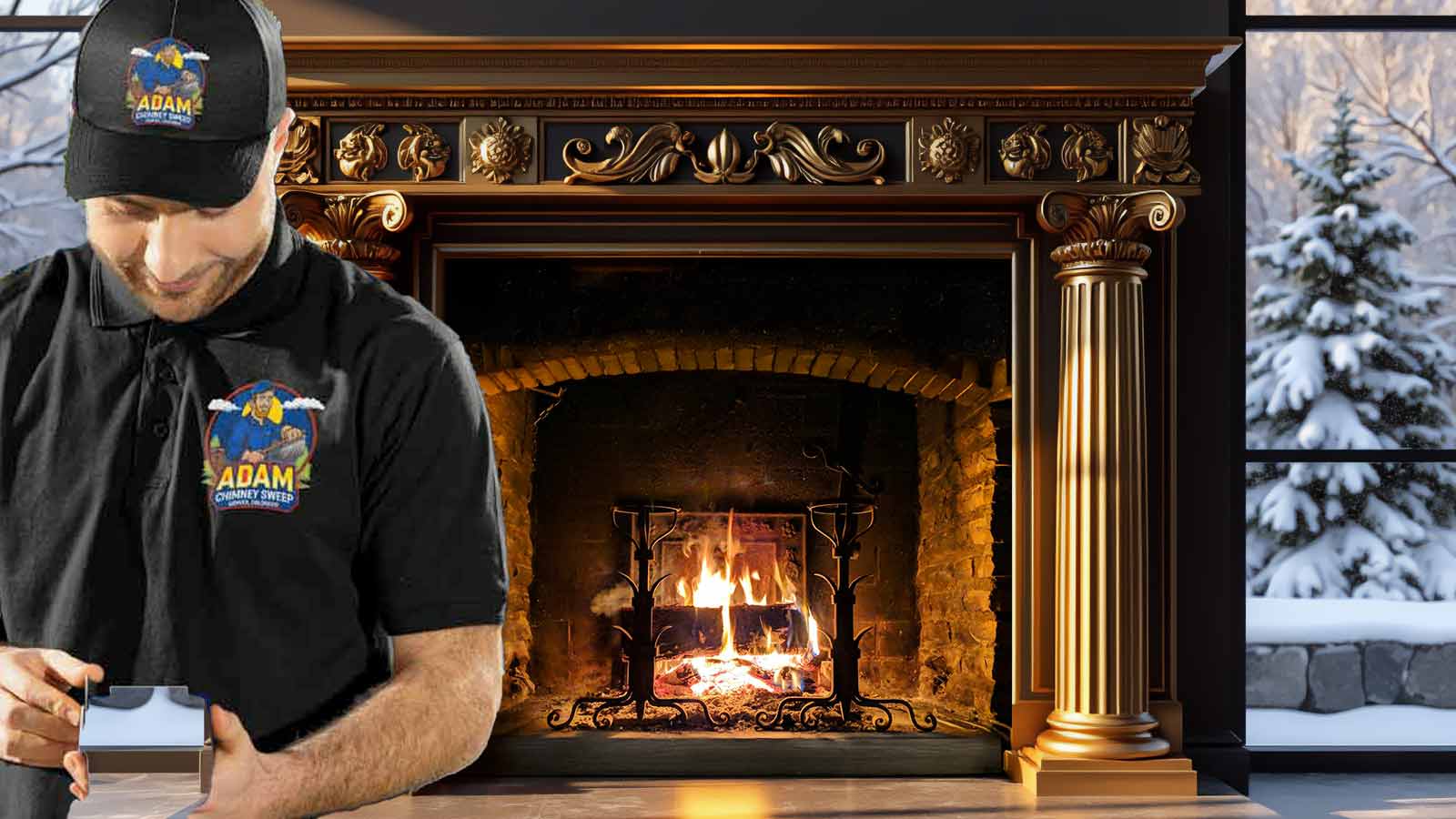
 Chimney and fireplace services in Security-Widefield cover everything from a basic sweep to a full reline, and Adam Chimney Sweep handles all of it. We're a family-owned crew that has protected Colorado homes since 2001. In Security-Widefield and across El Paso County, we provide the full range of chimney and fireplace care:
- Chimney sweeping & cleaning — HEPA-vacuum sweeps that remove creosote and soot without the mess.
- Inspections — dual-camera inspections that catch cracks, blockages and code issues early.
- Repairs & tuckpointing — crown rebuilds, firebox repair and masonry repointing.
- Caps, crowns & liners — stainless caps and relining that keep weather, animals and sparks where they belong.
- Fireplace & insert installation — safe, code-compliant wood, gas and insert installs.
Most folks call us for one thing and we end up spotting two or three others while we're up there. That's not a sales pitch, it's just how chimneys age out here. A cap rusts, then water gets into the crown, then the crown cracks, then the liner takes the hit. Catch it at the cap and it's a cheap fix. Wait until the liner fails and you're looking at a much bigger bill.
I've been on roofs all over Security-Widefield and the one thing I tell every homeowner is the same: the wind down here off the Front Range is brutal on chimney caps. I've pulled caps that were basically peeled open like a tin can. If yours rattles or you hear it banging in a storm, call me before it's gone for good and you've got rain pouring straight down the flue.
- Adam, Owner, Adam Chimney Sweep
Gas and wood-burning, we work on both
Security-Widefield homes are split pretty evenly between gas appliances and old-fashioned wood-burning fireplaces, and the two need very different care. A gas system runs cleaner, but it still vents through a flue that can clog, corrode or fill with debris from a bird's nest. A wood-burner builds creosote every single time you light it, and creosote is what starts chimney fires. We're set up for both, so it doesn't matter which one you've got.
If you switched from wood to gas at some point, that's worth a mention when you call. A lot of gas inserts get dropped into an old wood flue that was never resized, and an oversized flue can let moisture and acidic gas condense inside the chimney. That eats the masonry from the inside. We see it constantly, and the fix is usually a properly sized liner.
Why Security-Widefield homeowners choose Adam Chimney Sweep
Full service for Front Range homes
From chimney sweeping and inspections to cap, crown and dryer-vent work, we keep Security-Widefield fireplaces and venting systems safe, efficient and up to code. You're not getting passed between three different companies for one job. The same crew that inspects your chimney can sweep it, reline it, rebuild the crown or set a new cap, all in one visit when the scheduling works out.
We also show up with upfront pricing. You'll know what the work costs before we start, not after. No surprise add-ons, no vague "it depends" line on the invoice. If we find something extra while we're up there, we tell you, show you the photos from the camera, and let you decide.
What you get when we come out
Here's what's included on a standard visit so there are no surprises:
- A look at the cap, crown and flashing from the roof, with photos so you can see what we see.
- A camera run down the flue to check the liner for cracks, gaps and creosote buildup.
- A HEPA-vacuum sweep that keeps the soot in our equipment instead of your living room.
- A straight answer on whether anything needs repair, and an upfront price if it does.
- A clear note on when you should book your next visit based on how much you burn.
People hear "chimney sweep" and picture a brush and a broom. The camera is the part that actually matters. I've sent that camera down flues in Security-Widefield that looked perfectly fine from the fireplace and found a crack three feet up that was leaking smoke into the wall. You can't see that from the living room. That's the whole reason we run it on every job.
- Adam, Owner, Adam Chimney Sweep
How a chimney service visit works
If you've never had a chimney company out before, here's the order we usually work in so you know what to expect:
- We talk first. When you call, tell us what you're burning, how often, and anything you've noticed. Smells, smoke that won't draft, a cap that rattles. It all helps.
- We inspect from the top and the bottom. The crew checks the cap, crown and flashing from the roof and runs a camera down the flue from inside. You get photos either way.
- We sweep. Using a HEPA vacuum, we pull out creosote and soot without coating your house in black dust. We lay down protection around the firebox before we start.
- We show you what we found. If the chimney's clean and sound, great, you're done. If there's a cracked crown or a rusted cap or a failing liner, we walk you through it with the camera footage.
- You decide on repairs. We quote upfront. You pick what to do and when. No pressure to sign on the spot.
Most routine sweep-and-inspection visits wrap up in an hour or two. Repairs depend on what's involved, and we'll give you a realistic timeline before we book anything.
Common chimney problems we see in Security-Widefield
El Paso County weather is hard on chimneys in ways people don't always think about. We sit at altitude, the sun is intense, the temperature swings hard between day and night, and the wind comes off the mountains with real force. All of that wears on the parts of a chimney that sit out in the open. Here are the issues we run into most often around here.
Wind-damaged and rusted caps
The cap is the lid on top of your chimney, and it takes the worst of the Front Range wind. Cheap caps bend, rattle loose or rust out. Once the cap's gone, rain, snow and animals have an open door. We replace caps with stainless steel that actually holds up to the weather down here, and we make sure it's sized and seated right so it doesn't work itself loose again.
Cracked crowns
The crown is the concrete or mortar slab around the base of the flue that sheds water off the top of the chimney. When it cracks, water seeps in, freezes overnight, expands, and makes the crack worse. That freeze-thaw cycle is relentless at our elevation. A cracked crown is one of the most common things we find, and sealing or rebuilding it early saves the masonry underneath.
Creosote buildup
If you burn wood, creosote is just a fact of life. It's the sticky, tarry residue that coats the inside of the flue, and it's flammable. Let enough of it build up and a stray ember can set it off. That's a chimney fire, and they spread fast. Regular sweeping keeps the buildup down to a safe level. How often you need it depends on how much you burn, which is why we give you a real answer instead of a generic "once a year."
Failing or undersized liners
The liner is the protective channel inside your chimney that keeps heat and combustion gases away from the masonry and the wood framing of your house. Old clay liners crack. Metal liners corrode. And as we mentioned, a lot of gas conversions end up with a flue that's too big for the appliance. A bad liner is a safety problem, not just a maintenance one, because it's the barrier between a hot flue and the structure of your home.
The crowns are what get me. I'll pull up to a house in Security-Widefield and the homeowner thinks everything's fine, but I can see hairline cracks in the crown from the driveway. Up here the water gets in, freezes overnight, and pops the concrete apart a little more every winter. Sealing a crown is cheap. Rebuilding one because it went five years too long is not. Get it looked at before the snow flies.
- Adam, Owner, Adam Chimney Sweep
Warning signs your chimney needs attention
You don't need to be an expert to catch trouble early. Keep an eye out for these, and if you spot any of them, it's worth a call:
- Smoke that backs up into the room instead of drawing up the flue.
- A sharp, smoky or sooty smell coming from the fireplace, especially in warm or humid weather.
- White staining (efflorescence) or dark water marks on the brick outside.
- A cap that rattles, bangs in the wind, or is visibly bent or missing.
- Chunks of masonry, mortar or tile showing up in the firebox.
- Water in the firebox or a damp smell after it rains or snows.
- Animals, birds or the sound of nesting up in the flue.
None of these fix themselves, and most get more expensive the longer they sit. A quick inspection tells you whether it's a small repair or something bigger, and either way you'll know where you stand.
Local Colorado specifics that matter
Chimney care in Security-Widefield isn't the same as it would be at sea level, and the climate is a big part of why. At our altitude the air is thinner, which can affect how a fireplace drafts. The dry conditions and intense UV bake out sealants and mortar faster than you'd expect. And the freeze-thaw cycle, where daytime sun melts snow and overnight cold refreezes it, is one of the most destructive forces on masonry anywhere. Water gets into a tiny crack, freezes, expands, and pries the crack wider. Repeat that a few hundred times a winter and small problems become big ones.
Wildfire awareness is also part of the picture in El Paso County. A chimney throwing sparks because of a missing spark arrestor or a creosote-packed flue isn't just a risk to your house, it's a risk to the neighborhood. A proper cap with a spark arrestor and a clean flue are simple, real protections. If you want to brush up on safe wood-burning practices, the EPA's Burn Wise program is a solid, no-nonsense resource on burning cleaner and reducing risk.
Frequently asked questions
How often should I have my chimney swept in Security-Widefield?
It depends on how much you burn. If you run a wood fireplace as a main heat source through the winter, once a year at minimum, sometimes more. If you only light a few fires a season, every couple of years may be enough, but you still want a yearly inspection to catch crown cracks, cap damage and liner problems. Gas systems burn cleaner but still need an annual look at the flue and venting. We'll tell you what makes sense for your home instead of guessing.
Do gas fireplaces really need servicing?
Yes. Gas burns cleaner than wood, so it doesn't build creosote, but the flue can still clog with debris, corrode, or get blocked by a bird's nest. A blocked gas flue can push carbon monoxide back into the house, which is exactly why we check the venting on every gas job. It's not optional, it's a safety thing.
How do I know if my chimney crown is cracked?
Sometimes you can spot it from the ground if the cracks are bad enough, but the reliable way is to have someone get up on the roof and look. We check the crown on every visit and take photos so you can see the condition for yourself. Catching a cracked crown early usually means a sealant repair instead of a full rebuild.
Can you reline a chimney for a gas insert?
We do it regularly. When a gas insert goes into an old wood-burning flue, the flue is often far too big for the appliance, which lets moisture and acidic gas condense inside and damage the masonry. A correctly sized stainless liner fixes that and keeps the system venting the way it should. You can read more about the work on our services page, or just call and we'll talk it through.
Is creosote really that dangerous?
It is. Creosote is flammable, and a thick enough layer in the flue can ignite from a single spark or a hot fire. Chimney fires are fast and they can spread into the structure of the house. For more on chimney safety standards, the Chimney Safety Institute of America is the recognized authority, and they back up everything we'll tell you about keeping a flue clean.
Book a sweep, inspection or repair in Security-Widefield
Ready to book a sweep, inspection or repair in Security-Widefield? Call Adam Chimney Sweep at (720) 207-9232 for upfront pricing and a crew that treats your home like its own. We'll get you on the schedule, show up when we say we will, and give you a straight answer about what your chimney needs.
Not sure where to start? A chimney inspection is the right first step for most homeowners. It tells you exactly what condition your chimney's in and what, if anything, needs doing, before the cold sets in and you're counting on that fireplace.