If you've got a chimney leaking water into your firebox, down a wall, or showing up as a brown stain on the ceiling, I promise you're not imagining it and it's not going to fix itself. I've been crawling on Denver roofs since 2001, and water is the single most common thing I get called out for once the snow starts melting. The tricky part is that the spot where you see the water almost never matches the spot where it's actually getting in. Water is sneaky. It'll run sideways along a rafter and drip three feet from the real hole. So before you panic or start caulking everything in sight, let's walk through where these leaks actually come from and what it takes to stop them for good in our climate.
Why Is My Chimney Leaking? The Usual Suspects
 When I pull up to a house with a chimney leaking, I'm not guessing. After two-plus decades I can usually narrow it down to four spots before I even climb up. Water gets into a masonry chimney through the cap or crown up top, through the flashing where the chimney meets the roof, straight through the brick and mortar itself, or it isn't outside water at all but condensation forming inside the flue. Nine leaks out of ten trace back to one of those. The job is figuring out which one, because the fix for a cracked crown is nothing like the fix for bad flashing.
Here's the thing about Denver specifically. We don't get Seattle rain, so people assume water isn't their problem. But we get something arguably worse for masonry: the freeze-thaw cycle. A sunny 50-degree afternoon melts the snow, that meltwater soaks into your brick and mortar, then the temperature drops below freezing overnight and that water expands as it turns to ice. Do that forty or fifty times a winter, year after year, and even good brick starts to crack and flake apart. That's why a chimney that was bone dry for fifteen years can suddenly start leaking. The damage was building the whole time.
The Chimney Cap and Crown (Start Looking Here)
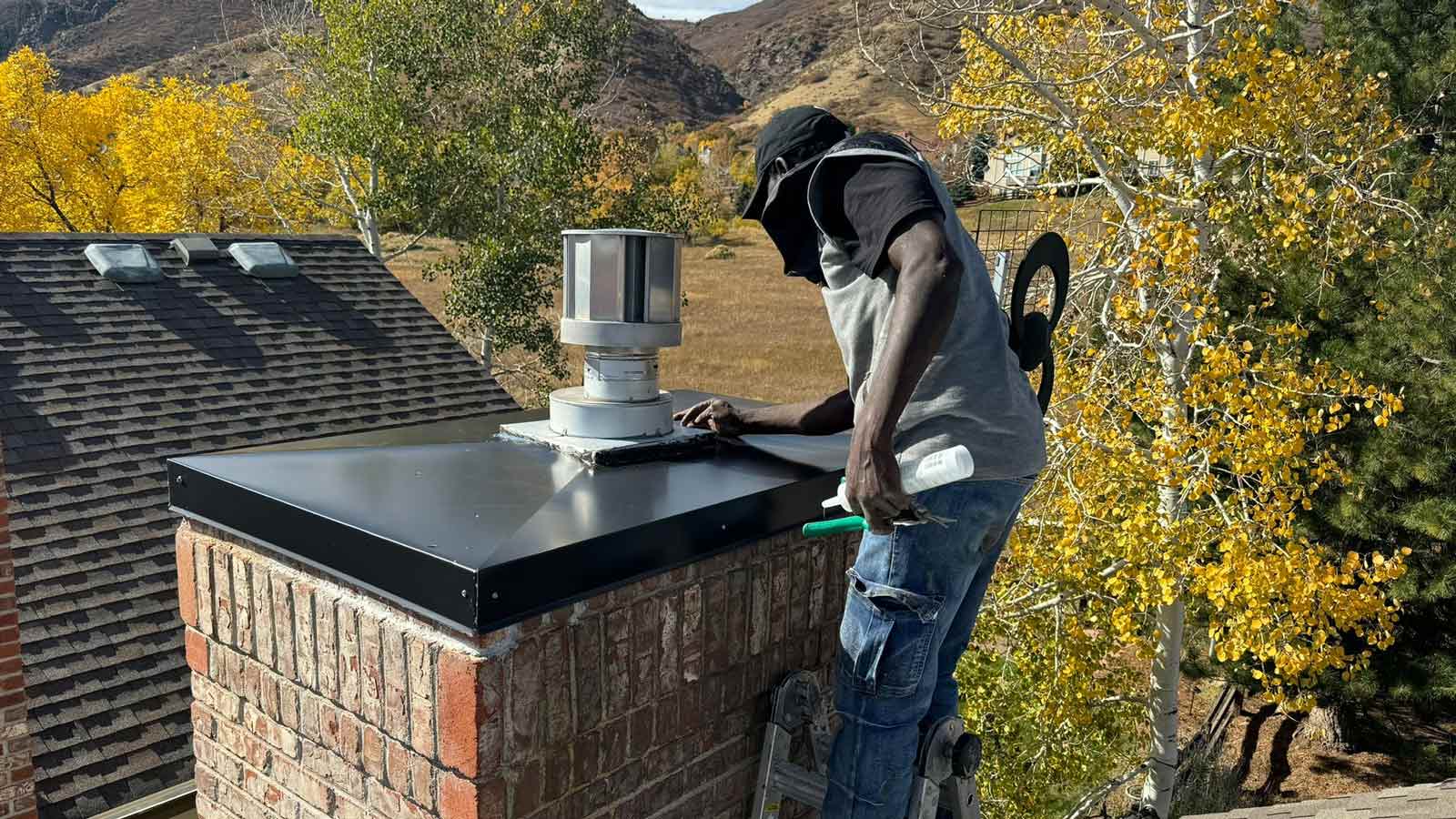
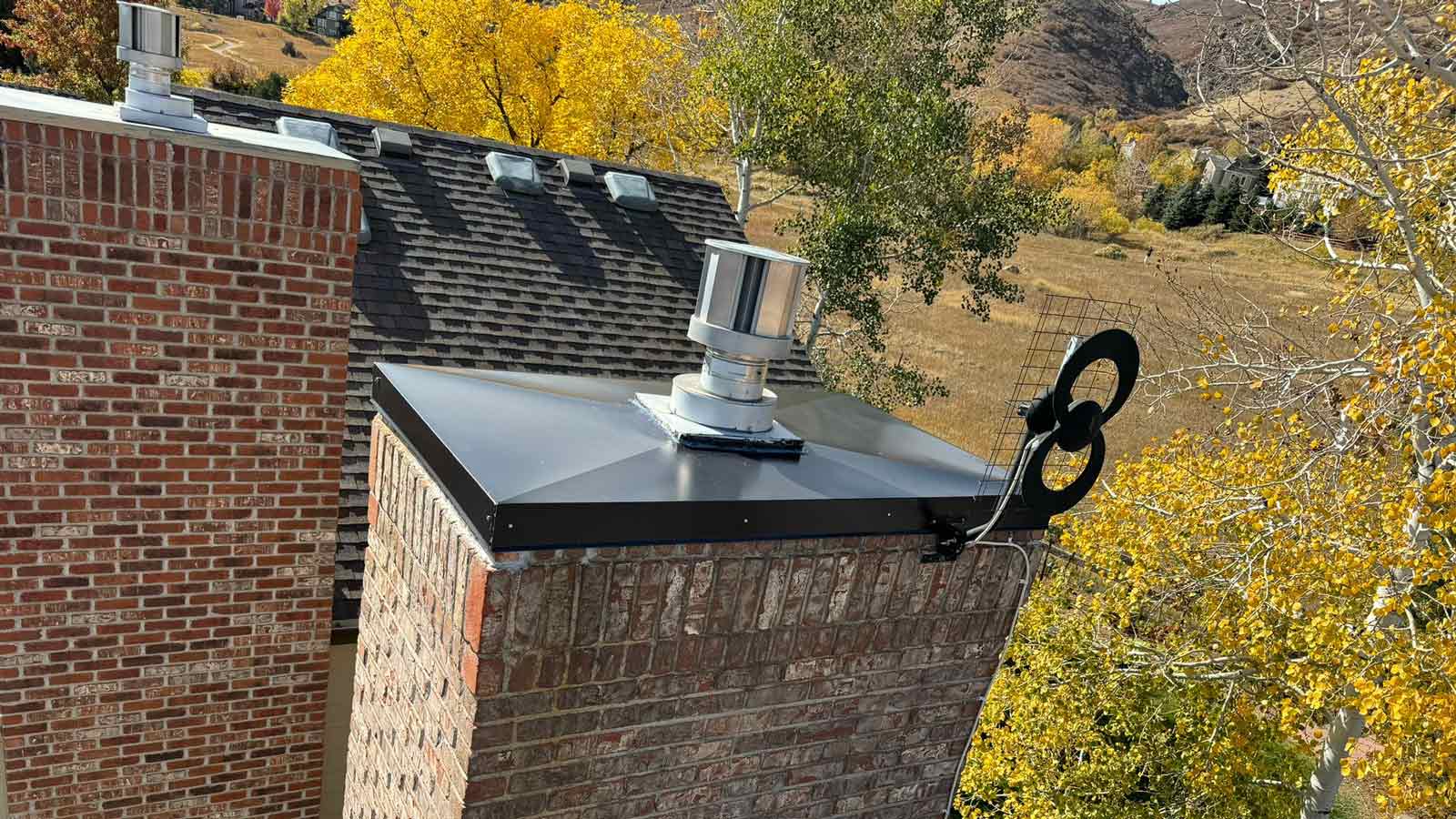
The crown is the concrete or mortar slab at the very top of the chimney, the part that slopes away from the flue to shed water. The cap is the metal cover with mesh sides that sits over the flue opening itself. These two take the worst beating of anything on your chimney because they're flat-out exposed to sky all year. When a crown cracks, and they almost all crack eventually, water runs straight down into the chimney structure. When a cap is missing or rusted through, rain and snow drop right down the flue into your firebox.
I'd say a solid third of the leaks I fix start at the top. A lot of older Denver chimneys were built with a thin mortar wash for a crown instead of a proper poured concrete crown with an overhang, and that thin stuff just doesn't hold up to our winters. The good news is this is often the cheapest leak to fix.
People always want to start by tearing into the masonry, but I tell them to let me look at the crown and cap first. Probably half the leaks I've stopped over the years got fixed up top in an afternoon, no scaffolding, no tearing out brick. A cracked crown and a missing cap are the low-hanging fruit, and I'd be doing you wrong if I sold you a big repair before I ruled those out.
- Adam, Owner, Adam Chimney Sweep
Flashing Failures Where the Chimney Meets the Roof
Flashing is the metal that seals the joint between your chimney and the roof shingles. It's two layers really: the base flashing that tucks under the shingles, and the counter-flashing that's set into the mortar joints of the brick. When flashing is done right it's watertight for decades. When it's done wrong, or when somebody just smeared a bunch of tar up there as a shortcut, it fails. That black roofing tar is a red flag for me every time. It looks like a fix, it cracks within a year or two, and then it hides the leak while water pours in behind it.
Flashing leaks are the ones most likely to show up inside your house rather than in the firebox, because the water gets in at roof level and follows the framing. If you've got a water stain on the ceiling near the chimney or running down an interior wall, I'm looking hard at the flashing. This is also the leak people most often misdiagnose as a roof problem when it's really a chimney problem, and vice versa.
Cracked Brick, Crumbling Mortar, and Unsealed Masonry
 Brick is porous. A lot of folks are surprised to hear that, but brick and mortar both drink water like a sponge unless something stops them. On a healthy chimney that's not a crisis because it dries out between storms. But once that freeze-thaw cycle starts cracking the mortar joints and spalling the face off the brick, you've got dozens of little entry points. The mortar joints go first, almost always. You'll see them recessed, sandy, or missing chunks. That's when water really starts moving into the structure.
The fix for failing mortar is tuckpointing, where we grind out the old joints and pack in fresh mortar. For brick that's drinking water through the face, the answer is a breathable masonry sealant. And I want to be clear about breathable, because this matters in Colorado more than almost anywhere.
Do not let anybody paint a regular waterproofing sealer on your chimney. I've seen it a dozen times. They use the wrong product, it traps the moisture that's already inside the brick, then our freeze-thaw turns that trapped water into a wrecking ball and the brick face pops right off. You want a vapor-permeable masonry sealer made for chimneys. It keeps rain out but lets the brick breathe and dry from the inside. Right product, your chimney lasts another twenty years. Wrong product, you've sped up the damage.
- Adam, Owner, Adam Chimney Sweep
When It's Not Rain at All: Condensation
This one fools everybody, including some sweeps. Sometimes the water isn't coming from outside. It's forming inside the flue. If you've got a high-efficiency gas furnace or a newer appliance venting into an old oversized masonry flue, the exhaust cools down before it reaches the top, and the moisture in it condenses on the cold flue walls and runs back down. It looks exactly like a leak. You'll get water and sometimes a white crusty staining on the brick. The fix here isn't sealant or flashing, it's usually a properly sized stainless steel liner so the exhaust stays warm and exits before it can condense. If your "leak" shows up even during dry stretches with no rain or snowmelt, condensation is high on my list.
How to Tell Where the Water Is Getting In
You can do a fair amount of detective work from the ground and your living room before anybody gets on the roof. Here's what I have homeowners check first.
- Where does the water show up? Inside the firebox points me toward the cap, crown, or flue. On the ceiling or an interior wall points me toward the flashing.
- Does it only leak when it rains or snows? If yes, it's outside water. If it leaks during dry weather too, think condensation.
- Is there a white chalky residue on the brick? That's efflorescence, mineral salts left behind as water moves through masonry. It's a dead giveaway that water is passing through the brick itself.
- Any musty smell or a damp firebox after storms? Classic sign of water sitting where it shouldn't.
- Rust stains on the damper or firebox? Metal doesn't rust without water reaching it, so that tells me water's been getting down the flue for a while.
From there, a real diagnosis means getting up top and, honestly, sometimes running a hose. The water test is old-school but it works. We isolate one area at a time, run water on it, and watch inside to see what shows up. It beats guessing and it beats fixing the wrong thing. A proper chimney inspection with a flue camera also lets us see cracks and gaps you'd never spot from the ground.
A Quick Self-Check Before You Call
If you're comfortable and safe doing it, here's the order I'd run through. No need to get on the roof for most of this.
- Look up the flue from inside with a flashlight. Daylight where there shouldn't be any, or a visibly missing cap, tells you a lot.
- Check the firebox and damper for rust, water pooling, or fresh stains after the last storm.
- Walk the interior walls and ceiling around the chimney chase and mark any stains.
- From the ground with binoculars, scan the crown for cracks and the brick for missing mortar or flaking faces.
- Note the weather pattern. Does it track with rain and snowmelt, or does it leak no matter what? Write it down before you call so we can zero in fast.
Stopping the Leak: Waterproofing Fixes That Hold Up in Colorado
Once we know the source, the repair is usually straightforward. The mistake I see most often is people treating the symptom instead of the source, slapping sealant on brick when the real problem is a cracked crown two feet up. Here's how the common fixes break down.
Crown repair or rebuild. Small cracks can be sealed with a flexible crown coating that flexes with our temperature swings. A badly deteriorated crown gets rebuilt with proper concrete and an overhang that throws water clear of the brick. This is bread-and-butter chimney crown work and it stops a huge share of leaks.
New cap. A stainless steel cap with mesh keeps rain, snow, leaves, and critters out of the flue. Stainless because our weather chews up the cheap galvanized ones in a few years. If you're missing a cap entirely, this is the easiest win there is. See our cap repair and installation page for the details.
Flashing repair. If the flashing's the culprit, we strip the tar and the failed metal and install proper step and counter-flashing set into the mortar joints, the way it should've been done the first time. Done right, it's watertight and you forget it exists.
Tuckpointing and masonry sealing. Failing joints get ground out and repacked, then the whole chimney gets a vapor-permeable sealer rated for freeze-thaw. Brick tuckpointing plus the right sealant is what gives an old Denver chimney another couple of decades.
A new liner. If it's condensation or if water's been getting down an unlined or cracked flue, a stainless chimney liner sized to your appliance fixes it and makes the whole system safer while we're at it.
The biggest favor you can do yourself is call when you first see a stain, not after the ceiling's coming down. A cracked crown caught early is a quick afternoon job. Let that same water run for three or four winters and now it's rotted the framing, rusted the damper, and chewed through enough brick that we're talking a partial rebuild. Same leak, ten times the cost. Water damage in a chimney never sits still, it just gets more expensive.
- Adam, Owner, Adam Chimney Sweep
I'll add one bit of perspective on the weather. The freeze-thaw cycle that drives most of this is brutal on masonry, which is why staying ahead of it matters so much here. The EPA's Burn Wise program has good general guidance on keeping a venting system healthy, and the Chimney Safety Institute of America is worth a read if you want to understand the structure better. A yearly look is the cheapest insurance against the kind of slow water damage you can't see until it's bad.
Don't Wait for the Next Storm
A chimney leak is one of those problems that's cheap to fix early and brutal to fix late. If you're seeing water, stains, rust, or that white chalky residue, get it looked at before the next freeze-thaw round makes it worse. We've been keeping Denver chimneys dry since 2001, and we'll tell you straight what's going on, even if the honest answer is that it's a simple cap and not a big repair. Call Adam Chimney Sweep at (720) 207-9232 or reach out through our contact page and we'll get you on the schedule and your chimney sealed up tight before winter hits.