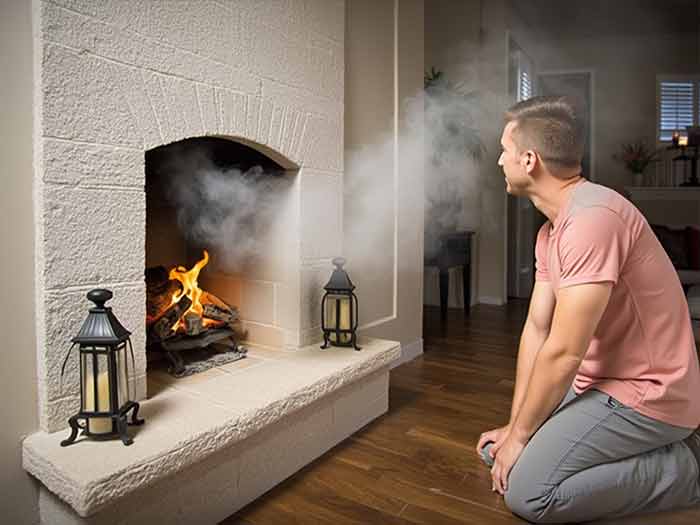
A smoky fireplace is one of the most common calls we get all winter, and nine times out of ten the homeowner thinks the chimney is dirty when the real problem is draft. Smoke rolls into the room because the air inside your chimney isn't moving up and out the way it should. Heat and smoke want to rise, but if something fights that rise, a cold flue, a blockage, the house pulling against you, the smoke takes the path of least resistance and that path is your living room. We've been sorting out smoky fireplaces around Denver since 2001, and the fix is usually simpler and cheaper than people fear.
This guide covers why a fireplace won't draft, what causes smoke to spill back inside, what you can fix yourself in ten minutes, and when to get a pro on the roof. Denver throws a few curveballs at fireplaces that flatlanders never deal with, and altitude is a real one.
Why a Smoky Fireplace Won't Draft in the First Place
 Draft is just warm air rising. Your chimney is a column, and when the air inside it is hotter and lighter than the air outside, it floats up and pulls fresh air in behind it through the firebox. That pull carries smoke out of your house. When the column stalls, the smoke has nowhere to go but back at you. So a fireplace that won't draft really means anything that breaks that rising column. Could be the air in the flue is too cold to rise, something's plugging the pipe, or the house is sucking harder than the chimney can pull.
Here are the usual suspects behind a smoky fireplace, roughly in the order we run into them:
- A cold flue that hasn't warmed up, so the air inside is heavy and won't climb.
- A blockage up top, a bird nest, leaves, a dead squirrel, or a wall of creosote choking the opening.
- Negative pressure, where exhaust fans, a furnace, or a tight modern build steal the air your fire needs.
- An undersized or oversized flue that doesn't match your fireplace opening.
- Altitude and weather, the thin Denver air and a cold, windy Front Range day working against the draft.
Most are one of these, or two ganging up. Let's take them one at a time.
The Cold Flue: The Most Common Culprit
This is the one I'd bet on first, especially the first fire of the season or a fire you light on a frigid morning. If your chimney runs up an outside wall, the masonry soaks in the cold all day. The air inside that flue gets dense and stubborn, and the smoke would rather pool in the firebox than push up against that cold plug of air. People see smoke curl into the room and assume the chimney's blocked. Usually it just hasn't woken up yet.
I'd say half the smoky fireplace calls I run in December are nothing but a cold flue. The homeowner did everything right, they just skipped the warm-up. Roll up some newspaper, light it, and hold it near the open damper for a minute before you build the fire. You're priming the chimney, getting that cold air moving the right direction. Once it catches, the draft takes over and the smoke goes where it's supposed to.
- Adam, Owner, Adam Chimney Sweep
The fix is dead simple. Before you light the main fire, warm the flue. Twist a sheet or two of newspaper into a torch, light one end, and hold it toward the damper opening for thirty seconds to a minute. You'll often feel the draft reverse and start pulling up. Then light your fire and it'll draw clean. If you've got an exterior chimney on the north side of the house, make this part of your routine.
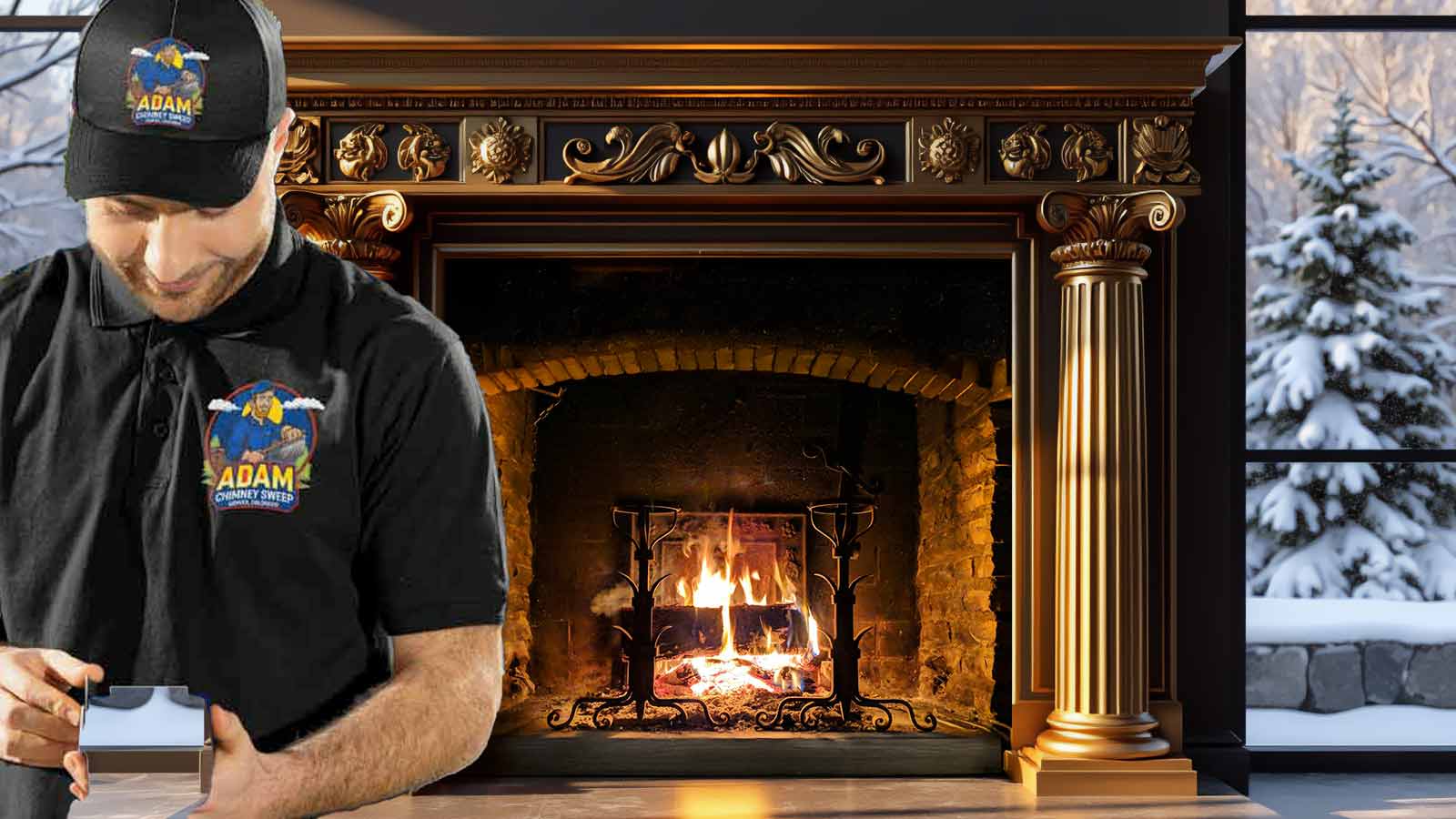 Checking the firebox and damper on a smoky fireplace call.
A Blockage in the Chimney
If warming the flue doesn't fix it, the next thing I look at is whether something's plugging the chimney. Birds love an open flue in spring, and a nest packed down at the top will choke your draft to almost nothing. Same with piled-up leaves and pine needles, or a critter that got in and didn't get out. Then there's creosote, the tarry buildup from burning wood, which narrows the flue until there's barely a passage left for smoke. A chimney that drafted fine last year can smoke up the room this year purely because the opening shrank.
You can do a rough check yourself. Open the damper all the way and shine a flashlight up the flue. If you can't see daylight at the top, or you spot a nest, debris, or thick black flaking on the walls, that's your problem. Don't poke at it from below, you'll rain soot on yourself. A blockage is a job for a sweep with the right rods and a vacuum, and clearing one is quick once we're up there. If it's an animal, we handle humane animal removal from chimneys too.
Last fall I pulled a starling nest out of a flue in Wash Park that was eighteen inches deep. The family thought they needed a whole new chimney. It was a forty-minute job. Before you spend real money, let somebody actually look up the pipe. A blockage hides as a thousand-dollar problem when it's really a quick clean.
- Adam, Owner, Adam Chimney Sweep
Creosote is its own deal, a fire hazard on top of a draft killer. If the inside of your flue is coated in shiny black or thick crust, you're overdue. We dig into that in our guide on preventing creosote buildup. A yearly chimney sweep and cleaning keeps the flue open and keeps you out of the smoke.
Negative Pressure: When Your House Fights the Fire
 This one trips up a lot of folks because the chimney is perfectly clean and still smokes. The issue isn't the chimney, it's the house. Your fireplace needs a steady supply of air coming in to replace the air going up the flue. When the house is starved for air, the chimney becomes the easiest place for outside air to get sucked back in, reversing the draft and pulling smoke into the room. Newer homes are built tight, great for the heating bill but rough on a wood fire.
The big offenders are kitchen range hoods, bathroom exhaust fans, a clothes dryer, and the furnace. A powerful kitchen hood especially can overpower a fireplace in seconds. I've stood in kitchens where flipping on the vent fan made smoke pour out like a switch. The fire was fine. The fan just won the tug of war for the house's air.
The test is easy. Crack a window near the fireplace an inch or two. If the smoking stops, you've confirmed negative pressure. Here's how to chase it down:
- Open a window close to the fireplace and leave it cracked while the flue warms up.
- Turn off the kitchen range hood, bathroom vents, and any other exhaust fans while you've got a fire burning.
- Shut down the furnace fan or a whole-house fan and see if the draft recovers. Watch the dryer too, that's a sneaky one.
In a really tight house, a permanent outside air intake feeding the firebox is the proper fix so you're not leaving a window open all winter. We can look at your setup and tell you whether that's the move or a simpler adjustment does the trick.
An Undersized or Mismatched Flue
Sometimes the smoke problem is baked into how the fireplace was built. Rule of thumb in our trade: on a masonry setup, the flue's cross-section should be about a tenth of the fireplace opening. When that ratio's off, the chimney can't move smoke fast enough to keep up, and the overflow spills into the room. We see this where somebody built a big, dramatic opening but ran a flue too small for it.
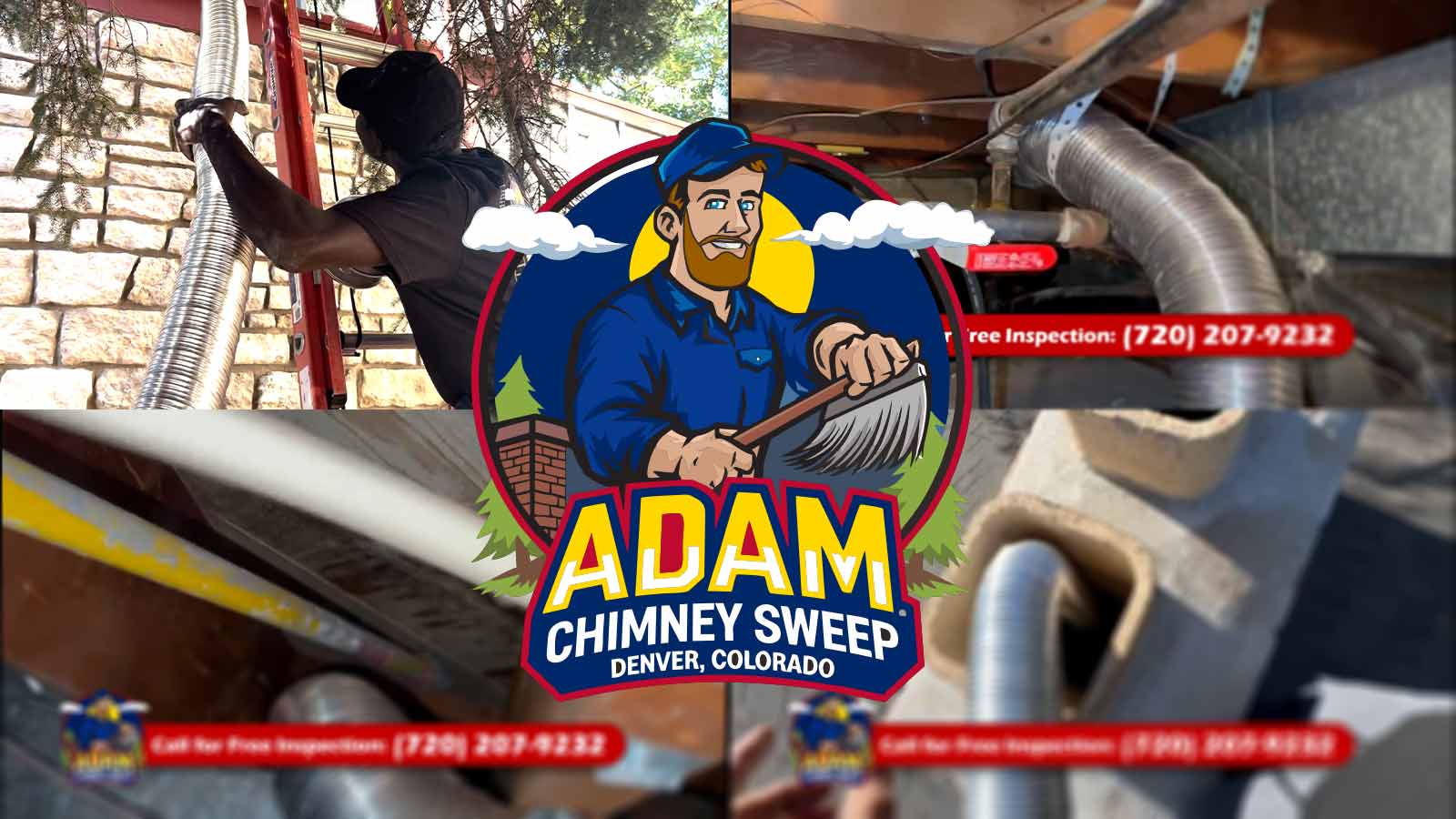
An oversized flue causes the opposite trouble, the volume of air is too big to ever warm up, so it stays sluggish and cold. Either way, the fix involves the flue itself. Resizing the opening with a smoke guard, or running a correctly sized stainless steel chimney liner, brings the ratio back into line. A liner does double duty, it right-sizes the passage and holds heat better than old clay tile, which helps the draft on top of the geometry.
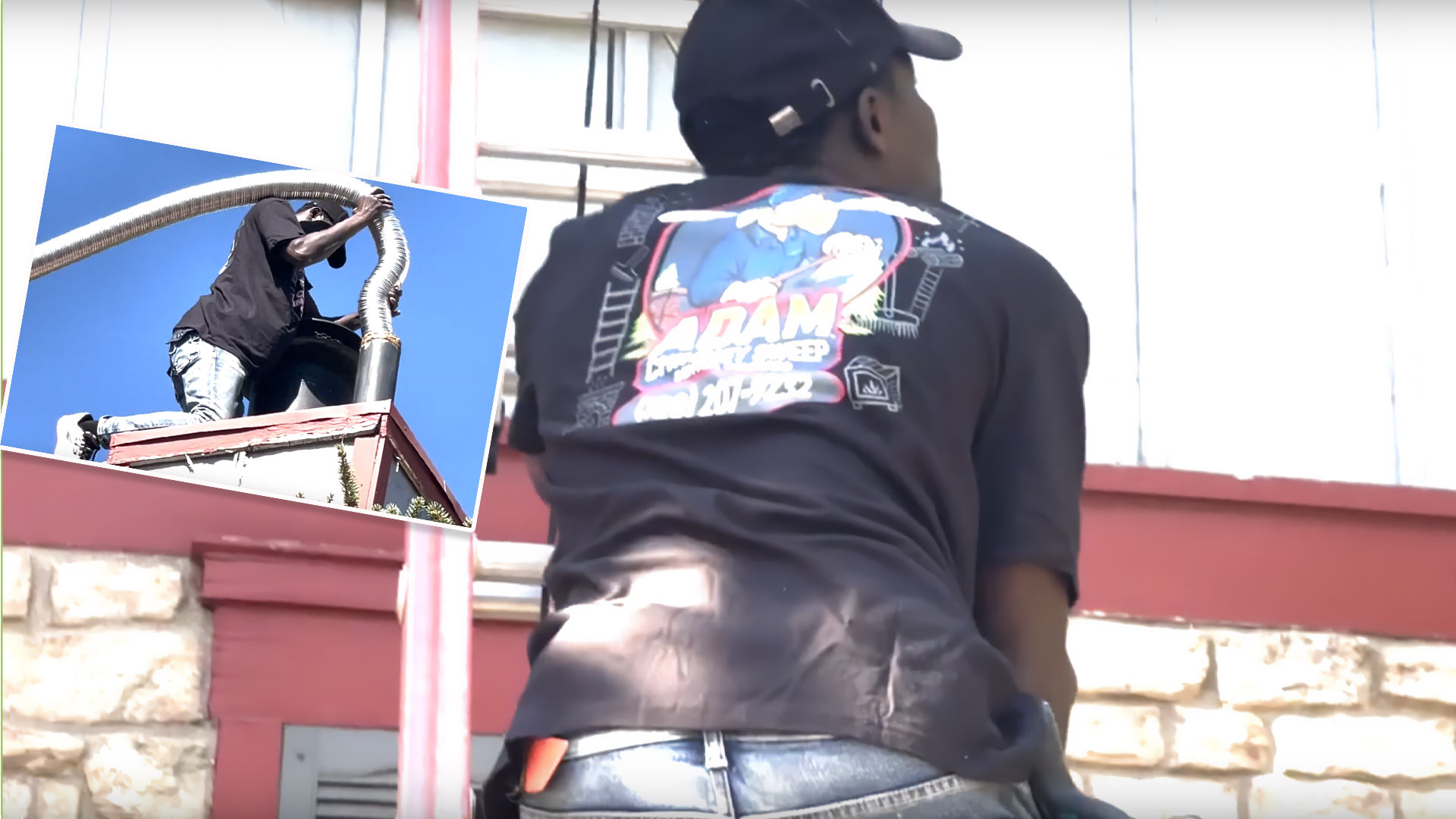 A properly sized stainless liner fixes both flue size and draft.
Altitude, Weather, and the Denver Factor
Here's where being a Colorado chimney company matters. We sit at a mile high, and the air up here is thinner than what most fireplace and damper specs were designed around. Less oxygen for the fire and a weaker natural draft means a fireplace that would draw fine at sea level can run lazy in Denver. It's not the whole story, but it's a thumb on the scale that makes every other draft problem worse. Smoldering fires are more likely up here, and they both smoke more and build creosote faster.
Weather piles on too. A cold, blustery day on the Front Range can push wind down the flue and stall your draft. Tall trees or a neighbor's higher roofline can create downdrafts that shove smoke back inside. A lot of the time the cure is at the top, a proper cap or a taller flue to clear the wind. If your fireplace smokes worse on windy days, that's the tell. A good chimney cap keeps rain and animals out and, in the right style, helps tame wind-driven downdrafts.
People move here from sea level and can't figure out why their fireplace acts up. The altitude's real, but don't blame the mountains and give up. Nine times out of ten we tighten the draft another way, warm the flue, clear the cap, get the flue sized right, and that thin Denver air stops being a problem. Don't let anyone tell you a mile-high fireplace just has to smoke. It doesn't.
- Adam, Owner, Adam Chimney Sweep
Quick Fixes You Can Try Right Now
Before you call anybody, run through this. A good chunk of smoky fireplace calls turn out to be something here, and you can knock these out yourself in a few minutes:
- Warm the flue first. Hold a lit rolled newspaper up to the open damper for a minute before building your fire.
- Check the damper. Make sure it's all the way open. A half-stuck damper smokes a room fast.
- Crack a nearby window. An inch or two gives the fire make-up air and beats negative pressure.
- Kill the exhaust fans. Shut off the kitchen hood, bath fans, and dryer while the fire's going.
- Burn dry, seasoned wood. Wet or green wood smokes like crazy. If the bark won't peel and it hisses, it's not ready.
- Build the fire toward the back of the firebox, not at the front lip where smoke escapes.
- Look up the flue with a flashlight. Damper open, light up. No daylight means you've likely got a blockage.
Work down that list and you'll solve more smoky fireplaces than you'd guess. If you've tried all of it and the smoke keeps coming, the problem's deeper and it's time to bring someone in.
When to Call a Pro
Some smoky fireplace problems aren't a DIY job, and a couple are genuine safety issues you don't want to sit on. Get a professional out if any of this sounds like you:
- You warmed the flue, cracked a window, shut off the fans, and it still smokes every time.
- You see or smell creosote, or there's heavy black buildup coating the inside of the flue.
- There's a visible blockage, a nest, debris, or an animal you can't safely reach.
- The fireplace has never drafted right since you bought the house or finished a remodel, which usually points to flue sizing.
- You're getting any carbon monoxide alarms, in which case put the fire out and get it checked right away.
A smoky fireplace that won't quit is your chimney telling you something. The honest move is a chimney inspection so somebody can run a camera up the flue and see what's going on instead of guessing. We'll tell you straight whether it's a ten-dollar fix or something bigger.
For safe wood-burning, the Chimney Safety Institute of America and the EPA's Burn Wise program both have solid info. On the fire-safety side, the National Fire Protection Association is the standard everybody in our trade works from.
Stop Fighting the Smoke and Get It Fixed
You shouldn't have to choose between a fire and clean air in your own living room. Most smoky fireplaces come down to a cold flue, a blockage, the house pulling against the draft, a mismatched flue, or our thin Denver air, and every one has a real fix. Try the quick stuff first. If the smoke keeps rolling in, let us take a look. Call Adam Chimney Sweep at (720) 207-9232 or reach out for a free quote, and we'll get your fireplace drafting the way it should this winter.