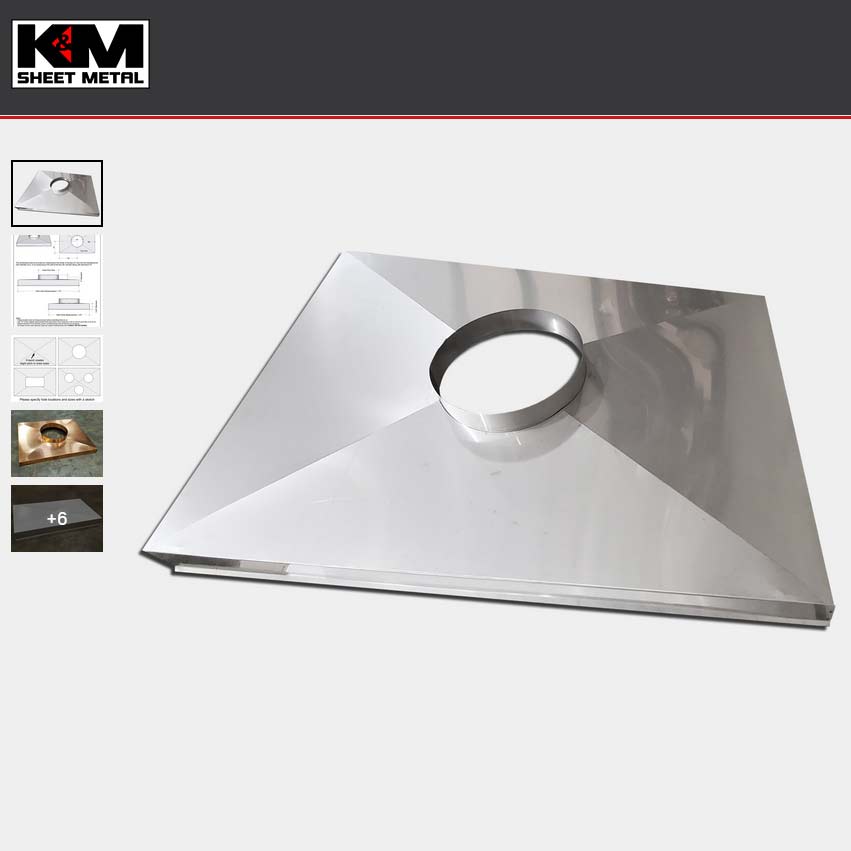
Chimney Chase Covers: Real Protection for Colorado Homes
 A chimney chase cover is the metal lid that sits on top of a boxed-in chimney, and on a Colorado roof it does a lot of quiet work. It keeps rain, snow, and blowing grit out of the chase, blocks animals from setting up shop inside, and stops water from rotting the wood frame underneath. Up in the high country of Grand County or out on the eastern plains in Prowers County, the cover is the part that takes the beating so the rest of your chimney doesn't have to. Get the right one fitted properly and you stop worrying about it for fifteen or twenty years.
Most folks mix up a chase cover with a chimney crown, so here's the quick version. A crown is the poured concrete or mortar top you'll see on a brick or stone chimney. A chase cover is the sheet-metal version for a framed chimney chase, the kind wrapped in siding or stucco with a flue or two poking out the top. If your chimney looks like a tall box that matches the rest of the house, you've almost certainly got a chase, and the cover on top is the piece we're talking about.
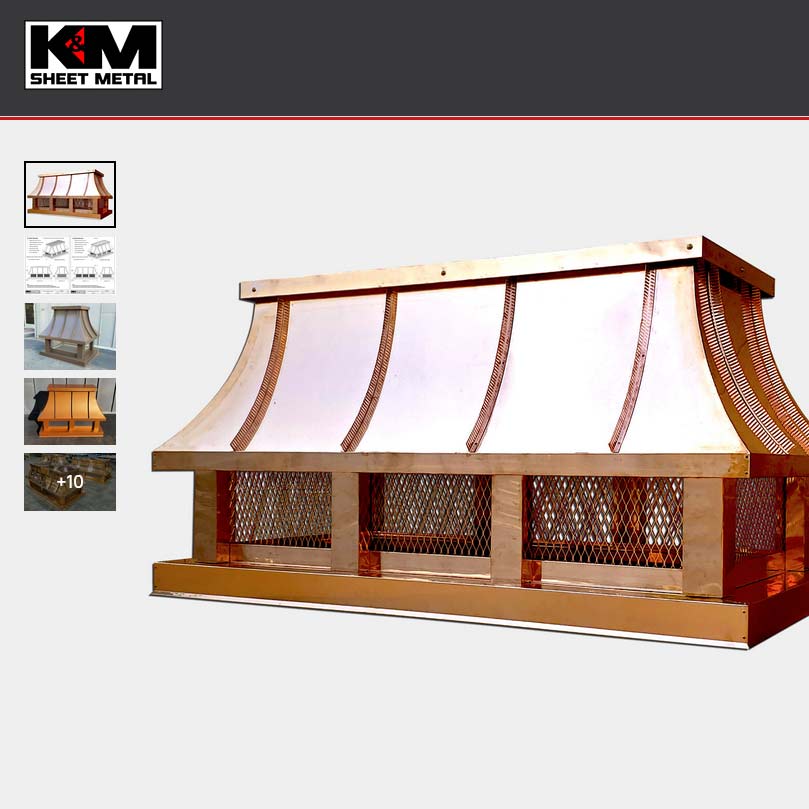
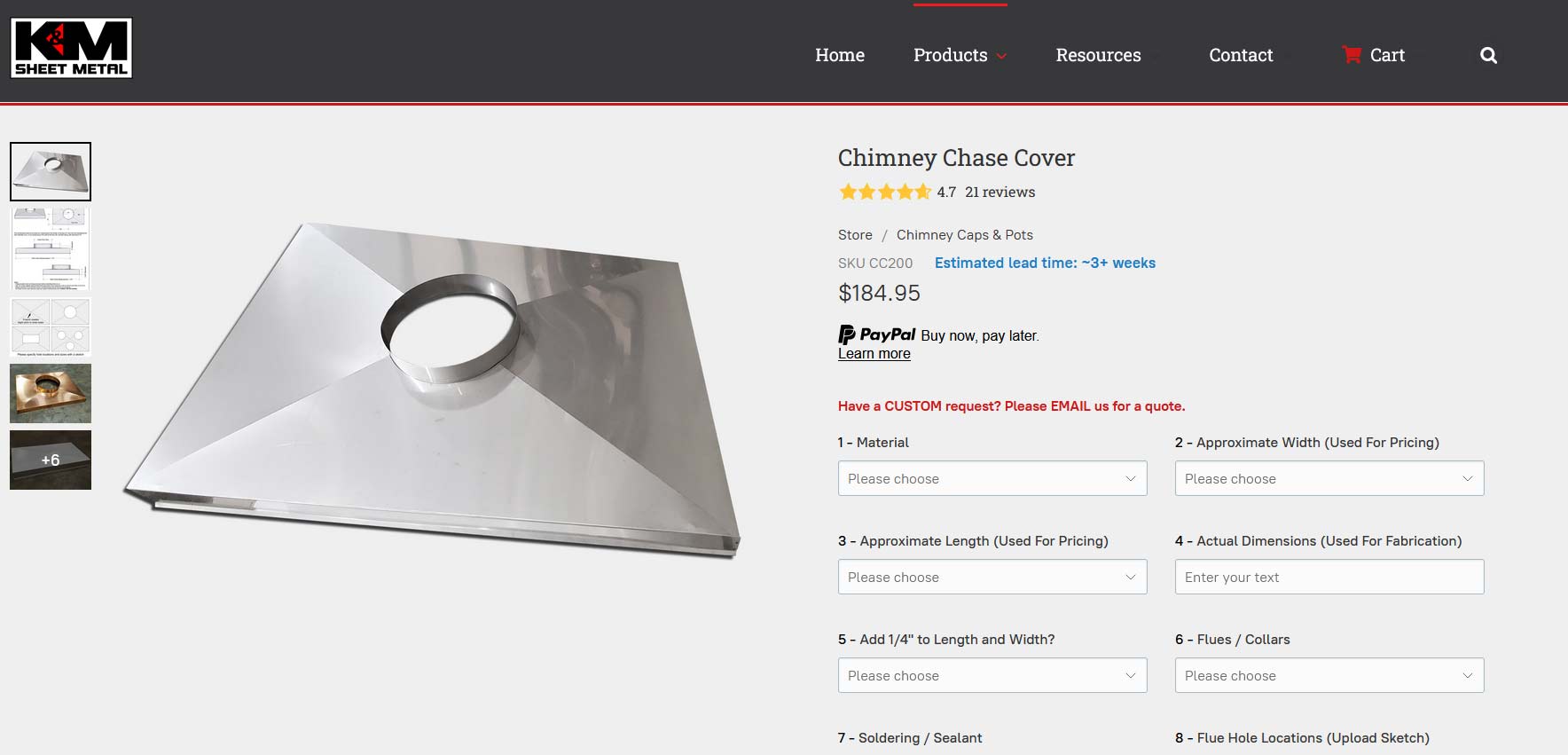
K&M Sheet Metal builds custom-made chimney chase covers in stainless steel, copper, aluminum, and Galvalume, so we can match the metal to your climate and your roofline. A good cover does two jobs at once: it keeps moisture out of the chase, and it stops the slow structural rot that turns a small leak into a framing repair. We've pulled off plenty of rusted, sagging covers that let water sit for years, and the damage hiding underneath is always worse than the homeowner expected.

 Want a chase cover installed? Call Adam Chimney at (720) 207-9232 and we'll get you on the schedule.
Nine times out of ten, when a homeowner calls me about a stain on their ceiling near the fireplace, the chase cover is the culprit. The old one rusted through, water pooled in the low spots, and it found its way down the framing. A cover is the cheapest part of your chimney, but it protects the most expensive parts. I tell people not to wait until they see a stain.
- Adam, Owner, Adam Chimney Sweep
Why Colorado Homes Need Chimney Chase Covers
Colorado throws a little of everything at a roof. We get heavy snow loads in Routt County, hard summer sun in Pueblo County, freeze-thaw cycles that swing forty degrees in a single day, and hailstorms that dent anything left exposed. A bare or failing chase top doesn't stand a chance against that combination. Here's what goes wrong when the cover gives out:
✅ Water Damage: Rain and melting snow seep into the chimney chase, and from there you get rust, mold, soaked insulation, and the kind of structural repair nobody budgets for.
✅ Animal Intrusion: Birds, squirrels, raccoons, and the odd family of mice love an open chimney. Their nests block the flue and become a real fire hazard, which is a common headache out in rural spots like Conejos County.
✅ Energy Loss: A gap around the flue lets heated air slip out during the long cold winters in Delta County, and you feel that on the gas bill every month.
✅ Debris Accumulation: Leaves, pine needles, twigs, and dirt pile up where they shouldn't, choking airflow and giving a stray ember something to catch on.
Here's the part most people don't think about. Our freeze-thaw swings are brutal on metal. Water gets into a seam or a screw hole, freezes overnight, expands, and pries the gap a little wider. Do that a few hundred times over a winter and a tiny pinhole becomes a steady drip. That's why a flat, cheap cover with no drainage fails so fast here. The water has nowhere to go, so it just sits, freezes, and works the metal apart.
Key Features of K&M Sheet Metal Chimney Chase Covers
1. Durable Material Choices
K&M Sheet Metal offers several metals, and each one fits a different climate and look. There's no single "best" material, only the best one for your house and your weather. Here's how they stack up:
| Material | Key Benefits | Best for Counties |
|---|---|---|
| Stainless Steel | Rust-resistant, ideal for snowy areas | Routt, Pitkin |
| Copper | Long-lasting, develops a natural patina over time | La Plata, Garfield |
| Galvalume Steel | Zinc/aluminum coated, excellent corrosion resistance | Pueblo, Rio Blanco |
| Aluminum | Lightweight, affordable, and corrosion-resistant | Prowers, Conejos |
If you want my honest take, stainless steel is what I put on most Front Range and mountain homes. It shrugs off snow, it doesn't rust at the screw holes, and it lasts. Copper costs more, but if you've got a nice house and you want the cover to look like part of the architecture, it ages into a beautiful patina and basically outlives everything else up there. Aluminum and Galvalume are solid budget picks, and they hold up fine in drier, lower-elevation spots.
2. Customizable Design Options
No two chimneys are exactly alike, so K&M Sheet Metal builds custom-fit covers for homes in Crowley County and everywhere else we work. Covers come in different sizes and layouts so the flue openings line up right and the whole thing seats tight to the chase. A cover that's even half an inch off is a cover that leaks, so we measure for the actual chimney rather than grabbing something close off a shelf.
Customization options include:
- Multiple metal thicknesses, so the cover doesn't oil-can or flex under snow load.
- Flat or sloped designs that move water off the top instead of letting it pond.
- Custom colors and finishes that match your siding, trim, or roof.
3. Cross-Break Design for Water Drainage
One feature I won't skip is the cross-break. It's a slight ridge bent into the surface of the cover that pitches water toward the edges instead of letting it sit in the middle. Sounds minor. It's not. In a high-snowfall area like San Juan County, a flat cover holds a pool of meltwater every afternoon, and that standing water is exactly what rusts a cover out from the center. The cross-break is what keeps the top draining and dry.
What the cross-break does for you:
- Sheds water fast so nothing pools on top.
- Cuts down rust and corrosion by keeping the surface dry.
- Keeps the cover stiff and flat for the long haul.
The single biggest mistake I see on chase covers is no cross-break and screws driven straight through the flat top. Every one of those screw holes is a place for water to get in, and with no slope the water never leaves. I bend a cross-break into every cover and I seal the fasteners. It's a little more work on the bench, but it's the difference between a cover that lasts two winters and one that lasts twenty.
- Adam, Owner, Adam Chimney Sweep
4. Easy Installation for Lasting Performance
Done by a pro, the install goes quick and the cover sits tight against weather. How we fasten it depends on your chimney and your exposure. The options:
- Screw-Down Installation: Locks the cover down hard, which is what you want in a windy spot like Bent County.
- Seamless Welding: Gives a clean, jointless finish that holds up for years.
- Storm Collar Add-On: Wraps the flue penetration so wind-driven rain can't sneak in around the pipe.
How a Chase Cover Replacement Works, Step by Step
People always ask what actually happens on install day, so here's the order we work in:
- Measure the chase. We get up on the roof and take exact outside dimensions, then mark where each flue comes through. This is the step that makes or breaks the fit.
- Build the cover. K&M fabricates it to those numbers in your chosen metal, with the cross-break bent in and the flue holes cut to size.
- Pull the old cover. We remove the failed cover, clear out any debris or rust scale, and check the chase top for water damage while it's open.
- Set and fasten the new one. The cover drops over the flues, seats flush, and gets screwed or welded down depending on the plan.
- Seal everything up. We run sealant on the fasteners and seams and slip a storm collar around each flue.
- Final check. We confirm water drains off correctly and nothing's left open, then haul the old cover away.
Why Choose K&M Sheet Metal Chimney Chase Covers for Colorado Homes?
Colorado weather is hard on chimneys, so a chase cover here has to be built for it. A K&M Sheet Metal cover gives you:
🏡 Better Curb Appeal: A clean, well-fitted cover sharpens up the whole roofline instead of being the rusty eyesore up top.
🔥 A Healthier Fireplace: Keeps the flue clear and airflow steady, which helps the fireplace draft the way it should.
🛡 Years of Service: Built to take snow, sun, hail, and freeze-thaw without giving out.
🌿 Cleaner, Safer Operation: Keeps wildlife out and helps your system vent properly.
Installation Process: What to Expect
At Adam Chimney, we handle the chase cover install start to finish so it fits right and stays sealed. Our process:
- Inspection: We look over the chimney structure and measure for an exact fit.
- Material Selection: We help you pick the cover that suits your home and your weather.
- Installation: We mount the cover for a watertight seal.
- Final Inspection: We check that it vents and sheds water the way it should.
We serve homeowners across Archuleta, Baca, Bent, Cheyenne, Conejos, Costilla, Crowley, Delta, Garfield, and Grand Counties. If your chimney sits in a county we didn't name, call anyway. We cover a wide stretch of the state and we'll tell you straight if we can reach you.
Warning Signs Your Chase Cover Needs Attention
You don't have to climb up there to catch most problems. A lot of them show up from the ground or inside the house. Keep an eye out for:
- Rust streaks running down the chimney siding or stucco, usually the first thing people notice.
- A water stain on the ceiling or wall near the fireplace.
- A musty or damp smell when you open the fireplace doors.
- Visible sagging, denting, or a cover that's lifting at a corner.
- Birds, squirrels, or scratching sounds coming from the chimney.
- Standing water or ice you can see sitting on top of the cover.
Catch any of these early and a chase cover swap is a straightforward, affordable job. Let it ride and the same water keeps working into the framing, the firebox, and the ceiling below, and now you're paying for a lot more than a piece of metal. The U.S. Consumer Product Safety Commission and chimney safety groups both point to water as the number-one enemy of masonry and metal chimneys, so a sound cover really is your first line of defense. If you want to read up on chimney care and safety standards, the Chimney Safety Institute of America is a solid, no-nonsense resource.
A chase cover replacement is one of the most satisfying jobs we do, because it's such an easy win for the homeowner. We're usually in and out in a couple of hours, the old rusty mess goes away, and the new cover protects the house for the next two decades. If you've got rust running down your chimney, don't put it off another season. That stain is telling you water's already getting in.
- Adam, Owner, Adam Chimney Sweep
Customer Testimonials
“The copper chase cover we had installed has held up great against the snow in Routt County! Excellent craftsmanship and durability.”— John M., Routt County, CO
“Our new stainless steel chimney chase cover in Pueblo County has prevented leaks and improved our home’s efficiency. Highly recommended!”— Sarah T., Pueblo County, CO.
“Adam Chimney’s team did an amazing job fitting our new chase cover in Grand County. Great investment for our home!”— Mike R., Grand County, CO
Frequently Asked Questions
Q: How often should I replace my chimney chase cover?
A: On average, stainless steel covers last 15-20 years, while galvanized steel may need replacement sooner, depending on weather exposure. Up here, where snow and freeze-thaw work the metal hard, I'd have any cover looked at once it passes the ten-year mark.
Q: Can I install a chimney chase cover myself?
A: You can, but the fit is everything, and a cover that's off by a fraction will leak. Pro installation gets you exact measurements, a cross-break for drainage, sealed fasteners, and a storm collar around the flue. It's also a steep, slick roof, so safety alone is a good reason to let us handle it.
Q: What maintenance is required?
A: Not much. Have it looked at during a regular chimney inspection, clear off leaves or pine debris a couple times a year, and glance up after big hail. That's about it for a quality cover.
Q: What's the difference between a chase cover and a chimney cap?
A: The chase cover is the flat metal lid over the whole chimney chase. The cap is the smaller piece with a screen that sits on the flue opening itself to keep out rain and sparks. Most chases need both, and we can fit them at the same time.
Q: My chimney is leaking. Is it always the chase cover?
A: Not always, but it's the first thing I check. Leaks can also come from failed flashing, cracked masonry, or a bad crown. During an inspection we track down where the water's actually getting in before recommending a fix, so you're not paying for the wrong repair. You can read more on our chimney inspection page.
Get Your Chimney Chase Cover Installed Today!
Protect your chimney and your home with a Chimney Chase Cover from K&M Sheet Metal, installed by Adam Chimney. We've been doing this around Denver and across Colorado since 2001, and a chase cover is one of the smartest, lowest-cost upgrades you can make for the life of your chimney. We proudly serve homeowners in Archuleta, Baca, Bent, Cheyenne, Conejos, Costilla, Crowley, Delta, Garfield, and Grand Counties.
Ready to get started, or just want a straight answer about whether your cover needs replacing? Call Adam directly at (720) 207-9232, or head over to our contact page and we'll set up a time to take a look. If you think the leak might be coming from somewhere else, our chimney repair team can sort that out too.