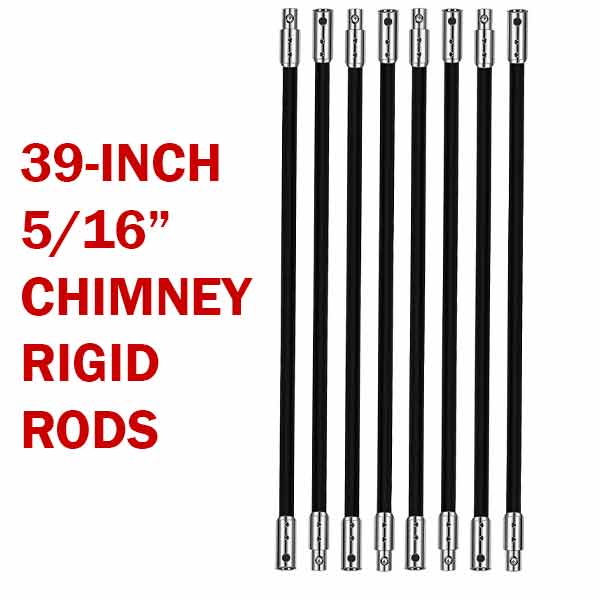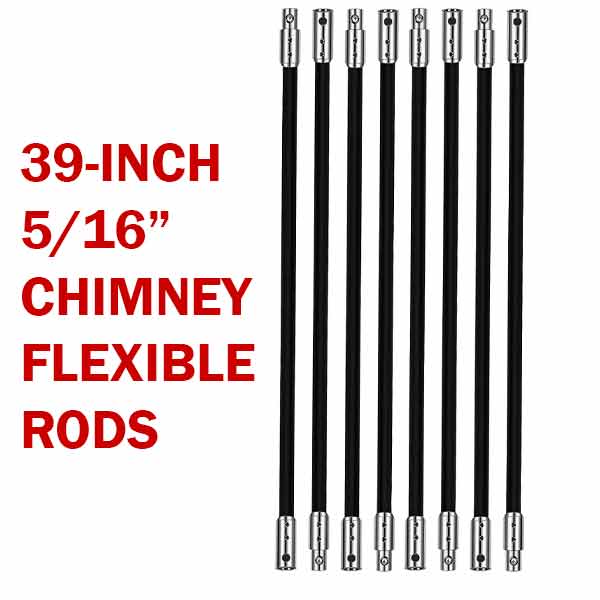
 The 39-inch 5/16″ chimney flexible rods are the cleaning rods we reach for when a flue won't cooperate, and they're built for both working chimney sweeps and the hands-on homeowner who'd rather do the job right than fight with cheap gear. These rods bend around tight corners, slip past offsets, and follow the kind of awkward flue shapes that leave stiff rods stuck halfway up. If you've ever tried to push a rigid rod through a chimney with a dogleg in it, you already know why flexibility matters.
We build these rods to do real work. The material holds enough backbone to scrape packed soot and creosote loose, but it flexes instead of snapping when the flue turns. Masonry chimney or stainless liner, this is the rod that gets a brush all the way to the top and back without drama.
What Makes the 39-Inch 5/16″ Chimney Flexible Rods Worth It
 The 39-inch 5/16″ chimney flexible rods earn their keep on the jobs where ordinary rods quit. Out here in Denver we run into every flue shape you can imagine, from skinny century-old liners in Capitol Hill bungalows to short stubby vents on a pellet stove. A rod that can't bend is a rod that leaves creosote behind, and leftover creosote is exactly what starts chimney fires. So the whole point of a flexible rod is a cleaner flue with less wrestling, which is good for your back and good for the safety of the house.
I've lost count of the rods I've snapped off in a chimney over the years before I switched to good flexible ones. A 5/16 co-polymer rod bends through an offset that would have me cussing at a fiberglass rod, and it doesn't crack in the cold. On a Denver winter roof, that toughness is the whole ballgame.
- Adam, Owner, Adam Chimney Sweep
Bends Where It Counts
The 5/16-inch diameter is the sweet spot. It's thin enough to flex through tight corners and follow a chimney with a couple of bends in it, but it still carries enough stiffness to push a brush hard against the flue wall. Chimneys with multiple offsets or a sharp angle near the smoke chamber are where this rod really shines. You feel the rod track the bend instead of jamming, and the brush keeps full contact with the walls the whole way.
Co-Polymer That Takes a Beating
These rods are made from a durable co-polymer, and that material choice is doing a lot of quiet work. Co-polymer flexes again and again without fatiguing, so the rod won't break, crack, or take a permanent bend after a season of hard use. Cheaper rods go brittle, especially in cold weather, and a brittle rod is one bad twist away from leaving half of itself stuck up a chimney. Co-polymer shrugs off that kind of abuse and keeps its shape job after job.
39 Inches Is the Right Length
At 39 inches a rod is long enough to cover real ground but short enough to handle without flailing around on a roof or in a firebox. Need more reach for a tall chimney or a deep flue? Thread on another rod or two. The sections couple together so you build out exactly the length the job calls for, then break them back down for the truck. It's a simple system, and simple is what holds up over years of use.
Threads That Fit Your Brushes
The rods come with standard threaded ends, so they pair with the brushes, scrapers, and flails you already own. There's no proprietary nonsense here. Whatever cleaning head your job needs, you screw it on and go. That universal fit is a big deal for working sweeps who carry a whole kit of heads for different flue sizes and buildup types.
Light Enough to Carry All Day
A rod has to be sturdy without being a brick. These hit that balance. They've got enough weight to feel stable when you're pushing and rotating, but they're light enough that a full pack doesn't wear you out by the third job of the day. Compact too, so they roll up and store easy or ride in a truck box without taking over.
Where These Rods Get Used
Flexible rods aren't a one-trick tool. Here's the kind of work they handle day to day:
- Stainless steel liners: Modern flexible liners need a rod that cleans hard without gouging the metal. The flex on these rods lets you follow the liner and brush it out without chewing up the flue.
- Masonry chimneys: Old brick flues cake up with heavy soot. These rods carry enough push to drive a brush through that buildup and scrub it back to clean.
- Offset chimneys: Anywhere the flue jogs sideways before it runs straight, a stiff rod fights you. A flexible rod tracks the bend and keeps moving.
- Pellet stove vents: The narrow flues on pellet stoves call for a thinner rod that fits the smaller pipe. The 5/16 size slips right in.
- Wood stove pipe: Stove connector pipe and the flue above it collect creosote fast, and these rods reach the spots a quick hand-brush misses.
How to Use the Flexible Rods
Using these rods is straightforward once you've done it a time or two. Here's the order of operations we follow on the job:
- Connect the rods: Thread enough rods together to reach the length you need. Snug each joint by hand so a section doesn't unscrew mid-clean (more on that below).
- Attach a cleaning head: Screw a compatible brush, scraper, or flail firmly onto the end. Match the brush size to the flue so you get full wall contact.
- Start cleaning: Feed the head into the chimney and rotate the rod as you push it up. Keep it turning so the bristles drag against every side of the flue, not just one face.
- Add rods as you go: When you run out of length, thread on another section without pulling the brush back out. That keeps you from losing your place in the flue.
- Pull back and check: Once you've worked the full length, draw the rods out slowly and look over the flue for any creosote or debris you missed. A second pass on stubborn spots is normal.
The one tip I give every DIYer who buys rods: always rotate the same direction you spun the rods together, never the opposite way. If you reverse it, you can unthread a section right off inside the chimney, and then you're fishing a brush out of your own flue. Keep it turning clockwise and you'll never have that headache.
- Adam, Owner, Adam Chimney Sweep
Technical Specifications
| Feature | Detail |
|---|---|
| Length | 39 inches per rod |
| Diameter | 5/16 inch |
| Material | High-durability co-polymer |
| Flexibility | Designed for navigating tight bends |
| Compatibility | Standard threaded ends for brushes |
| Weight | Lightweight for easy handling |
Why Chimney Pros Reach for These Rods
Working sweeps trust the 39-inch 5/16″ flexible rods because they hold up and they perform. Cleaning a chimney in a single-family home or running back-to-back jobs on commercial properties, you get the same steady results every time. That consistency is what you pay for in a professional tool. A rod that works great on Monday and fails on Friday isn't worth carrying.
What People Tell Us
“These rods are a game-changer! I’ve used them on several jobs where traditional rods couldn’t handle the bends, and they worked flawlessly.” – David, Professional Chimney Sweep.
“As a DIYer, I appreciate how easy these rods are to use. They’ve saved me time and effort cleaning my chimney.” – Amy, Homeowner.
Available Packages
Pick the pack that fits how much cleaning you actually do:
- Single Rod: Good for a small job or for replacing one rod in a set you already own.
- 5-Rod Pack: The right call for a DIY homeowner with a standard chimney and a once-a-year cleaning habit.
- 10-Rod Professional Pack: A full kit for sweeps working multiple properties or tackling tall commercial flues that need real length.
Common Problems These Rods Solve
Most of the calls we get about chimney cleaning come down to the same handful of issues, and the right rod heads off all of them. Knowing what to watch for helps you clean smarter, whether you're doing it yourself or deciding it's time to ring a pro.
- Creosote stuck in the corners: A stiff rod skips over the inside of a bend, so creosote builds up right where the flue turns. A flexible rod follows the curve and scrubs that spot clean.
- Rods snapping in cold weather: Brittle rods crack in the cold, and Denver gets plenty cold. Co-polymer stays flexible down into freezing temps, so it bends instead of breaking.
- Brushes losing wall contact: If the rod can't hold the brush tight against the flue, you get a streaky half-clean. The stiffness in a 5/16 rod keeps the bristles pressed where they belong.
- Not enough reach: Short rods leave the top of a tall flue dirty. The threaded sections let you add length until you reach the cap.
- Gear that won't last: Cheap rods go soft or shed their threads after a season. Co-polymer holds its shape and its fit job after job.
Good rods are honestly half of a good cleaning. I've gone up on Denver roofs with the wrong tools and left creosote behind without even knowing it, back before I knew better. The flue looked clean from the bottom. With a flexible 5/16 rod and the right brush, I can feel when I've actually scrubbed every wall. That's the difference between a chimney that's clean and one that just looks clean.
- Adam, Owner, Adam Chimney Sweep
Colorado Homeowners and the DIY Habit
Colorado is full of people who'd rather do it themselves, and that DIY streak runs deep here. From the busy streets of Denver out to mountain towns like Blue River and Breckenridge, folks take real pride in keeping up their own homes. Some are restoring old historic places, some are building custom furniture in the garage, and plenty are climbing up to clean their own chimneys every fall.
Why DIY Fits Colorado
The land out here seems to bring out the hands-on side of people. Maintaining and improving your own place isn't just a chore in Colorado, it's part of how folks connect to where they live, save a little money, and make a house feel like theirs. Local hardware stores, craft shops, and weekend workshops give DIYers the tools and the know-how to take on everything from landscaping to chimney cleaning.
A Growing Trend Across the State
More Colorado homeowners are picking up the DIY tools every year because it's both cheaper and satisfying. People are adding energy-efficient insulation up in Fort Collins, building custom pieces in Colorado Springs, and handling their own basic upkeep all over the state. Chimney cleaning, gutter clearing, and small repairs are some of the most popular projects, and a good set of flexible rods makes the chimney part of that list a whole lot easier.
A Word on Doing It Yourself Versus Calling a Pro
These rods make a real DIY chimney cleaning possible, and we're all for it. A homeowner with the right rods, a good brush, and a little patience can knock loose a season's worth of soot. That said, cleaning is only half of chimney safety. The other half is the inspection, and that's the part a brush can't do for you. A rod won't tell you that a flue tile has cracked, that the liner is failing, or that the crown is letting water in. If you're cleaning your own chimney, it's still smart to have a pro look it over every so often to catch the things you can't see from the bottom. The National Fire Protection Association recommends a yearly check, and that guidance holds whether you sweep it yourself or not. You can read their fire-safety guidance straight from the source at the National Fire Protection Association.
A Quick FAQ on Chimney Cleaning Rods
How many rods do I need for my chimney?
It depends on how tall your flue runs. A typical single-story home with a straight flue often takes four or five 39-inch rods to reach the cap. Two-story homes and tall masonry chimneys can need more, which is why the rods thread together. When in doubt, the 10-rod pack covers almost any residential chimney with rods to spare.
Will the 5/16 rods work in my liner?
In most cases, yes. The 5/16 diameter is thin enough for standard stainless steel liners and narrow pellet vents while still being stiff enough to clean a full-size masonry flue. Match the brush head to your flue size and you're set.
How do I keep a rod from unscrewing inside the chimney?
Always rotate the rods in the same direction you threaded them together, which is clockwise. If you spin them counterclockwise while cleaning, a section can unthread and come loose up in the flue. Keep it turning one way and the joints stay tight.
How long do co-polymer rods last?
With normal use and a little care, a good co-polymer rod lasts for years. The material doesn't go brittle or take a permanent bend the way cheaper rods do. Store them out of direct sun, keep the threads clean, and they'll keep working clean after clean.
Can these rods damage my flue?
Used correctly, no. The co-polymer is firm but not abrasive to the flue itself, and the brush does the scrubbing. The main thing is to pick the right brush size so you're cleaning the walls and not forcing an oversized head through a tight liner.
The Right Tool Backs Up the Right Work
Whether you're a working sweep or a homeowner who likes handling things yourself, the 39-inch 5/16″ chimney flexible rods are the kind of tool you only have to buy once. They bend where stiff rods fail, they hold up through Colorado winters, and they pair with the brushes you already trust. A clean flue is a safe flue, and the right rod is how you get there. If you'd rather hand the job to a crew that's been doing it on Denver rooftops since 2001, that's what we're here for too. Take a look at our Denver chimney sweep and cleaning service or reach out anytime through our contact page, and we'll get your chimney handled.
Order Your Flexible Rods Today
Make your chimney cleaning quicker and a lot less aggravating with our 39-inch 5/16″ chimney flexible rods. Seasoned pro or first-time DIYer, these rods belong in your chimney-cleaning kit.
Call us at (720) 207-9232 or visit our website to place your order today!