If you've ever wondered how often should you sweep your chimney here in Colorado, the short answer is once a year, and the longer answer is what this whole guide is about. I've been climbing onto Denver roofs since 2001, and the "once a year" rule is a good starting point, but it bends a lot depending on what you burn, how much you burn it, and where you live along the Front Range. A cabin up in Evergreen that runs a wood stove every night is a completely different animal than a gas fireplace in a Wash Park bungalow that gets lit twice a winter. Both need attention. They just don't need the same attention on the same clock.
So let's break down what actually changes the schedule, what happens to your chimney when you push it too long, and how to read the warning signs yourself between visits. No scare tactics, just what I see on the job.
How Often Should You Sweep Your Chimney? Start With Once a Year
 The National Fire Protection Association says every chimney, fireplace, and vent should be inspected at least once a year, and swept whenever that inspection turns up buildup or anything blocking it. That's the rule the whole industry runs on, and it's a good one. An annual visit catches creosote before it gets dangerous, spots a cracked flue tile before water makes it worse, and clears out anything a critter dragged in over the summer. You can read the NFPA's own guidance over at nfpa.org if you want it straight from the source.
Here's the part people miss, though. "Inspect once a year" and "sweep once a year" aren't the same sentence. Some chimneys need sweeping every single year because they get used hard. Others might go two years between actual cleanings but still get looked at annually. The inspection tells us which one you are. That's why I always check before I brush. There's no point charging somebody to sweep a flue that's barely got a dusting in it, and there's no way I'd skip a flue that's caked.
People hear "once a year" and they treat it like an oil change, same thing every time no matter what. It's not. The inspection is the part that matters most. Some of my Denver customers genuinely need a sweep every fall, and some I look at and tell them they're fine for another season. You don't know which one you are until somebody actually puts eyes and a camera up there.
- Adam, Owner, Adam Chimney Sweep
It Really Comes Down to What You Burn
Fuel type is the single biggest thing that changes your schedule. What's going up the flue decides how dirty it gets, and a gas log and a wood stove are about as different as it gets. Let me walk through each one the way I'd explain it standing in your living room.
Wood-Burning Fireplaces and Stoves
This is the one that needs the most attention, plain and simple. Wood smoke leaves creosote behind, and creosote is what catches fire inside chimneys. If you've got an open wood-burning fireplace or a wood stove and you use it through a real Colorado winter, plan on a sweep every year. No "maybe." If you're burning most nights from October to April, I'd honestly look at it twice a season, once before you start and once mid-winter if you're a heavy burner. Wet or unseasoned wood makes it dramatically worse, and I'll get into why in a minute.
Gas Fireplaces and Inserts
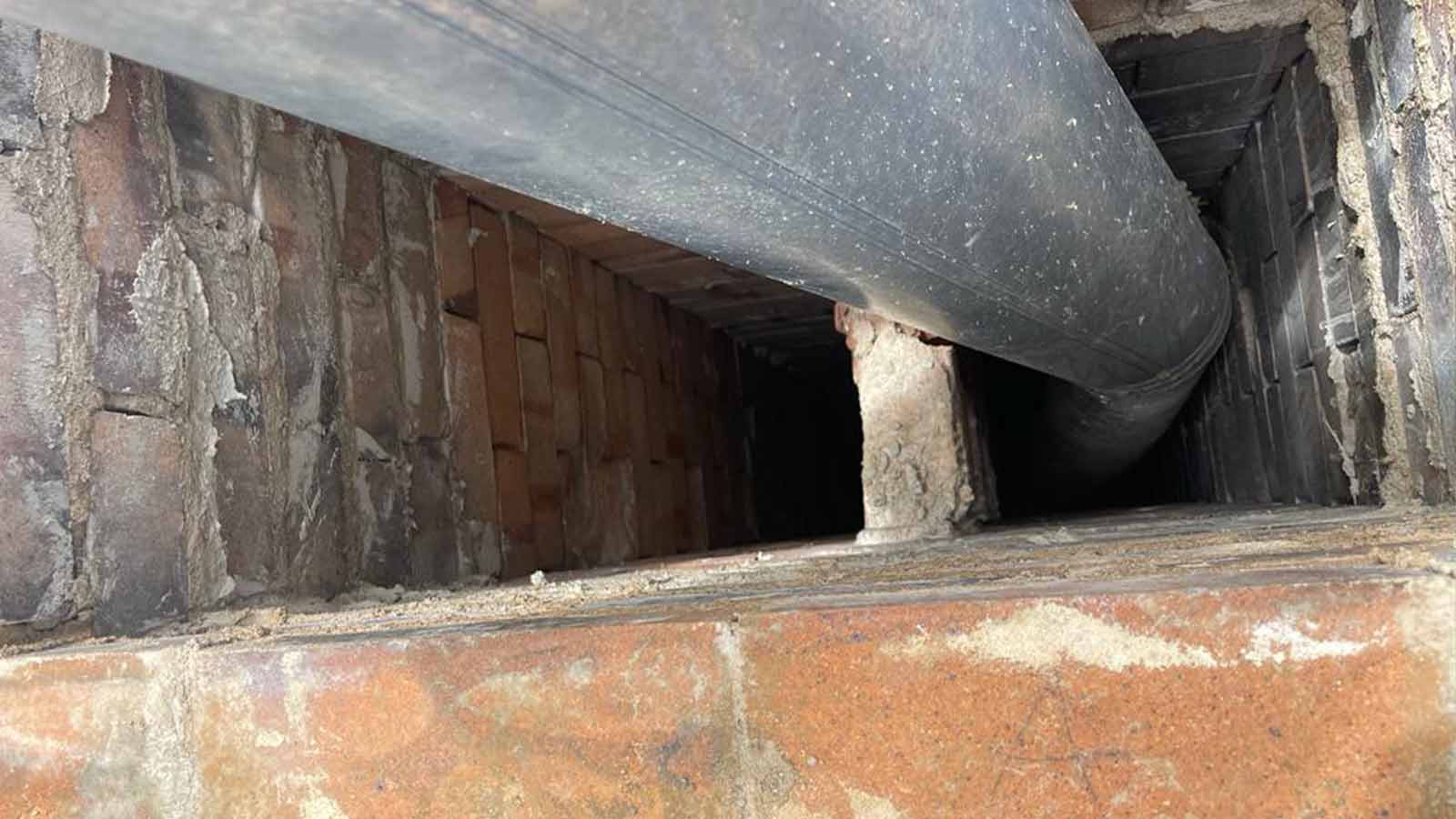
Gas is cleaner, no argument there. It doesn't throw creosote the way wood does, so a gas fireplace or a gas insert won't gum up the flue nearly as fast. But "cleaner" doesn't mean "ignore it." Gas appliances still need an annual inspection, and here's the thing folks don't expect: gas exhaust carries a ton of water vapor, and that moisture is brutal on a chimney liner. I've pulled apart gas flues with rusted-through liners and crumbling tile that the homeowner never thought twice about because "it's just gas." The vent can also get blocked by a bird's nest or a chunk of failed masonry, and a blocked gas flue is a carbon monoxide problem fast. So gas gets inspected yearly, even if it rarely needs an actual brushing.
Pellet Stoves
Pellet stoves land in the middle. They burn cleaner than cordwood but still produce ash and some buildup, and their venting is narrow, so it doesn't take much to choke airflow. Most pellet setups want a good cleaning once a season, sometimes more if you run it as your main heat. Check your manufacturer's manual too, because a lot of them spell out a cleaning interval and running past it can void the warranty.
The biggest myth I run into is folks with gas fireplaces thinking they're off the hook completely. Gas doesn't make creosote, true, but all that water vapor it puts out will eat a liner alive over a few winters, and a nest up top can back exhaust right into the house. I'd rather spend twenty minutes inspecting a clean gas flue than get a carbon monoxide call in January.
- Adam, Owner, Adam Chimney Sweep
What Pushes You Past the Once-a-Year Rule
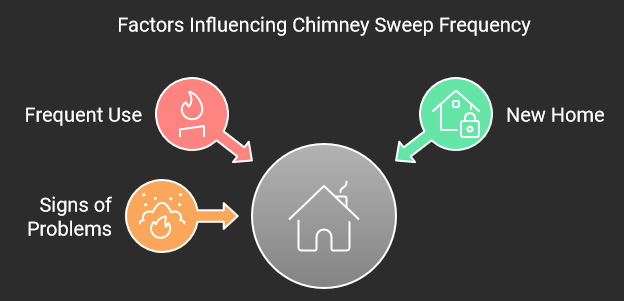
Fuel sets your baseline. A handful of other things can move you to a tighter schedule, and a few of them are specific to living in Colorado. Here's what bumps you up:
- Heavy burning. The old rule of thumb is a sweep for about every cord of wood you burn. Go through three or four cords a winter and one annual cleaning won't keep up.
- Wet or unseasoned wood. Green wood burns cool and smoky, and cool smoke is what packs creosote onto your flue walls. Properly seasoned, dry wood burns hotter and far cleaner. This one's huge out here.
- Slow, smoldering fires. Damping a wood stove way down so it burns all night feels efficient, but those low, starved fires are creosote factories. Hot and bright beats low and slow for chimney health.
- Altitude. Thinner air up in the Colorado high country means less oxygen for combustion, so fires can burn less completely and leave more behind. A place in Conifer or Bailey often dirties a flue faster than the same stove down in the city.
- Freeze-thaw cycles. Denver swings above and below freezing constantly all winter. Water gets into tiny masonry cracks, freezes, expands, and pries them wider. That's why an annual look matters even if the inside is clean.
- A new-to-you house. If you just bought the place and have no idea when the chimney was last touched, don't guess. Get it inspected before the first fire.
That altitude and freeze-thaw combination is exactly why I tell people the national rules are a floor, not a ceiling, for Colorado. The state's own air-quality folks at cdphe.colorado.gov push clean, efficient burning for a reason, and a clean-burning fire is also a clean-chimney fire. If you want to go deeper on keeping buildup down between sweeps, I wrote a whole piece on preventing creosote buildup that's worth a read.
Watch This Before You Decide You're Fine
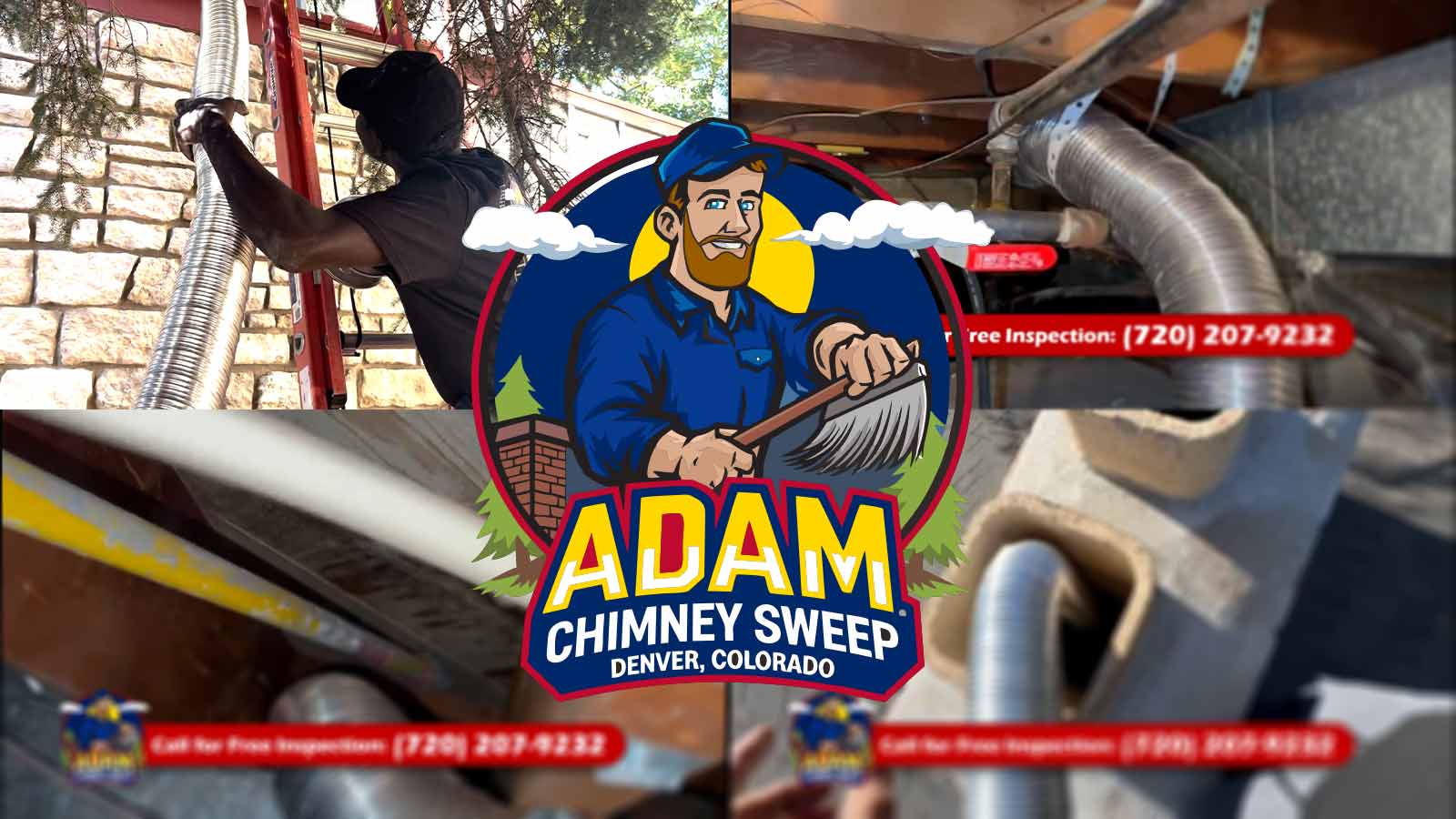
Sometimes it's easier to just see the work. Here's a real sweep and cleaning on a Denver home so you know what a proper job actually looks like, not the chimney-sweep-on-a-rooftop cartoon version.
Warning Signs You're Overdue Between Visits
You don't have to wait for your scheduled date if your chimney is telling you something's wrong. Your nose and your eyes catch a lot. If you notice any of these, call somebody out sooner rather than later:
- A campfire smell in the house when the fireplace isn't even lit, especially on warm or humid days. That's creosote you're smelling, and it means there's enough up there to stink.
- Smoke spilling back into the room instead of drawing up. That's a draft problem, often from buildup or a partial blockage.
- Black, oily, or tar-like flakes dropping into the firebox, or a thick shiny coating you can see on the flue walls. Glazed creosote is the dangerous kind.
- Fires that won't get going or seem starved for air even with the damper wide open.
- Animal sounds, nesting debris, or a damper that won't move. Birds and squirrels love an uncapped flue in the off-season.
- A carbon monoxide alarm going off with no obvious cause. Treat that as an emergency, get out, and get the flue checked.
Any one of those is worth a phone call. A couple of them together and I'd stop using the fireplace until somebody's looked at it. While we're up there we'll usually catch the smaller stuff too, a worn chimney cap letting water and animals in, or early cracking in the crown that's cheap to fix now and expensive to ignore.
The Real Cost of Skipping It
 A sweep is one of the cheapest things you'll ever do for your house. Skipping it is one of the most expensive bets you can make. Here's what's actually on the table when a chimney goes years without a cleaning.
The big one is a chimney fire. Creosote is basically concentrated, flammable tar, and once there's enough of it, a stray spark or an overhot fire can light it off. A chimney fire can sound like a freight train or it can be nearly silent, and either way it can crack your flue tiles, ruin your liner, and spread into the structure of the house. The U.S. Fire Administration and the folks at csia.org log thousands of these every year, and a huge share trace straight back to creosote that should've been swept out.
Then there's carbon monoxide. A blocked or filthy flue can't vent properly, so combustion gases back up into your living space. CO is colorless and odorless, which is exactly what makes it so dangerous. The whole point of a clear chimney is giving that gas a way out, and that's also why the EPA's burn-wise program at epa.gov/burnwise harps on clean, well-vented burning.
And even if nothing catastrophic happens, neglect just quietly wrecks the chimney. Acidic buildup and trapped moisture eat the liner and mortar from the inside. What would've been a $180 sweep turns into a new liner or serious masonry repair running into the thousands. I've seen it more times than I can count. The folks who get on a yearly schedule almost never end up needing the big-ticket repairs, because we catch the little stuff while it's still little. If you want a sense of what routine service runs around here, our pricing page lays it out honestly.
I've never once had a customer regret spending a couple hundred bucks on a sweep. The regret always goes the other way, the people who put it off for five or six winters and then I'm pulling a scorched liner out of a chimney that had a fire they didn't even know about. A yearly cleaning is the cheapest insurance on your whole house. That's not a sales pitch, it's just what I've watched happen for twenty-some years up here.
- Adam, Owner, Adam Chimney Sweep
A Simple Schedule You Can Actually Follow
If you want to boil all of this down to something you can stick on the fridge, here it is:
- Wood fireplace or stove, regular use: sweep every year, before the burning season. Heavy burners, consider a mid-winter check too.
- Gas fireplace or insert: inspect every year. Sweep only when the inspection calls for it, but never skip the yearly look.
- Pellet stove: clean at least once a season, more if it's your main heat, and follow the manual.
- Rarely used fireplace of any kind: still get a yearly inspection. Critters and weather don't care how often you light a fire.
Late summer and early fall are the smart time to book, before everybody in Denver fires up at the first cold snap and the schedule fills. Get it done while it's warm and you'll never be the one calling in December hoping for a same-week slot. Curious what your first visit looks like? Our chimney sweep and cleaning page walks through the whole process.
Let's Get Your Chimney Checked
However often you burn, an annual sweep or inspection is the one habit that keeps your fireplace safe and your repair bills small. If it's been more than a year, or you honestly can't remember the last time, that's your sign. Call Adam Chimney Sweep at (720) 207-9232 and we'll get you on the schedule, or reach out through our contact page and we'll take it from there. We've kept Denver's chimneys clean since 2001, and we'd be glad to add yours to the list.