Animals in your chimney almost always announce themselves before you ever see one, usually as a scratching or fluttering sound coming from somewhere above the firebox. We've been pulling birds, raccoons, and squirrels out of Denver flues since 2001, and the call goes about the same every time. Somebody hears a noise in the wall, then a chirp, then a thump, and they realize the dark hole over the fireplace has turned into someone's nest. It's more common than people think out here, especially in spring, and it's worth understanding what's actually up there before you light a fire or stick your hand anywhere near that damper.
This guide walks through the signs of birds and critters in your chimney, the real risks they bring, why poking around yourself is a bad idea, and how we get them out humanely and keep them from coming back. If you'd rather just talk it through, Adam's number is (720) 207-9232.
Signs You've Got Animals in Your Chimney
 The first clue is almost always sound. A chimney acts like a big echo chamber, so even a small bird makes a racket you can hear two rooms away. Once you know what to listen for, the rest of the signs fall into place pretty quick. Here's what tells us something has moved in:
- Scratching or scrambling above the firebox. Claws on metal or clay tile. Squirrels and raccoons make this kind of noise, and it tends to come in bursts.
- Chirping, peeping, or flapping. If you hear baby birds, you've likely got a nest. Chimney swifts in particular sound like a fast, chattering trill that echoes down the flue.
- A smell you can't place. Droppings, nesting material, and sometimes a dead animal. It gets worse on warm days when the heat draws the odor down into the room.
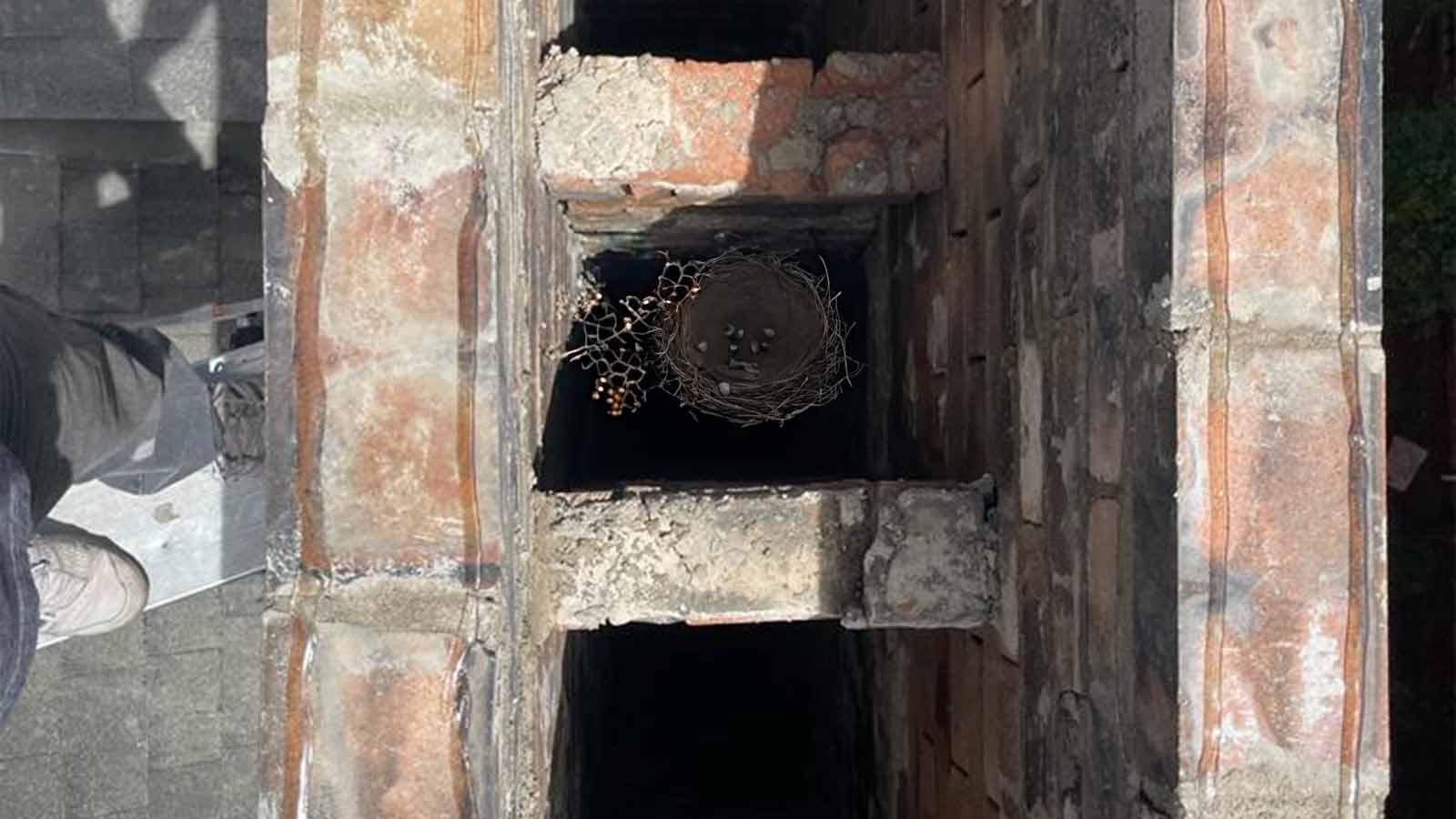
- Debris in the firebox. Twigs, leaves, feathers, or bits of insulation showing up on the smoke shelf or down in the firebox is a dead giveaway.
- Flies or a sudden bug problem near the fireplace. A cluster of flies around the hearth in summer usually means something died up there.
- A bird flapping behind the damper. Sometimes one falls all the way down and gets stuck against the damper, and you'll hear it beating its wings trying to get back up.
One or two of these and it's worth a look. If you're hearing babies, don't wait, because the situation only gets more delicate from there.
Which Critters End Up in Denver Chimneys
We see the same handful of animals over and over around the Front Range, and each one behaves a little differently.
- Chimney swifts. These little birds are practically built for chimneys. They can't perch like a normal bird, so they cling to the rough inside walls of a flue and build a small nest there. They're protected under federal law, which matters a lot for how we handle them, more on that below.
- Raccoons. A mother raccoon will treat an uncapped chimney like a hollow tree and use it as a den to raise her kits, usually in spring. They're strong, smart, and they will defend those babies, so this is the one you absolutely do not want to tangle with yourself.
- Squirrels. Squirrels are climbers and fallers. A lot of the time they come down looking for a warm spot and then can't get back up the slick flue. You'll hear frantic scratching as they try.
- Birds in general. Pigeons, starlings, and the occasional duck or owl drop in too. Some nest on purpose, others just fall in and get trapped.
- Bats and the odd snake. Less common, but it happens, usually through a gap where the cap should be.
People always ask how the animal got in, and nine times out of ten the answer is the same: there's no cap on the chimney, or the old one rusted out and blew off a couple winters ago. An open flue looks exactly like a hollow tree to a raccoon or a swift. To them it's prime real estate. Put a good cap up top and the whole problem just goes away.
- Adam, Owner, Adam Chimney Sweep
The Real Risks of Leaving Them Up There
 It's tempting to just wait it out and hope whatever's up there leaves on its own. Sometimes a healthy adult animal does. But there's real downside to ignoring it, and it's not only about the noise driving you nuts at 5 a.m. Here's what we worry about.
Blockage and Fire Danger
A nest is a pile of dry sticks, leaves, and feathers sitting right in the path your smoke needs to take. Light a fire under that and you've got two problems at once. First, the flue is partly or fully blocked, so smoke and gases back up into the house instead of going out the top. Second, that dry nesting material is basically kindling sitting inside a hot chimney. Nest fires are a genuine cause of chimney fires, and they can spread into the structure fast. If you suspect anything is nesting in there, the firebox stays cold until it's cleared. No exceptions.
Carbon Monoxide Backing Up
This is the quiet one. When a flue is blocked, the exhaust from your fireplace, furnace, or water heater that vents through that chimney can't escape the way it's supposed to. Carbon monoxide is colorless and odorless, and a blocked chimney is one of the ways it ends up in living spaces. A working CO detector is non-negotiable any time you burn anything, and doubly so if you've got reason to think something's plugging the flue.
Disease, Mites, and Mess
Animal droppings in a chimney aren't just gross, they're a health issue. Bird and bat droppings can carry histoplasmosis, a lung infection you get from breathing in spores from dried waste. Raccoon droppings can carry roundworm. Nests bring mites and other parasites right into your house. And a dead animal up there will stink for weeks and draw flies into your living room. None of this is something you want to be breathing or handling without knowing what you're doing.
Damage to the Chimney Itself
Droppings are acidic and eat at masonry and metal liners over time. Nesting material holds moisture against the flue. Animals scratching and clawing can damage a liner. The longer it sits, the more likely you are looking at chimney repair on top of the removal, or in bad cases a new liner to undo the corrosion.
I had a homeowner near Wash Park who lived with the smell for most of a summer because she figured it'd clear up on its own. By the time she called, we pulled a dead raccoon and a season's worth of droppings out of there, and the acid had already started pitting her liner. Waiting almost never saves you money on this stuff. It usually costs you more.
- Adam, Owner, Adam Chimney Sweep
Why DIY Animal Removal Is a Bad Idea
I get why people want to handle it themselves. It feels like a small problem. But chimney animal removal goes sideways in a hurry, and here's why we tell folks to leave it alone.
- You're on a roof, reaching into a dark hole. Most of the work happens at the top of the chimney. Roof falls are no joke, and a startled raccoon lunging at your hand while you're up a ladder is exactly how people get hurt.
- Cornered animals bite and scratch. A mother raccoon defending kits is genuinely dangerous, and raccoons are a rabies vector in Colorado. Birds will peck and flap. You do not want to be the soft thing in a tight space with a scared animal.
- Lighting a fire to smoke them out is cruel and dangerous. People still try this. It kills the babies, who can't fly out, and it risks a chimney fire from the nest. Don't.
- Some birds are protected by law. Chimney swifts and many migratory birds are covered under the federal Migratory Bird Treaty Act. You can't legally remove an active nest with eggs or chicks, and the right move is to wait until they fledge and then cap the chimney. We know how to handle that the right way.
- You probably can't reach the real problem. Half the time the animal or nest is down on the smoke shelf, behind the damper, in a spot you can't get to from either end without the right tools.
The worst calls I get are the ones where somebody already tried to fix it themselves. They lit a fire to drive a bird out, or they jammed a hose down the flue, and now we've got a hurt animal, a smoke-filled house, and sometimes a cracked liner on top of it. Call before you try anything. It's cheaper, it's safer, and it's a whole lot kinder to whatever's stuck up there.
- Adam, Owner, Adam Chimney Sweep
How We Handle Humane Removal
Our whole approach is to get the animal out alive, clean up after it, and seal the chimney so the next one can't get in. Here's roughly how a job runs.
- Inspect and identify. We figure out what's up there and where it is, often with a camera, before we touch anything. What we do next depends a lot on whether it's a raccoon, a squirrel, or a protected bird with babies.
- Get it out safely. For a trapped squirrel or bird that fell in, that often means giving it a way back up or carefully removing it from the top. For raccoons with young, we make sure the kits come out with the mother, never leaving babies behind to die in the flue.
- Respect the law on birds. If it's an active chimney swift nest with chicks, removing it isn't legal and isn't right. We'll advise you on timing and come back to clean and cap once they've safely fledged.
- Clean and decontaminate. We remove the nest, droppings, and debris, then clean the flue so you're not left with the smell, the mites, or the fire hazard.
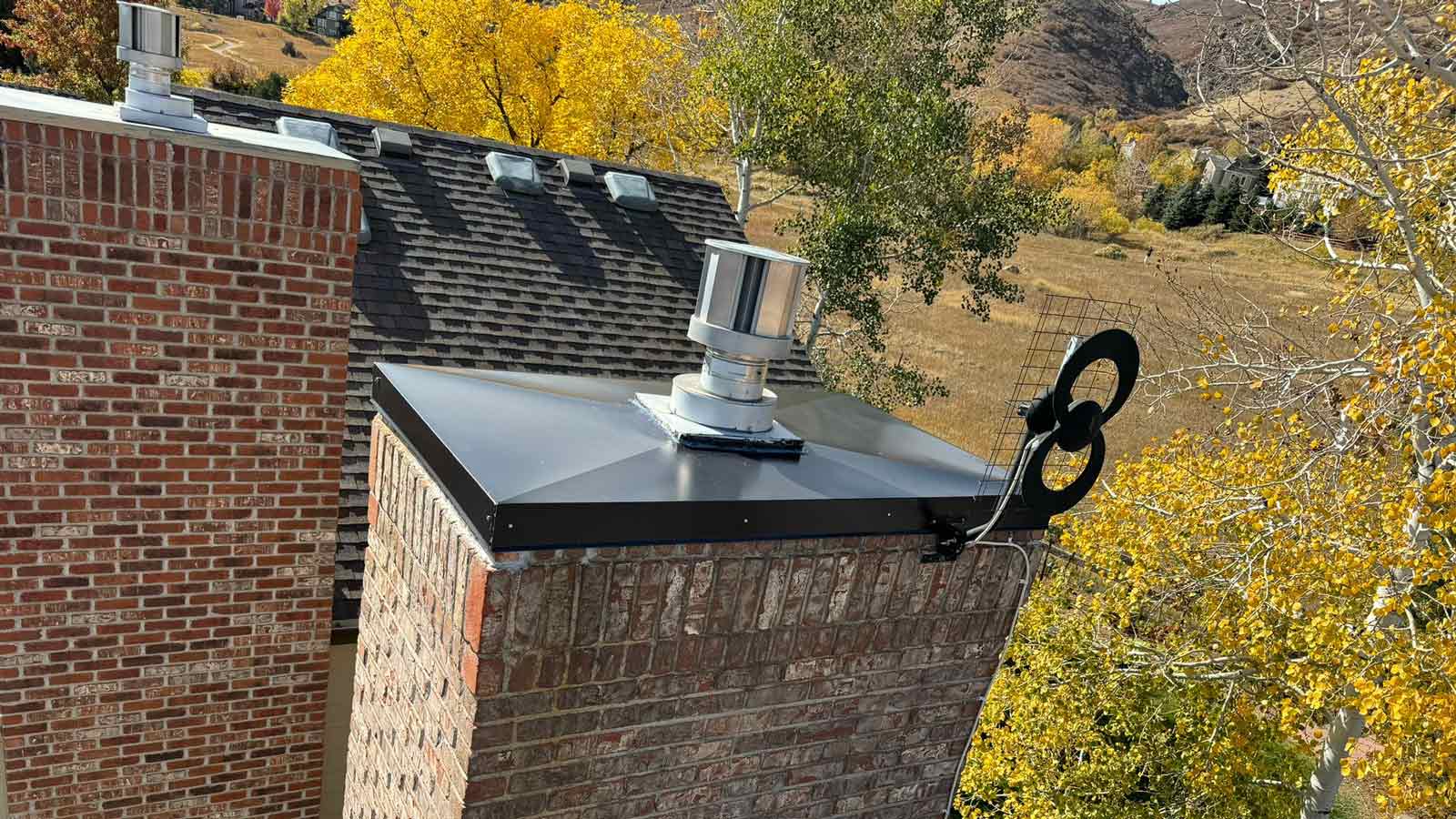
- Cap it. This is the part that actually solves the problem. A solid chimney cap with mesh keeps animals out for good while still letting smoke through.
Want the full rundown on how we do this? Here's our humane animal removal service in Denver.
Prevention: A Good Cap Ends the Whole Cycle
Almost every animal-in-the-chimney call traces back to the same root cause, which is an open or broken cap up top. The fix is simple and it's the best money you'll spend on your chimney. A chimney cap is a metal cover with mesh sides that sits over the top of the flue. It lets your smoke out and keeps the weather, debris, and animals from getting in. Here's what staying ahead of it looks like:
- Put a cap on every open flue. If you don't have one, that's the single biggest thing you can do. A chimney cap installation pays for itself the first time it keeps a raccoon out.
- Check the cap you've got. Caps rust, crack, and blow loose in our Front Range wind. A cap with a hole in the mesh is an open invitation. We look it over on every visit.
- Get a yearly inspection. An annual chimney inspection catches a failing cap, an early nest, or a gap before it turns into a full-blown infestation. The CSIA and NFPA both recommend a once-a-year look, and it's the cheapest insurance going.
- Keep branches trimmed back. Overhanging limbs give squirrels and raccoons an easy highway to your roof. Cutting them back makes your chimney a lot less convenient.
- Deal with it in the off-season. The best time to cap and inspect is late summer or early fall, after any swifts have fledged and before you want to light your first fire.
For a deeper safety run-through before burning season, our winter chimney safety checklist covers the rest. You can also read up on bird-related disease risk straight from the Colorado Department of Public Health and Environment.
What It Usually Runs
Cost depends on what's up there, how far down it is, and whether the chimney needs cleaning or a new cap afterward. A straightforward bird or squirrel removal is on the lower end. A raccoon with kits, a heavy clean-out, and a new cap costs more because there's simply more work involved. We'll always look first and give you a straight number before we start, no surprises. You can see our general pricing here or just call and ask.
Hearing Something Up There? Call Us.
If you've got scratching, chirping, a smell, or you've already spotted a visitor behind the damper, don't light a fire and don't try to flush it out yourself. Call Adam Chimney Sweep at (720) 207-9232 and we'll get whatever's up there out safely, clean up the mess, and cap the chimney so it stays empty. You can also reach us here to book a visit. We've been keeping Denver chimneys safe and critter-free since 2001, and we'd be glad to help you do the same.